


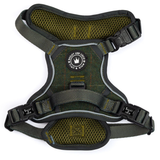


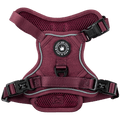
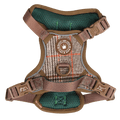
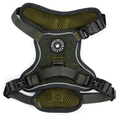
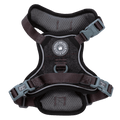
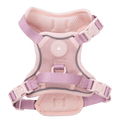
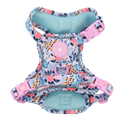
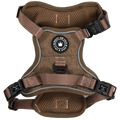
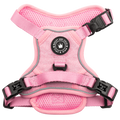




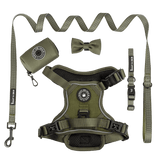




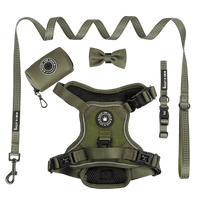

Dual D-ring dog harnesses give you two attachment points – one at the chest and one on the back – so you can switch between no-pull training and relaxed everyday walking. If you want one harness that feels kind, looks refined and keeps strong pullers under control, a dual D-ring design is the UK buyer’s sweet spot for 2025.
At Bailey & Coco, we build premium harnesses that blend fashion and function. Think soft padding, escape-resistant shaping, reinforced stitching and a handle for quick, calm control. Below you will find a practical guide to how dual rings work, who benefits most, and how to size and fit with zero fuss.
Why choose a dual D-ring harness
- No-pull guidance: clip to the front ring during training so gentle lateral pressure redirects pulling without strain.
- Relaxed walking: swap to the back ring for easy everyday strolls or when recall and manners are solid.
- Even pressure: a padded chest panel spreads force across the sternum and shoulders, not the throat.
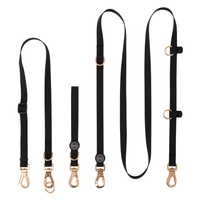
- Flexible control: attach a double-ended lead to both rings when you want extra steering on busy streets.
- UK-proof materials: water-resistant textiles and quick-dry linings suit rain, mud and early sunsets.

Who a dual ring suits best
It works brilliantly for energetic adolescents, city walkers who need confident steering around traffic and prams, and strong breeds that benefit from even pressure. If your dog already walks nicely most of the time, you will still love the flexibility of swapping clips for different routes and moods.
At-a-glance benefits vs single-ring harnesses
| Feature | Single D-ring | Dual D-ring |
|---|---|---|
| Training control | Back clip only | Front clip for no-pull, back clip for cruising |
| Pressure distribution | May increase forward drive | Balanced across chest and shoulders |
| Versatility | One attachment mode | Two modes or double-ended lead |
Next up: the essential features that separate great harnesses from the rest, so you can buy with confidence the first time.
The features that make a dual D-ring harness best in class
Premium materials are only the beginning. For daily comfort and dependable control, focus on the following design choices that we engineer into every Bailey & Coco harness.
1. Even-pressure chest panel
A broad, softly padded panel spreads force across the sternum. This helps prevent rubbing in the underarms and reduces the tendency for forward drive when your dog feels excited at the park entrance.
2. True dual ring hardware
Look for a secure front ring placed high enough to redirect pulling yet far enough from the throat to protect the airway, and a sturdy back ring aligned with the centre of mass. Both rings on Bailey & Coco are metal and stitched with reinforced bar-tacks.

3. Three-buckle easy fit
Many dogs dislike harnesses that go over the head. Our neck buckle solves that. Clip around the neck and ribcage, fine-tune the fit, and you are out the door in seconds.
4. Handle for quick assist
A low-profile handle helps you steady nervous pups near roads, give elderly dogs a boost over kerbs, or pause a puller at a crossing without pressure on the throat.
5. UK-ready textiles
From rainy Manchester mornings to muddy Peak District trails, water-resistant outer fabrics and quick-dry linings keep things fresh. Reflective accents increase visibility on dark commutes.

6. Fit and sizing that actually works
Measure behind the front legs around the widest part of the chest. If between sizes, choose the larger and tighten. We target a two-finger gap under each strap for comfort and security. See the size chart on each product page for guidance and breed examples.
Next, let us walk through how to use each ring in real life with a simple, repeatable routine that builds confident leash manners without stress.
How to use front and back rings day to day
Think of the front ring as your gentle steering wheel and the back ring as cruise control. Here is a simple method you can use on any UK pavement or park path.
Step-by-step routine
- Clip to the front D-ring as you leave home. Reward alongside walking and loose leads.
- Redirect pulling calmly: step away a half pace, let the chest ring pivot your dog toward you, then reward when they return to your side.
- Switch to the back ring once your dog settles into a steady rhythm. This is more relaxed for longer stretches.
- Use both rings with a double-ended lead if you want added steering near traffic or when passing excitable dogs.

Common mistakes to avoid
| Mistake | Why it causes problems | Fix |
|---|---|---|
| Straps too loose | Harness can rotate and rub | Tighten to a two-finger gap under each strap |
| Front clip every minute | Dog never learns relaxed walking | Switch to back ring for steady periods |
| Over-the-head only designs | Many dogs resist and tense up | Choose three-buckle easy-fit with neck buckle |
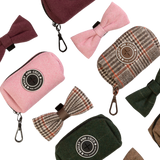
Round out your setup with a matching lead and an organised carry solution so treats, bags and keys are always to hand.
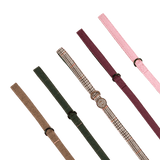
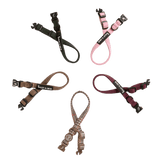
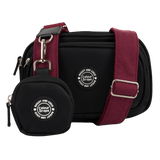
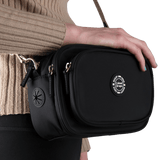
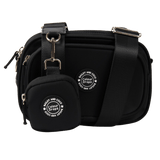
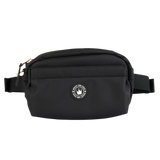
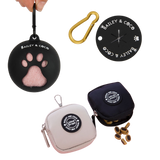
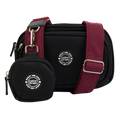
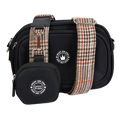
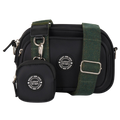
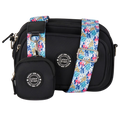
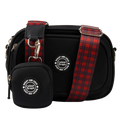
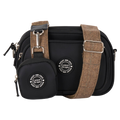
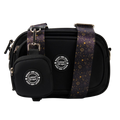
Explore dog walking bags to pair with Heritage Plaid or Mulberry looks. The tidy, coordinated set makes every outing feel polished and reduces faff at the door.

In the final section we will compare popular options, show who each suits best and wrap with quick answers to buyer questions so you can order with confidence today.
Compare options and choose your perfect setup
Below is a simple comparison to help you pick a Bailey & Coco dual D-ring harness configuration for your dog and walking style.
| Option | Best for | Why it wins |
|---|---|---|
| Heritage Plaid dual D-ring | City walks, everyday style | Classic look, padded comfort, reflective accents |
| Mulberry dual D-ring | Evening walks and darker routes | Rich tone with high-contrast visibility and quick-dry lining |
| Double-ended lead set | Busy streets or training transitions | Clip to both rings for precise steering and confidence |

Real-world proof
Customers consistently report less pulling after the first few walks using the front ring, alongside compliments on fabrics and fit. Add a matching dog walking bag and you have a coordinated setup that looks premium yet works hard in rain and mud.
Quick answers
- Is the front clip safe? Yes. It redirects motion at the chest rather than the neck, helping manners without force. See RSPCA guidance on safe walking and The Kennel Club for fit tips.
- What size do I choose? Measure the chest behind the front legs and check the size chart on the product page. If between sizes, size up.
- How do I clean it? Wipe after wet walks or machine wash in a laundry bag, then air dry.


