












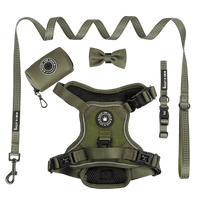

If you have ever Googled “dog collar” and immediately felt overwhelmed, you are not alone. In the UK, dog collars sit at the intersection of comfort, safety, everyday practicality, and style.
This guide is written to do two things at once: answer the most common questions dog owners ask (so you can feel confident), and help you find a collar you actually want to reach for every day. Throughout the guide, you will also see “quick answer” paragraphs, simple checklists, and a sizing chart that you can screenshot for later.

What is the best dog collar for a dog?
Quick answer: the best dog collar is the one that fits correctly, suits your dog’s lifestyle, and stays comfortable all day. In practice, most UK owners do best with an adjustable flat collar for everyday wear, plus a second option for specific needs (for example, a waterproof dog collar for muddy walks or beach days).
When “best” is the goal, think in three layers:
- Fit and comfort: the collar should sit comfortably around the neck without rubbing, twisting, or slipping over the head.
- Everyday practicality: easy on and off, reliable fastening, and a D-ring that makes lead attachment feel secure.
- Style you actually love: because the best collar is the one you will happily keep on your dog for the school run, café stop, and weekend walks.
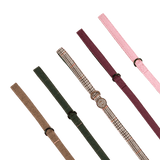
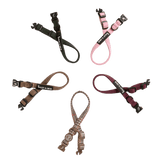
If you love that classic, countryside look, our tweed dog collars are a gorgeous place to start, then you can use the sizing tips in this guide to get the fit spot on.
In 2026, “best dog collar” searches often include extra context: “good quality dog collar”, “premium dog collar”, “dog collar reflective”, “dog collar and lead set UK”, and “dog collar waterproof”. The right choice depends on what your real life looks like. If your dog is frequently out in rain, wet grass, or swims, you will want something that handles moisture well. If your dog is mainly an on lead stroller with a love of looking smart, a tweed-style collar can be a beautiful everyday staple.

What type of collar is recommended for most dogs?
Quick answer: for most dogs, a flat, adjustable dog collar is the most practical everyday option. It is simple to fit, suitable for ID tags, and comfortable when chosen in the right width for your dog’s size.
Here is an owner-friendly way to choose a collar type:
- Everyday walks and errands: adjustable flat collar.
- Rainy season and muddy fields: waterproof collar (and ideally a matching lead set for consistency and easy cleaning).
- Occasions and photos: a tweed collar or a dog collar with a bow tie can be a lovely upgrade that still feels wearable.
- Low light evenings: choose a collar with reflective elements, or pair your collar with reflective accessories for visibility.
Dog collars UK: what really matters in 2026
In the UK, dog owners often want a collar that feels safe, stylish, and durable. But there is also a practical angle that gets missed. A dog collar is often where your dog’s ID tag lives, and that matters on the days when something unexpected happens. The best 2026 dog collar is one that you can rely on when you are tired, rushing, or it is pouring down, and you still want everything to feel simple.
Next, let’s cover fit and comfort properly, including the famous 2-finger collar rule, plus how to avoid the most common “new collar” problems like rubbing and slipping.
What is the 2 finger collar rule?
Quick answer: the 2-finger rule means you should be able to slide two fingers flat between your dog’s neck and the collar. If you cannot fit two fingers, the collar is too tight. If you can fit three or more easily, it is likely too loose.
This rule is popular because it is simple and works for most dogs. In 2026, it is also one of the most searched “fit” questions, often alongside queries like “how tight should a dog collar be”, “dog collar tightness”, and “how should a dog collar fit”.
Where should the collar sit on the neck?
A standard everyday collar should sit comfortably around the middle of the neck, not so high that it presses behind the ears, and not so low that it drifts down towards the shoulders. A good fit stays in place when your dog walks, shakes, and sniffs without twisting.
How should a dog collar fit?
Quick answer: a collar should feel snug enough that it does not rotate freely, but loose enough that your dog can swallow, breathe, and move their head naturally. You should be able to fit two fingers under it, and the collar should not slide over your dog’s head when gently pulled forward.
Signs a collar is too tight
- Indentations in the fur after short wear
- Reluctance to eat, swallow, or move comfortably
- Constant scratching at the collar area
Signs a collar is too loose
- The collar rotates and the buckle ends up under the neck regularly
- The collar can slip over the head
- The lead clip feels unstable on the D-ring

Dog collar size chart UK (cm) and how to measure
Quick answer: measure your dog’s neck with a soft tape where the collar will sit, then choose a size range that includes that measurement. Aim to fasten the collar in the middle of the adjustment range where possible, so you have room to adjust for coat changes.
Bailey & Coco dog collar sizing (all collars, including waterproof)
These are your collar sizes in centimetres, plus collar width. Use this chart as a baseline, then check fit using the 2-finger rule.
| Size | Neck (cm) | Width |
|---|---|---|
| Extra Small | 18cm to 28cm | 1.5cm |
| Small | 25cm to 38cm | 1.5cm |
| Medium | 33cm to 53cm | 2cm |
| Large | 38cm to 63cm | 2.5cm |
How to measure your dog for a collar size
- Use a soft tape measure (or a string, then measure the string).
- Measure around the neck where the collar will sit.
- Choose the size range that includes that number.
- Fit the collar and confirm the 2-finger rule.
These steps align with how people search for “how to measure dog collar size” and “dog collar measurements” in the UK.
Now that fit and sizing are clear, let’s talk materials and use cases, including tweed dog collars, waterproof dog collars, and when a matching dog collar and lead set makes life easier.
Waterproof dog collars UK: who needs one in 2026?
If you live in the UK, a waterproof dog collar is not a niche purchase. It is a practical solution for wet grass, muddy footpaths, rainy school runs, and dogs who treat every puddle like an invitation. Searches like “dog collar waterproof” and “waterproof dog collar and lead” are consistently popular because owners want a set that stays looking good and is easy to clean.

What to look for in a waterproof dog collar
- Easy-clean finish: you want something you can wipe down quickly after a wet walk.
- Comfort first: waterproof does not need to feel stiff. The collar should still sit comfortably and not pinch.
- Reliable fastening: a secure buckle and sturdy D-ring are non negotiable for everyday use.
- Optional visibility: if you walk at dusk, a reflective detail can be a smart safety upgrade.
Dog collar and lead set UK: when a matching set is the better choice
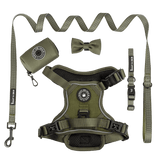
A matching dog collar and lead set is not just about aesthetics. It helps with consistency, reduces the chance of mismatched hardware, and can make packing for walks simpler. It also shows up frequently in search demand, including “dog collar and lead set UK” and “dog leash and collar set”.
If you want an easy rule: choose a matching set when you want one grab-and-go option that feels smart and reliable, especially for daily walks and trips where you do not want to think.

Tweed dog collars: why they still win for everyday style
“Tweed dog collar” searches stay strong because tweed feels premium, timeless, and wearable. In 2026, owners are not only searching for function, they want something that looks great on the dog they love. Tweed also covers a range of searches like “herringbone tweed dog collar” and “leather and tweed dog collar”.

A simple material comparison table for 2026
| Type | Best for | Owner tip |
|---|---|---|
| Tweed dog collar | Everyday style, photos, café walks | Keep a second collar for muddy days if your dog loves puddles |
| Waterproof dog collar | Rain, mud, beach, swimming | Wipe after walks and check fit as coats change seasonally |
| Reflective collar option | Early mornings and dark evenings | Pair with a reflective lead or clip-on light for best visibility |
Next, we’ll cover the UK “collar and tag” rules, whether dogs should wear collars around the house, and the safety checks that help you choose confidently for 2026 and beyond.
Should dogs wear collars around the house?
Quick answer: it depends on your dog and your home setup. Many dogs wear collars indoors without issues, but you should prioritise comfort and safety. If your dog scratches a lot, gets caught on furniture, or has a very thick coat that mats easily, you may choose to remove the collar at home and put it on for walks and outings.
For most UK owners, a sensible approach in 2026 is:
- Collar on when your dog is outside, travelling, or in unfamiliar places.
- Collar off for long naps, crate time, and unsupervised indoor time if snagging is a risk.
- Always check fit and rotate the collar position slightly day to day to reduce friction in one spot.
Dog collar law UK: do dogs need an ID tag on the collar?
Quick answer: In the UK, dogs in public places are generally expected to wear a collar with the owner’s name and address on it, either written on the collar or shown on a tag attached to it.
What to put on a dog collar tag in the UK
- Owner name
- Owner address
- Optional but helpful: phone number
If you have moved house recently, it is worth updating your dog’s tag so it is accurate and easy for someone to use quickly.
How to stop a dog collar rubbing or causing hair loss
One of the most common “help” searches is essentially: “my dog’s collar is rubbing”. In 2026, this often appears as “dog collar rubbing fur off neck” or “no rub dog collar UK”.
Start with these checks:
- Fit: confirm the 2-finger rule. Too tight causes pressure, too loose causes friction.
- Width: small dogs often do better with a slimmer width that matches their neck size, while larger dogs benefit from a wider collar that distributes pressure.
- Cleanliness: dirt and grit trapped under the collar can increase rubbing.
- Coat changes: collars can fit differently after grooming or seasonal shedding.

Collar or harness in the UK? (and how to decide fast)
If you are debating collar versus harness, you are asking the right question. Some dogs do beautifully on a collar for calm lead walking. Others are more comfortable in a harness for certain walks, training phases, or body shapes. If you want a clear UK-focused breakdown, read our guide here:
Great debate: dog harnesses vs collars in the UK
Style upgrades in 2026: bow tie dog collar and coordinated sets
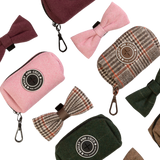
Style-led searches are not just seasonal. Terms like “bow tie dog collar” and “dog collar with bow” show that owners want something that feels special without being impractical.


FAQ quick answers
How tight should a dog collar be?
Use the 2-finger rule. Two fingers flat should slide under the collar comfortably. If you cannot fit two fingers, loosen it. If you can fit three easily, tighten it. :contentReference[oaicite:10]{index=10}
Where should you put dog tags on a collar?
Attach tags to the collar’s D-ring or tag ring so they hang freely and do not press into the neck. Make sure they do not sit inside the collar where they could rub.
What is a dog safety collar?
Most owners use “safety collar” to mean a collar that fits well, attaches securely, and supports clear identification in public. Always prioritise fit, comfort, and appropriate use for your dog’s behaviour and environment.
If you want the simplest next step: choose a style you love, pick the right size range, then confirm fit with the 2-finger rule. When your collar feels good and looks beautiful, it becomes part of your routine, and that is what “best dog collar” really means in 2026.
Ready to choose? Browse the full collection here: dog collars .


