


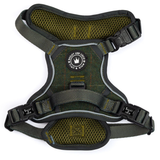


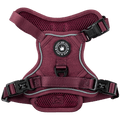
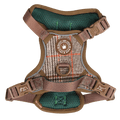
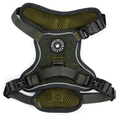
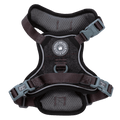
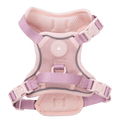
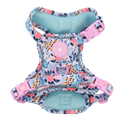
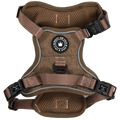
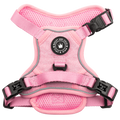








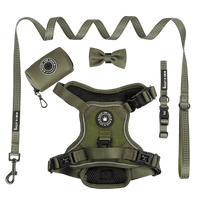

If you’re looking for an anti pull harness in the UK, it usually means one thing: you want calmer, safer walks without feeling like you’re in a tug-of-war every time you pick up the lead.
Lead pulling is incredibly common. Puppies pull because everything is exciting. Teen dogs pull because they are full of energy. Adult dogs pull because it has become a habit that works for them. And some dogs pull because they are anxious, reactive, or simply powerful.
The good news is that you do not need harsh tools to make progress. A well fitted anti pull harness can help reduce pulling by changing how your dog’s movement works when they surge forward, while keeping them comfortable and supported. The even better news is that when you combine the right harness with simple training, you can see real improvement quickly.
If your dog pulls on the lead, start here: No Pull Dog Harnesses.
Not sure how front clips work? Read: Front Clip Dog Harness UK.
In this guide, we’ll cover what an anti pull harness really is, how it works (and why some styles work better than others), how to fit it properly, and how to use it in a way that actually changes behaviour rather than just managing it for a week.
Now that we’ve set the goal, let’s start with the basics so you can spot the right harness style in seconds.
What is an anti pull harness?
An anti pull harness is a dog harness designed to discourage pulling on the lead by changing the mechanics of forward movement. Instead of allowing your dog to lean into the lead and power ahead, the harness helps reduce leverage and encourages your dog to return their attention back to you.
Most effective anti pull harnesses do this in one of two ways:
- Front clip attachment: The lead clips to a D-ring at the chest. When your dog pulls, the lead naturally guides their body slightly to the side, which makes pulling less effective and encourages them to slow down.
- Dual clip system: A harness with both a front and back attachment point. You can use the front clip for training, then switch to the back clip for relaxed walks when your dog is calmer.
Some harnesses marketed as anti pull rely on tightening straps. Those can work for specific cases, but many dogs find them unpleasant, and they can cause rubbing if the fit is not perfect. For most UK dog owners, a comfortable, well designed harness with a front clip option is a kinder, more sustainable approach.

Understanding the definition is helpful, but the real value is knowing why it works, so you can choose the right style for your dog.
How does an anti pull harness work?
When your dog pulls while wearing a collar, the pressure sits around the neck. That can be uncomfortable, and for some dogs it actually increases excitement or frustration, which can lead to more pulling. With a harness, pressure is distributed across the chest and shoulders, which is generally safer and more comfortable for daily walks.
An anti pull harness adds one more ingredient: it changes the angle of force.
The simple explanation
Dogs pull because pulling works. They pull, they get closer to the smell, the park, the pigeon, or the friend they want to greet. A front clipped lead reduces the reward because it redirects their body slightly rather than letting them surge forward. Pulling becomes less effective, so the dog is more likely to slow down and check in.
The practical explanation you can feel on a walk
With a front clip, when your dog hits the end of the lead, you often feel a gentle side turn instead of a straight forward tug. That small redirection can be enough to help you regain balance and stop the walk from becoming a wrestling match. It also gives you a moment to reward calm behaviour.
Important: An anti pull harness is not magic on its own. It is a support tool. It works best when you pair it with a simple training habit: reward your dog when the lead is loose and stop moving when they pull.
If you want the full step-by-step approach that works for real life walks, you can also read our complete guide here: No Pull Dog Harness UK.
Next, let’s make sure you choose the right style, because the “best” anti pull harness depends on your dog’s body shape and your walking goals.
Which type of anti pull harness is best?
There are several harness styles that can be used for anti pull training. Here’s a clear breakdown, with a simple “best for” guide.
| Harness style | Best for | Watch-outs |
|---|---|---|
| Front clip harness | Most dogs who pull, everyday training walks | Needs a good fit so it does not twist |
| Dual clip harness | Training and relaxed walks with one harness | Owners need to use the right clip for the right walk |
| Step-in harness | Dogs that dislike harnesses going over the head | Not all step-in designs support front clip training |
| 3-clip / easy-on harness | Wriggly dogs, sensitive dogs, dogs that hate overhead harnesses | Make sure it sits correctly and does not rub behind the legs |
If your dog hates harnesses going over their head, our guide to the easy-on style can help: The Best 3-Clip Dog Harness That Doesn’t Go Over the Head (UK).
Now that you know which style to look for, the next step is the one most people skip, and it makes all the difference: fit.
How to fit an anti pull harness properly (so it works and stays comfy)
The best anti pull harness will not help if it is fitted incorrectly. Fit affects everything: comfort, control, rubbing, twisting, and whether the front clip does its job.
The two-finger rule
In most areas, you should be able to fit two fingers between the straps and your dog’s body. Too loose and the harness twists. Too tight and it can rub or restrict movement.
Where the chest strap should sit
The chest section should sit comfortably on the front of the chest, not up at the throat and not too low where it interferes with leg movement.
Common fit mistakes to avoid
- Too loose behind the shoulders: this often causes twisting when using the front clip.
- Straps sitting in the armpits: rubbing and sore spots often come from straps that sit too far back.
- Uneven adjustments: if one side is tighter than the other, the harness pulls off-centre and becomes uncomfortable.
- Skipping a re-check: straps can loosen slightly after a few walks. Re-check fit after the first few uses.
For a full measuring walkthrough, read: How to Measure a Dog for a Harness.

Great fit sets you up for success. Next, let’s talk about who an anti pull harness helps most, because different dogs need slightly different approaches.
Which dogs benefit most from an anti pull harness?
Almost any dog can benefit, but anti pull harnesses are especially useful for:
- Puppies learning what a lead even means
- Teen dogs going through an excitable phase
- Strong pullers who have learned they can tow you
- Dogs who lunge when they spot something exciting
- Dogs with sensitive necks where collar pressure is not ideal
Breed shape can matter too. Stocky dogs, long-backed dogs, and flat-faced breeds often do better in a harness than a collar for everyday walking comfort.
If you are choosing by breed, these guides can help:
- Best Harness for Labradors
- Best Harness for English Bulldogs
- Best Harness for Pugs
- Best Staffordshire Bull Terrier Harness

So far, we’ve covered the “what” and the “who”. Now let’s cover the “how” in real life, because using an anti pull harness correctly is what creates change.
How to use an anti pull harness correctly (the simple routine that works)
Here is a practical approach you can start on your next walk. It is simple, but it is powerful, because it teaches your dog one clear lesson: loose lead makes walks continue.
Step 1: Start the walk calmly
Before you step out, clip the lead to the right attachment (front clip for training walks). Give your dog a treat for standing still, then step forward.
Step 2: Reward the first few steps
Many dogs pull in the first minute because they are excited. Reward the first few seconds of calm walking. This sets the tone.
Step 3: Stop when the lead goes tight
When your dog pulls, do not keep walking. Stop, wait, and the moment the lead loosens, move again. You are not yanking or telling off. You are simply making pulling less effective.
Step 4: Turn it into a game
If your dog is very determined, do a gentle direction change when they pull. Not a sharp spin, just a calm change. Praise when they follow you and the lead relaxes.
Step 5: Keep training walks short
A 10 minute training walk where your dog thinks is often more effective than a 60 minute walk where they pull the whole time. You can still give your dog exercise, but the “training walk” should feel achievable.
If your dog is new to harnesses, our step-by-step guide can help you get it on smoothly: How to Put a Harness on a Dog.
Using the harness well helps immediately, but the next section is where you prevent common problems like rubbing and twisting.
How to stop an anti pull harness from twisting
Twisting is the main frustration people have with front clip training. If the harness twists, it can feel less effective and less comfortable. The fix is almost always fit and balance.
Quick twist checklist
- Tighten evenly: check both sides match
- Check the chest placement: too high or too low can cause shifting
- Reduce slack: a harness should be snug enough that it does not rotate easily
- Use the right lead length: very long leads can increase twisting during training

Once the harness sits correctly, the next step is choosing the right approach for your dog’s size and build.
Anti pull harness for small dogs
Small dogs can pull surprisingly hard relative to their size. They also tend to have delicate necks, which makes harness training a great choice. The key is ensuring the harness does not overwhelm their frame and the straps sit comfortably away from the armpits.
For small dogs, look for:
- A comfortable chest area that spreads pressure
- Adjustments that allow a secure fit without gaps
- Lightweight but strong hardware

Small dogs need gentle control. Next, let’s look at strong dogs, where durability and stability matter most.
Anti pull harness for large and strong dogs
For large dogs and powerful pullers, the biggest priorities are stability, strength, and comfort. You want a harness that holds its shape, stays balanced, and gives you reliable control without digging in.
For strong dogs, look for:
- Strong stitching and secure buckles
- Reliable hardware and attachment points
- A fit that stays put when your dog changes direction
- Comfort that supports longer walks

If you want to browse our range built for real world walking, you can shop here: no pull dog harnesses.
Now that we’ve covered fit by size, let’s talk about a common question from UK dog owners: harness versus collar.
Anti pull harness vs collar: which is better for pullers?
For dogs that pull, a harness is often the more comfortable option because it spreads pressure across the chest rather than concentrating it on the neck. Many owners find it helps them walk with more confidence, especially when training a dog who lunges or surges forward.
If you are deciding between the two, you may enjoy this deeper comparison as well: Dog Harnesses vs Dog Collars in the UK.
Next, let’s answer the question everyone asks when they are shopping: what is actually “best”?
What is the best anti pull harness in the UK?
The best anti pull harness in the UK is one that:
- Helps reduce pulling without causing pain
- Fits securely without rubbing
- Allows comfortable movement at the shoulders
- Feels easy to use day-to-day
Most importantly, the best harness is the one you will consistently use with a simple training routine. Small habits add up quickly.
At Bailey & Coco, our harnesses are designed to support real walks and real training, without sacrificing comfort or style. If you want to see the full range, browse our No Pull Dog Harnesses collection.
Before we finish, let’s cover the small details that help you avoid setbacks like rubbing, slipping, and “it worked for a week then stopped”.
Common questions and problems (and easy fixes)
My dog still pulls in an anti pull harness. Is it working?
It can still be working. Think of the harness as a support tool, not a full training programme. If your dog pulls hard, start with short training walks and reward heavily for even small moments of a loose lead. Consistency matters more than perfection.
My dog walks sideways with the front clip
This is usually a sign that the front clip is doing its job, but the walk needs shaping. Use a shorter lead, reward when your dog is straight and calm, and keep sessions short. If it looks uncomfortable, re-check fit and ensure the chest area is sitting correctly.
My dog’s harness rubs behind the legs
Rubbing often comes from a harness sitting too far back, being too loose, or having uneven strap tension. Re-check placement, tighten evenly, and make sure the harness is the correct size. Measuring correctly helps massively.
My dog hates putting a harness on
Some dogs dislike overhead harnesses. If that sounds familiar, the easy-on style can be a game changer. Our guide here can help you choose: 3-Clip Harness Guide.

Now that you’ve got the practical answers, let’s wrap up with a quick buying checklist so choosing feels easy.
Quick buying checklist: choosing the right anti pull harness
- Choose the right style: front clip or dual clip for training support
- Measure properly: use chest and neck measurements for sizing
- Check comfort: straps should sit away from the armpits
- Prioritise security: snug and balanced, not loose and twisty
- Train with it: reward calm walking and stop when the lead is tight
If you want to keep browsing, you can also shop our full harness range here: Dog Harnesses.
If you are ready to choose a no pull option, you can shop here: No Pull Dog Harnesses.
FAQs
What is an anti pull harness?
An anti pull harness is designed to reduce pulling by changing how force works on the lead, often using a front clip or dual clip system to discourage forward lunging.
Do anti pull harnesses work for strong dogs?
Yes. A well fitted anti pull harness can make walks feel more controlled, especially when paired with consistent loose lead training and calm handling.
Is a front clip harness better than a back clip harness for pulling?
Front clip harnesses are usually better for training pullers because they gently redirect movement. Back clip harnesses are great for relaxed walks once your dog is calmer.
How tight should an anti pull harness be?
It should be snug and secure without digging in. In most areas, you should be able to fit two fingers between the straps and your dog’s body.
Where can I shop Bailey & Coco no pull dog harnesses?
You can browse our range here: No Pull Dog Harnesses.
Final thought: The best anti pull harness is the one that fits properly, feels comfortable, and supports a simple routine you can stick with. Keep it calm, keep it consistent, and celebrate small wins. They add up.


