


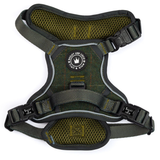


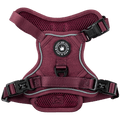
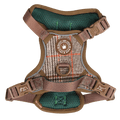
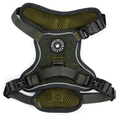
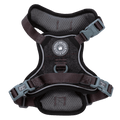
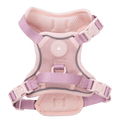
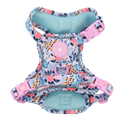
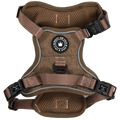
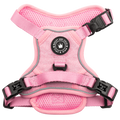




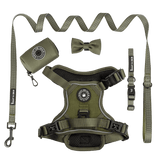




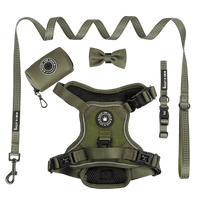

If your dog pulls on the lead, a front clip dog harness can be a total game changer. Not because it “forces” your dog to behave, but because it changes the way pulling feels and works. When used properly, it helps you regain control, makes loose-lead training easier to practise, and keeps walks kinder on your dog’s neck.
In this guide, we’ll cover what a front clip harness actually is, when it’s the right choice, how to fit it so it stays comfortable, and how to use it on real UK walks without twisting, rubbing, or frustration.
If you want the full overview of no pull harnesses and how to get the best results, you can also read our main guide here: No Pull Dog Harness UK.
What is a front clip dog harness?
A front clip dog harness has a lead attachment point on the front of your dog’s chest (usually a D-ring). Instead of clipping the lead to a point on the back, you clip it at the chest for training walks.
The aim is simple: when your dog pulls forward, the lead naturally guides their body slightly to the side rather than letting them lean forward and power ahead. Pulling becomes less effective, so your dog is more likely to slow down and check in with you.
Front clip harnesses are often used for:
- Loose-lead training
- Dogs who lunge toward people, dogs, or exciting smells
- Strong pullers where you want more control without harsh tools
- Puppies learning lead manners

How does a front clip harness stop pulling?
Pulling is a habit that rewards itself. Your dog pulls, they get closer to what they want. A front clip harness changes the “reward” part of that loop.
The quick explanation
When your dog pulls while clipped at the chest, the lead creates a gentle turning angle. Instead of moving straight forward, your dog feels a sideways redirection. This interrupts the forward surge and makes it easier for you to pause, reset, and reward calm walking.
What it feels like on a real walk
With a back clip, pulling often feels like being towed. With a front clip, pulling usually feels more like a gentle drift to the side. That small change is often enough to help you keep balance and maintain a calm, consistent response.
Important: a front clip harness works best when you pair it with a simple habit: stop when the lead goes tight, and reward when the lead is loose. The harness helps create the moment. Your training uses the moment.
Front clip vs back clip: when should you use each?
Many dogs benefit from both options depending on the walk. Training walks and sniffy strolls are not the same thing, and it’s perfectly normal to switch clip positions as your dog improves.
| Clip position | Best for | What it feels like |
|---|---|---|
| Front clip | Training walks, reducing pulling, building focus | Gentle redirection instead of towing |
| Back clip | Relaxed walks, sniff time, calmer dogs | Smooth, natural movement |
If your harness has both options, a simple approach is:
- Front clip for the first 10 minutes when excitement is highest
- Back clip after your dog settles for a more relaxed walk
Want help choosing the best harness style for your dog? This guide makes it easy: What Type of Harness is Best for Your Dog?
Is a front clip harness safe?
For most dogs, a front clip harness is safe when:
- It fits properly and does not rub behind the legs
- It allows full shoulder movement
- You use calm handling rather than sharp yanks
The aim is gentle guidance, not force. If you ever feel like you need to yank the lead to “make it work”, pause and adjust the plan. A snug fit and a slower training routine usually fixes the problem.
How to fit a front clip harness properly
Fit is everything. Most “front clip doesn’t work” complaints are really fit complaints. A harness that twists, rides up, or rubs is usually too loose, unevenly adjusted, or sitting in the wrong place.
Step 1: Measure first (it saves so much hassle)
Before you guess a size, take a quick chest and neck measurement. If you want a step-by-step walkthrough, follow this guide: How to Measure a Dog for a Harness.

Step 2: Check the chest placement
The chest section should sit comfortably on the front of the chest, not at the throat and not so low that it interferes with the legs. If the front section rides up into the neck, it’s usually too loose or sitting too high.
Step 3: Use the two-finger check
In most areas, you should be able to fit two fingers under the straps. Too tight can cause rubbing. Too loose makes twisting more likely.
Step 4: Even adjustments matter
Adjust both sides evenly. If one side is tighter, the harness pulls off-centre and front clip walking becomes awkward.
Step 5: Do a 60-second movement test
Let your dog take a few steps, then:
- Check the harness stays centred
- Check the straps are not sitting in the armpits
- Check your dog can move shoulders freely
If you want an easy, stress-free way to get a harness on, this guide helps: How To Put a Harness On a Dog.
How to use a front clip harness for training (a simple routine)
You do not need complicated training plans. You need a repeatable routine you can practise on real walks.
Start with “easy mode”
For the first few training walks, pick a quiet route with fewer distractions. Your dog needs chances to succeed.
Use the front clip for the training part
Clip the lead to the front ring for the first 5 to 15 minutes. This is when your dog is most excited and most likely to pull.
Reward calm walking early and often
In the first minute, reward any moment where the lead is loose. You are teaching your dog what you like, not only correcting what you dislike.
Stop when the lead goes tight
If your dog hits the end of the lead, stop. Wait. The second the lead loosens, move again. Calm and consistent beats loud and dramatic every time.
Turn pulling into a dead end
If your dog is determined, calmly change direction when they pull. When they follow and the lead loosens, praise and reward. This teaches your dog that staying near you keeps the walk moving.
Keep sessions short
A focused 10-minute training walk can do more than an hour of pulling. You can still give exercise afterwards, but keep the “training block” manageable so you stay consistent.
If your dog is a strong puller and you want an all-in-one overview, this guide pairs perfectly with front clip training: No Pull Dog Harness UK.
Common front clip problems (and quick fixes)
Front clip harnesses can feel brilliant, but there are a few common issues that pop up. The good news is that most have simple fixes.
Problem 1: The harness twists to one side
This is the most common one. Twisting is usually caused by a loose fit, uneven adjustments, or a lead that is too long during training.
Quick fixes:
- Tighten slightly (snug, not tight)
- Check both sides match
- Shorten the lead during training
- Reward close walking so your dog is not constantly at full extension

Problem 2: My dog walks sideways
A little sideways movement can happen at first because your dog is feeling the new lead angle. Keep things calm and reward straight walking. If your dog looks uncomfortable, check fit and make sure the chest section is centred.
Problem 3: Rubbing behind the legs
Rubbing usually means the harness is sitting too far back or the straps are too loose. Re-check placement and tighten evenly. If rubbing continues, reassess size.
Problem 4: My dog pulls anyway
That can still be progress. The harness helps reduce leverage, but behaviour change comes from repetition. Keep the training block short, reward loose lead, and stop when the lead goes tight.
Problem 5: My dog hates harnesses going over the head
Some dogs are sensitive to overhead harnesses. If that sounds like your dog, you may prefer an easy-on style. This guide helps: The Best 3-Clip Dog Harness That Doesn’t Go Over the Head (UK).
Front clip harnesses for different dogs
Every dog pulls for slightly different reasons. Here’s how front clip harnesses typically suit different dogs and builds.
Puppies and teen dogs
Puppies pull because the world is exciting. Teen dogs pull because they have energy and confidence. Front clip training works well here because it helps you practise calm habits early, before pulling becomes a long-term routine.
For extra control in tight spaces, browse our dog harness with handle collection.
If you’re starting from scratch with a young dog, you might also like: The Ultimate Puppy Harness Guide (2026 UK Edition).
Small dogs
Small dogs can pull hard relative to their size, and collar pressure can be uncomfortable. A well fitted harness that supports the chest can make walks kinder and easier to manage.

Strong pullers
Strong dogs need stability. A front clip can help reduce the feeling of being towed, but fit matters even more. If a strong dog is twisting the harness easily, it’s usually too loose or the lead is too long.

Stocky breeds
Stocky dogs can be powerful and enthusiastic. A secure fit and comfortable chest placement are key. If you’re choosing by breed, these guides can help you get the fit right:

Long-backed breeds
Dogs with long backs and shorter legs often benefit from careful fit so the harness sits in the right place and does not rub. If you own a Dachshund, you’ll appreciate a harness that feels secure without shifting.

Flat-faced breeds
Many flat-faced breeds do better in a harness than a collar, especially if they pull. A harness helps keep pressure away from the neck area and can feel more comfortable for everyday walks.

If you want breed-specific help, these guides are popular:
Choosing a front clip harness that feels good to use
When you’re looking at harnesses online, it’s easy to get overwhelmed. Here’s a simple checklist to help you choose confidently.
1) Comfortable chest support
The chest area should sit flat and spread pressure. If it rides up at the throat, it’s often a sign of poor fit or the wrong shape for your dog.
2) Enough adjustability
Adjustability is what turns a harness from “fine” into “perfect”. It also helps prevent twisting when using the front clip.
3) Strong hardware you trust
For everyday UK walks, you want something reliable and secure, especially for dogs who lunge or pull.
4) A design that suits your routine
Some people want a harness they can throw on quickly. Others want something that feels structured for a strong puller. The “best” harness is the one you will use consistently.
If you’re browsing options, you can explore:
Front clip harness tips for calmer UK walks
These are small changes that make a big difference, especially if your dog is an enthusiastic puller.
- Start with shorter routes: success is easier when distractions are lower.
- Use rewards: treats or praise for loose-lead moments.
- Practise “check-ins”: reward your dog when they look back at you.
- Be consistent: stop when the lead is tight, move when it is loose.
- Keep it calm: steady handling helps your dog learn faster.
If you want a deeper overview of harness types and walking routines, you might also like: The Ultimate Guide to Dog Harnesses: From Puppy to Fully Grown Pal.
FAQs
What is a front clip dog harness?
A front clip dog harness has a lead attachment point on the chest. When your dog pulls, it gently redirects their movement to make pulling less effective.
Do front clip harnesses stop pulling immediately?
They can reduce pulling straight away for many dogs, but the best results come from pairing the harness with consistent loose-lead training and rewards.
Why does a front clip harness twist?
Twisting is usually caused by a loose or uneven fit, or using a lead that is too long during training. A snug, balanced fit helps prevent it.
Can I use a front clip harness on a puppy?
Yes, as long as the harness fits properly and allows full shoulder movement. Keep training sessions short, calm, and reward-led.
Should I use front clip or back clip for everyday walks?
Front clip is best for training and reducing pulling. Back clip is great for relaxed walks once your dog is calmer. Many owners use both depending on the walk.
Where can I shop Bailey & Coco no pull harnesses?
You can browse our range here: No Pull Dog Harnesses.
Final thought: A front clip harness is at its best when it’s fitted correctly and used consistently. Keep training simple, reward the behaviour you want, and your walks can feel calmer sooner than you think.


