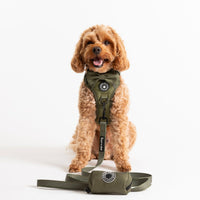
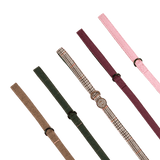
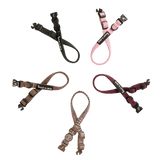



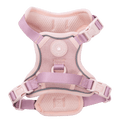
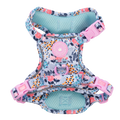
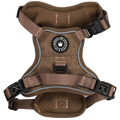
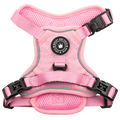







To get a dog used to a harness, go slowly and pair every step with something your dog loves: let them sniff it, touch it to their body, clip one buckle, then build up to short spells of wearing it indoors before you ever clip on a lead. Keep sessions to a minute or two, stop before your dog gets worried, and never force the harness on. A harness that opens at the neck, so nothing goes over the head, makes the whole process much easier for a head-shy dog.
Here's a gentle, step-by-step plan that works for puppies, rescue dogs and adult dogs who've decided harnesses are the enemy.
Why some dogs dislike harnesses
- Things going over the head. Many dogs dislike having straps pulled over their face and ears.
- Being held still or reached over. Leaning over a dog to fasten buckles can feel worrying to them.
- The click of a buckle close to their ear can startle a sensitive dog.
- A past bad experience, such as a harness that rubbed, pinched or was rushed on.
- Not knowing what it is. A new puppy or rescue dog may simply never have worn one.
Signs your dog is finding it too much
Watch for lip licking, yawning, turning the head away, freezing, tucking the tail, walking off or hiding. If you see these, stop, go back a step and make the next session easier. Pushing through tends to make the next attempt harder.
A step-by-step plan
Have plenty of small, tasty treats ready. Move to the next step only when your dog is relaxed and happy at the current one. Some dogs take a day, others a couple of weeks.
- Meet the harness. Put the harness on the floor. When your dog sniffs it, treat. Pick it up and put it away. Repeat a few times.
- Harness means treats. Hold the harness in one hand and treat with the other. Your dog learns the harness predicts good things.
- Touch. Gently touch the harness to your dog's shoulder or back, then treat. Build up to resting it on their back for a second or two.
- The buckle sound. Click a buckle a short distance away, then treat. Gradually bring the click closer.
- Wrap, don't pull over. Lay the harness across the back and bring the straps under the chest without fastening anything. Treat, then take it off.
- One buckle. Fasten a single buckle, treat, and unclip straight away. Then try two buckles, then all of them.
- Short wear indoors. Leave it on for a minute while you play or give a chew. Slowly build up the time.
- Add the lead indoors. Clip the lead on and walk a few steps around the house or garden, rewarding as you go.
- Out for a walk. Start with short, easy walks somewhere quiet.

Why a harness that doesn't go over the head helps
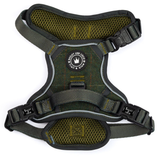
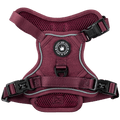
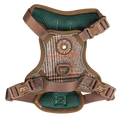
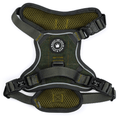
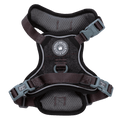
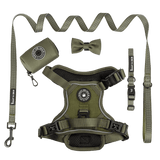
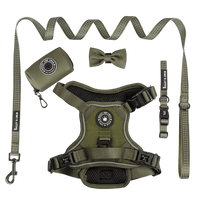
If your dog backs away the moment a harness comes near their face, take the head out of the equation. Our Trail & Glow harnesses have a lockable clasp at the neck, so the harness opens up, wraps around your dog's neck and chest, and clips shut. There's no need to pull anything over the head or ears, which means you can skip the step many dogs find hardest. Our guide to the 3-clip harness that doesn't go over the head shows how it works, and our guide on how to put a harness on a dog walks through fastening it.
Make sure the harness fits
A dog who's uncomfortable in a harness won't learn to like it. Before you start the training:
- Measure your dog's neck and chest and check them against the size guide. Our measuring and fitting video shows how, and the harness size chart lists each size.
- Two fingers under every strap. Snug, but never tight.
- Chest strap behind the front legs, not up in the armpit where it could rub.
- Loosen everything before you put it on, then adjust once it's in place, so you're not squeezing it over your dog.

Puppies, rescue dogs and adult dogs
- Puppies usually accept a harness quickly if it's introduced early, gently and with treats. Keep re-checking the fit as they grow. Our puppy harness guide covers sizing.
- Rescue dogs may have unknown history with handling. Go at their pace, and let them choose to come to you and the harness.
- Adult dogs who have had a bad experience may need more time at the early steps. Patience now saves a battle at the door every day.
When to get help
If your dog suddenly dislikes being touched around the neck, shoulders or chest, or reacts as if it hurts, stop and speak to your vet, as discomfort can be the reason. If fear or snapping continues despite slow, gentle training, a qualified behaviourist can help.
Quick questions
How long does it take a dog to get used to a harness?
It varies. Some dogs are happy in a day or two, others need a couple of weeks of short sessions. Go at your dog's pace.
Should my dog wear the harness around the house?
Short spells while you're with them are a great part of training. Take it off when you're not supervising.
What harness is best for a dog who hates harnesses?
One that fits well and doesn't need to go over the head. A harness that opens at the neck and clips around your dog avoids the part many dogs dislike most.