

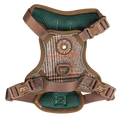
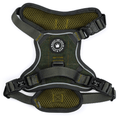
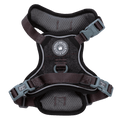
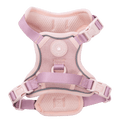
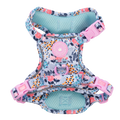
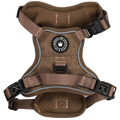
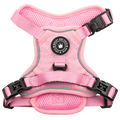


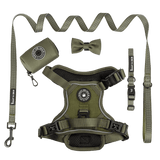




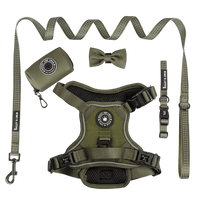

If your dog's harness is rubbing under their front legs, the cause is usually the fit: a chest strap sitting too far forward in the armpit, straps that are too loose and move around, straps that are too tight, or a harness in the wrong size. Wet or muddy straps and tangled fur under the legs can add to it. Check and adjust the fit, keep the harness clean and dry, and if the skin looks sore, broken or bald, stop using the harness and speak to your vet.
Here's how to work out what's causing the rubbing and what to change.

Signs a harness is rubbing
Check under your dog's front legs and around the chest after a walk, especially with a new harness. Things to look out for:
- Flattened, broken or thinning fur where the straps sit
- Pink or red skin under the legs or across the chest
- Knots or matted fur along the strap line
- Your dog licking or nibbling under their front legs after walks
- Your dog walking a little stiffly, or seeming reluctant to have the harness put on
These are signs to look more closely at the fit. They aren't a diagnosis, and if you see sore, broken or bald skin, or your dog seems uncomfortable, please speak to your vet.
Common causes and what to try
| Likely cause | What you might notice | What to try |
|---|---|---|
| Chest strap too far forward | The strap sits tight in the armpit and moves with every step | Adjust so the chest strap sits a little way behind the front legs, not in the armpit |
| Straps too loose | The harness slides or twists as your dog walks | Tighten until two fingers slide under each strap without forcing |
| Straps too tight | Marks on the coat, and you can't fit two fingers under a strap | Loosen a little at a time and check again |
| Wrong size | Adjusters right at the end of their range, or the harness sits oddly on your dog's shape | Re-measure neck and chest, and check them against the size chart |
| Wet, muddy or gritty straps | Rubbing shows up after wet or muddy walks | Let the harness dry between walks and wash off mud and grit |
| Tangled coat under the legs | Knots or mats along the strap line | Brush the area under the front legs regularly, gently |
How to check the fit, step by step
- Measure first. Measure around the base of your dog's neck, where a collar would usually sit, and around the widest part of the chest, just behind the front legs. Compare both with the harness size chart. Sizes are a general guideline, as individual dogs vary.
- Put the harness on with your dog standing. Then look at it from the side: the chest strap should sit behind the front legs, with room for the legs to move freely.
- Do the two-finger check. Two fingers should slide under every strap without forcing them.
- Watch your dog walk. The harness should stay put. If it slides sideways, rides up into the armpits or twists, adjust and try again.
- Re-check after a short walk. Look under the front legs before you head out for a longer one.
Our measuring and fitting video shows how the straps should sit, and our guide on how to measure a dog for a harness has more detail.
Adjusting a 3-buckle harness
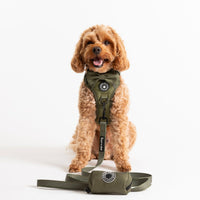
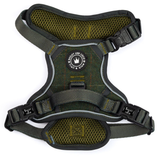
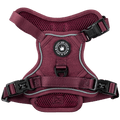
Our Trail & Glow harnesses have three buckles: a lockable clasp on the neck strap and two on the chest strap. The neck and chest straps adjust separately, which helps when your dog's shape doesn't match a standard chart. A few tips:
- Make small changes to one strap at a time, then check the fit again.
- Keep the two sides of the chest strap even, so the harness sits centrally.
- Check that strap ends are tucked in and buckles aren't sitting right in the armpit.
- Re-check the fit every so often. Coats change through the year and young dogs keep growing.

Keep the harness clean and dry
Mud and grit trapped in the straps, or a harness that's put back on while still wet, can make rubbing more likely. Our Trail & Glow harnesses have a breathable, quick-dry mesh lining, but it's still worth letting the harness dry fully between walks. When it needs a wash, wash it on a cool wash, ideally inside our laundry bag.
Feathered coats and long, low dogs
Dogs with long or feathered fur under the front legs can get knots where the straps sit, so a gentle brush of that area after walks helps. Long-backed, short-legged dogs can also be tricky to fit, because the chest strap sits close to the front legs. If you have a Dachshund, our guides on measuring a Dachshund for a harness and harnesses for Miniature Dachshunds go into this in detail.
If it's a collar rather than a harness that's causing trouble, see our guide to a dog collar rubbing fur.
When to see your vet
Stop using the harness and speak to your vet if you notice sore, broken or bleeding skin, bald patches, swelling, or your dog keeps licking or scratching the area, or if the problem carries on after you've adjusted the fit. Skin problems can have other causes, so it's worth getting them checked rather than guessing.
Quick questions
Where should a harness sit under the front legs?
The chest strap should sit a little way behind the front legs, not pressed up into the armpit, with room for the legs to move freely.
How tight should a dog harness be?
Snug but not tight. You should be able to slide two fingers under every strap without forcing them.
Should I size up if the harness rubs?
Not automatically. A harness that's too big can move around and rub too. Re-measure your dog's neck and chest and check them against the chart before changing size.