




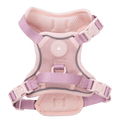
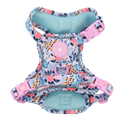
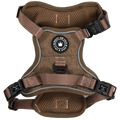
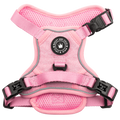









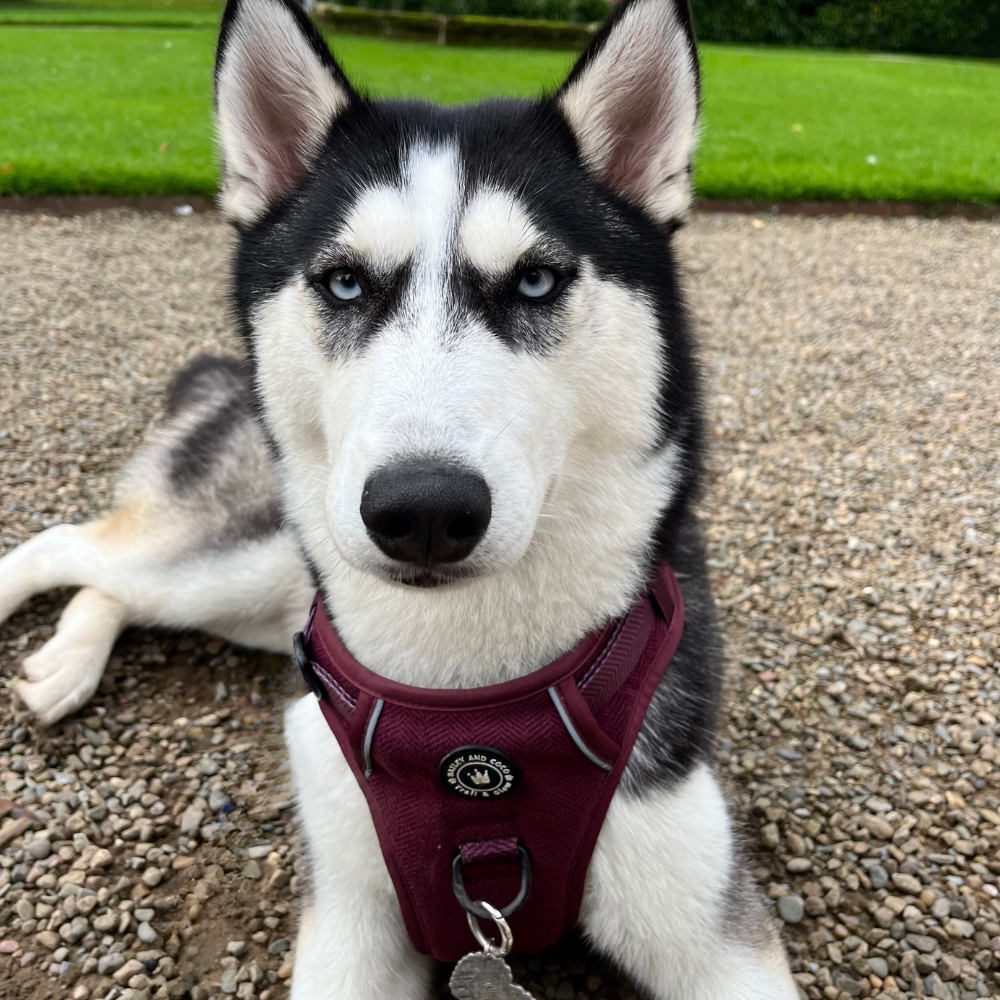
If you share your life with a Siberian Husky, you already know the score. These magnificent, dramatic, gloriously stubborn dogs were literally bred to pull sleds across frozen tundra for hours on end. That means every single walk is a negotiation between your shoulder joints and 25kg of pure, focused power. A flimsy harness simply will not cut it. You need the strongest, most escape-proof harness you can find, and you need it to fit a dog whose coat thickness changes with the seasons.
This guide is written specifically for Husky owners in the UK. We will cover exactly what to look for in a husky harness, how to get the sizing right (even when they blow their coat), and why the Trail & Glow harness has become a favourite among Husky owners who are tired of replacing gear every few months.
Why Huskies Need the Strongest Harness You Can Find
Let's be blunt: Huskies are the strongest pullers of all domestic dog breeds. This is not a training failure. It is genetics. For thousands of years, these dogs were selectively bred to lean into a harness and pull with everything they have. When your Husky locks onto a squirrel across the park and launches forward, they are doing exactly what their DNA tells them to do.
That pulling force puts enormous strain on equipment. Cheap harnesses with thin webbing, plastic buckles, and single-stitch construction will fail. We have heard countless stories from Husky owners whose dogs have snapped buckles mid-walk, worn through stitching in weeks, or simply reversed out of a poorly fitted harness and bolted.
Then there is the escape artist problem. Huskies are notorious for it. They can back out of a standard harness with alarming ease, twisting their shoulders and ducking their heads in a move that would impress Houdini. If you have ever experienced that heart-stopping moment of seeing your Husky running free near a road, you understand why escape-proof design is not optional. It is essential. If you also own a Shiba Inu, you will recognise this talent; our Shiba Inu harness guide covers a similarly escape-prone breed.
A proper Siberian Husky harness needs to tick three boxes: industrial-strength materials, a secure fit that prevents backing out, and a design that distributes pulling force safely across the chest rather than concentrating it on the throat.
What to Look for in a Husky Harness
Not all harnesses are created equal, and what works for a Cockapoo will not survive a week on a Husky. Here is what matters most when choosing a harness for this breed.
Dual Clip Points (Front and Back)
A no-pull harness with a front clip redirects your Husky's forward momentum back towards you, making pulling less rewarding for them. A back clip gives you a secure attachment point for everyday walks. The best husky harnesses offer both, letting you choose based on the situation. Front clip for training walks; back clip for relaxed rambles.
Heavy-Duty Hardware
Zinc alloy or stainless steel D-rings are non-negotiable. Plastic D-rings will snap under the force a Husky generates. Every buckle, clip, and adjustment point needs to be robust enough to handle sustained, powerful pulling without bending, cracking, or popping open.
Wide, Padded Chest Plate
A wide chest plate distributes pulling force across a larger area, reducing pressure points. This is especially important for Huskies because they pull constantly and with considerable power. Narrow straps will dig in and cause chafing, particularly under the front legs where the coat is thinner.
Escape-Proof Fit
Look for a harness with multiple adjustment points. A Husky's chest is deep and their waist is narrow, which creates the perfect body shape for backing out of poorly designed harnesses. You need adjustable straps at both the chest and the girth to get a snug, secure fit that they cannot wriggle free from.
A Sturdy Grab Handle
A harness with a strong grab handle on the back is invaluable for Husky owners. When your dog spots a cat and tries to launch into orbit, a well-placed handle gives you instant physical control. It is also essential for helping them in and out of the car, over stiles, or through any situation where you need to guide 25kg of determined Husky.
Breathable, Weather-Resistant Materials
Huskies have a thick double coat that traps heat. In UK summers, overheating is a genuine concern. Your harness should use breathable padding that does not add unnecessary insulation against all that fur. Equally, it needs to handle rain, mud, and the general dampness of British walking conditions without falling apart.
Reflective Details
UK winters mean short days and dark walks. Reflective stitching or strips on the harness keep your Husky visible during early morning and late afternoon outings, which accounts for most of the walking hours between October and March.
Trail & Glow: Why It Works for Huskies
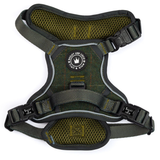
The Trail & Glow harness was designed with strong, powerful breeds firmly in mind. Here is why it has become a go-to choice for Husky owners across the UK.
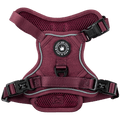
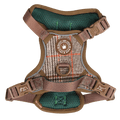
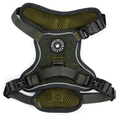
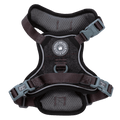
Dual D-Ring Clips: Front and rear attachment points give you flexibility. Use the front clip for no-pull training and the rear clip for general walks. Many Husky owners use both simultaneously with a double-ended lead for maximum control during reactive moments.
Zinc Alloy Hardware Throughout: Every D-ring, buckle, and adjustment slider is zinc alloy. No plastic components anywhere in the load-bearing structure. This harness is built to handle the sustained pulling force that Huskies produce on every single walk.
Wide Padded Chest Plate: The generous chest plate spreads force across your Husky's chest, preventing the pressure points and chafing that narrower harnesses cause. The padding is firm enough to maintain its shape under load but soft enough to sit comfortably against the coat.
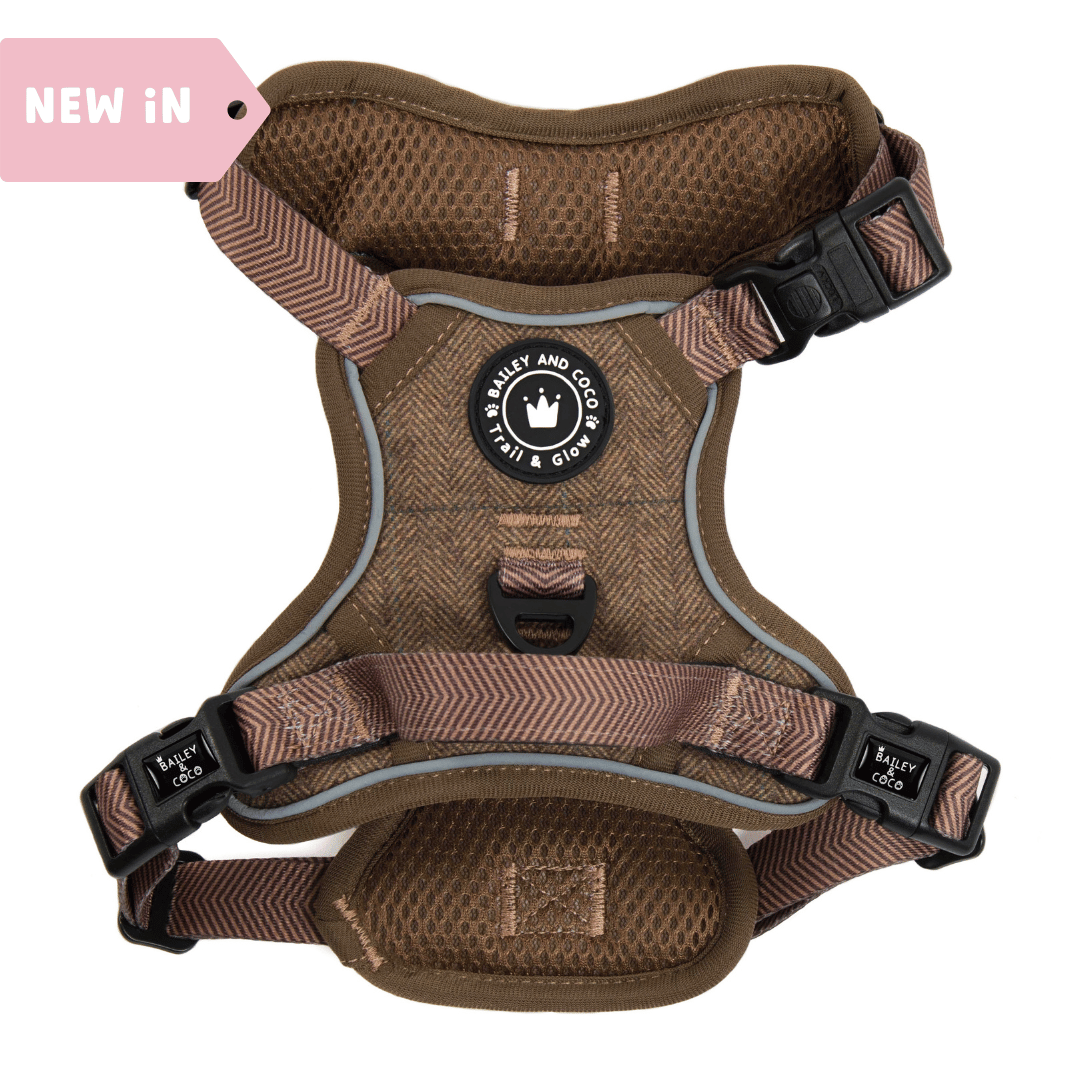
Four Adjustment Points: Adjustable at both the neck and the girth on each side, giving you precise control over the fit. This is critical for Huskies because their deep chest and narrow waist combination requires careful adjustment to prevent escape. You can also easily adjust the fit when seasonal coat changes alter their measurements.
Reinforced Grab Handle: The padded top handle is stitched with reinforced bar-tacking, strong enough to physically restrain a lunging Husky. This is not a decorative feature; it is a genuine control tool that you will use regularly.
Breathable Oxford Fabric: The outer fabric is tough and weather-resistant while allowing airflow, which is important for a breed that already carries its own built-in fur coat. It dries quickly after rain and resists the mud that is an inevitable part of UK dog walking.
Reflective Stitching: Integrated reflective elements keep your Husky visible on dark winter walks without relying on separate clip-on lights.
For more detail on what makes a quality harness, our dog harness buying guide covers the full breakdown.
Husky Harness Size Guide
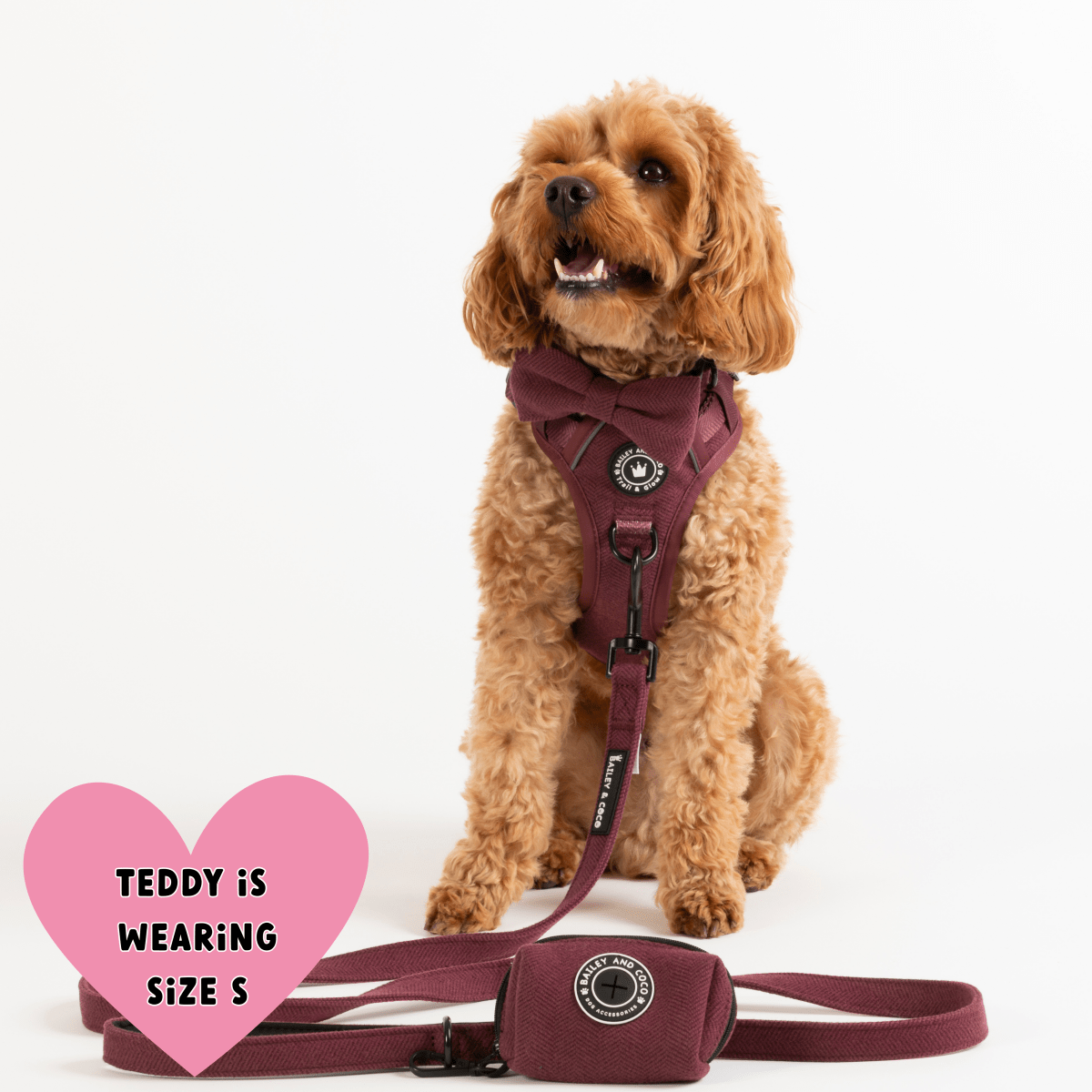
Getting the size right is arguably the most important step, and with Huskies, it is more complicated than most breeds because their coat thickness changes dramatically through the year. Most adult Siberian Huskies will fit a Size L or XL in the Trail & Glow harness, but you must measure rather than guess.
How to Measure Your Husky
You need two measurements, both taken with a soft fabric tape measure:
- Chest girth: Measure around the widest part of the ribcage, just behind the front legs. Keep the tape snug but not tight; you should be able to slide two fingers underneath.
- Neck girth: Measure around the base of the neck, where a collar would naturally sit.
Important for Huskies: If your dog is mid-way through blowing their coat, measure again once the new coat has come in. The difference can be 2 to 5cm on the chest girth alone, which can shift them between sizes or require significant strap adjustment.
Trail & Glow Size Chart for Huskies
| Size | Chest Girth (cm) | Typical Husky Fit | Coat Notes |
|---|---|---|---|
| M | 40–71 cm | Small females (rare) | Only if underweight or very petite |
| L | 55–83 cm | Most females, smaller males | Good year-round for average females; males may need XL in full winter coat |
| XL | 71–99 cm | Most males, larger females | Best choice for males year-round; allows room for full winter coat |
Pro tip: If your Husky measures right at the boundary between L and XL, go with the XL. The four adjustment points give you plenty of room to tighten, and you will appreciate the extra allowance when winter coat comes in thick.
Harness vs Collar for Huskies
This is not even a debate for this breed. A collar on a pulling Husky is a recipe for tracheal damage, and Huskies pull harder than almost any other breed you will encounter. Here is the direct comparison. For a deeper dive, read our full collar vs harness guide.
| Feature | Collar | Harness (Trail & Glow) |
|---|---|---|
| Pulling pressure | Concentrates on throat and neck | Distributes across chest and shoulders |
| Escape risk | High; Huskies easily back out | Low; multi-point adjustment prevents escape |
| Trachea safety | Risk of damage with sustained pulling | No throat pressure at all |
| Control over pulling | Minimal; dog can still lean and pull | Front clip redirects pulling; handle for emergencies |
| Physical control | No grab point | Reinforced grab handle on back |
| For Huskies specifically | Not recommended for walks | Essential for safe, controlled walking |
Our recommendation: Use a harness for every walk, every time. A collar is still useful for carrying ID tags and for moments when your Husky is off-lead in a secure area, but it should never be the primary attachment point for a lead on a breed this powerful.
Escape-Proofing: How to Keep a Husky Secure
Huskies do not escape because they are badly trained. They escape because they are intelligent, independent, and have a prey drive that can override every recall command you have ever taught. When a Husky decides it wants to be somewhere else, it will find a way. Your job is to make escape as difficult as possible.
The Two-Finger Check
Every single time you put the harness on, slide two fingers under each strap. You should be able to fit them in, but just barely. Too loose and your Husky will back out. Too tight and you risk chafing, especially under the front legs. With a breed that changes coat thickness seasonally, this check needs to become a daily habit rather than a one-time setup.
Front Clip Engagement
Attaching the lead to the front D-ring makes escape harder because any backward movement tightens the harness rather than loosening it. When a Husky tries to reverse out, the front attachment actually pulls the harness snugger against their chest. This is why a no-pull harness is doubly valuable for this breed: it reduces pulling and makes escape attempts self-defeating.
Double-Ended Lead Setup
For maximum security, use a double-ended lead clipped to both the front and rear D-rings. This creates two independent attachment points, meaning your Husky would need to free themselves from both simultaneously. Many experienced Husky owners consider this setup essential rather than optional.
Collar as Backup
Even with an escape-proof harness, keep a collar on your Husky as a backup attachment point. If the worst happens and they somehow free themselves from the harness, the collar with an ID tag gives you a second chance. Some owners clip a lightweight backup lead to the collar as well, particularly in high-risk environments like near roads or around livestock.
Post-Coat-Blow Refit
This catches many Husky owners out. Your dog blows their coat in spring and suddenly the harness that was perfectly snug all winter is now loose. A loose harness on a Husky is an escape waiting to happen. Mark your calendar for a full refit in late spring and again in autumn when the winter coat grows back.
Seasonal Considerations for Husky Owners in the UK
Huskies were bred for Arctic conditions, which makes UK weather an interesting challenge. Our climate is rarely cold enough for them and occasionally too warm.
Spring and Summer (March to September)
Overheating is the biggest risk. Huskies have a dense double coat designed to insulate against temperatures of minus 50 degrees Celsius. British summers at 25 to 30 degrees can genuinely be dangerous for them. Walk early in the morning or late in the evening, keep sessions shorter, and make sure your harness is breathable rather than adding extra insulation against all that fur.
Spring is also coat-blowing season. Expect tumbleweeds of fur and a significant change in body measurements. Recheck your harness fit weekly during heavy shedding periods.
Autumn and Winter (October to February)
This is when your Husky comes alive. Cold, crisp walks are their absolute favourite, and you will notice a visible increase in energy and enthusiasm. The winter coat grows in thick, potentially pushing your harness fit towards the top of the size range. If you are wondering whether it is too cold for your dog, our guide on how cold is too cold to walk your dog has the full breakdown, though spoiler: for a Husky, it is almost never too cold in the UK.
Dark evenings make reflective harness features essential. You will be doing the majority of your walks in low light or complete darkness for roughly five months of the year. The Trail & Glow's reflective stitching helps, but consider adding a clip-on LED light to the harness for maximum visibility.
Wet Weather
It rains in the UK. Frequently. Your Husky will not care, but your harness needs to handle constant moisture without degrading. Look for quick-drying materials and hardware that resists rust. Give the harness a good rinse and air dry after particularly muddy walks to keep the padding fresh and prevent odour build-up.
Complete the Look
Once your Husky is kitted out with the right harness, there are a few complementary pieces worth considering to complete the setup.
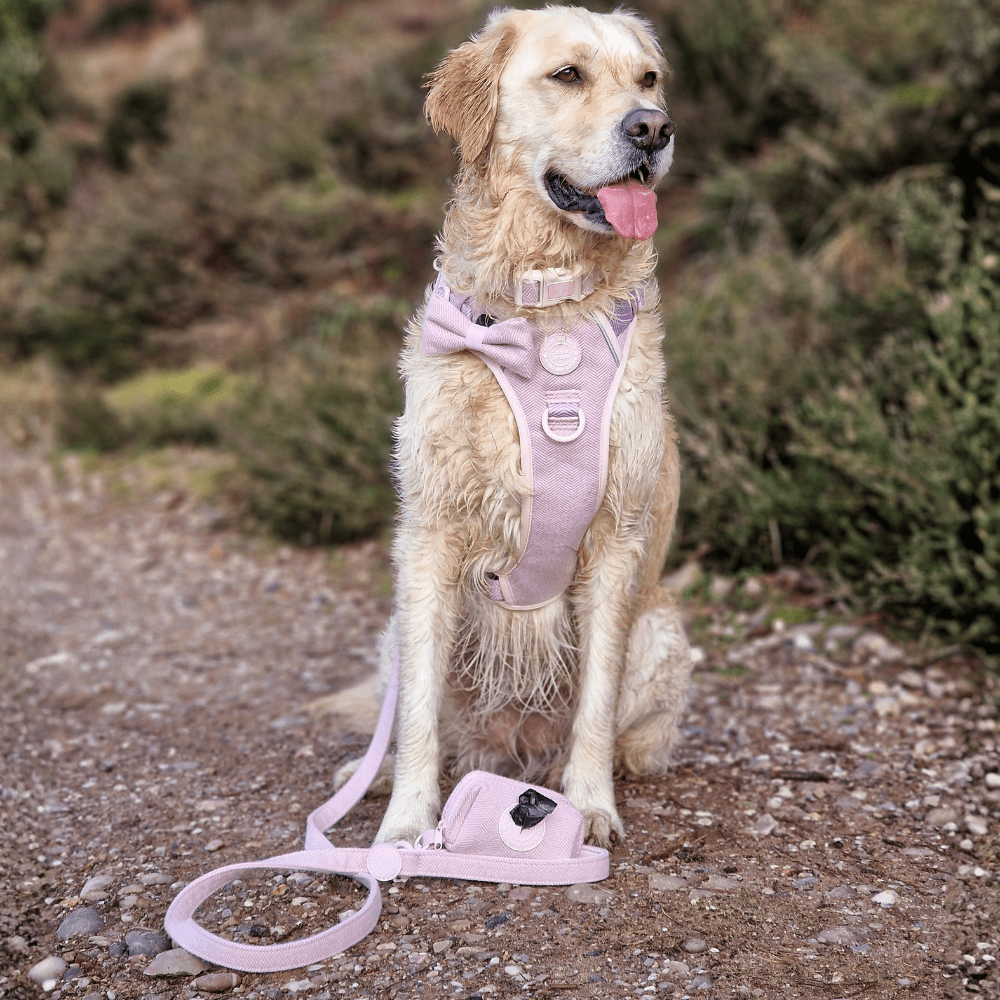
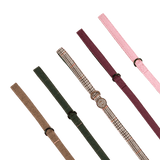
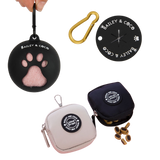
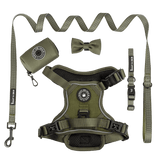
Matching Lead: A strong, padded dog lead that matches your harness makes the daily walk feel more put together. For Huskies, choose a lead with a padded handle; your hands will thank you during those moments when the pulling is at full intensity.
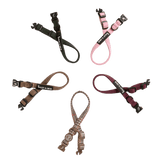
Collar for ID: A quality collar carries your Husky's ID tags and serves as a backup attachment point. It does not need to be heavy-duty since it is not bearing the pulling force, but it should be secure enough that your dog cannot slip it.
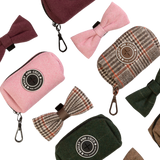
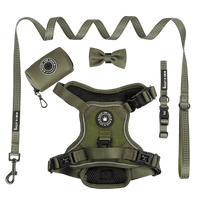
Bow Tie: Because even a dog that looks like a wolf deserves to look dapper. Our dog bow ties clip onto any collar and are surprisingly popular with Husky owners who want their dramatic fluffball to stand out at the park.
Bundles: Save on the full kit by picking up a harness and lead bundle. Matching sets look sharp, and bundling saves you a few pounds compared to buying everything separately. For a large breed like the Husky, also check out our Labrador harness guide for more large-breed sizing insights.
Frequently Asked Questions
What size harness does a Husky need?
Most adult Siberian Huskies need a Size L or XL harness. Females typically fit a Large (chest girth 55 to 83cm), while males usually need an Extra Large (chest girth 71 to 99cm). Always measure your individual dog rather than guessing, and remember that seasonal coat changes can shift measurements by 2 to 5cm. If your Husky falls between sizes, size up and use the adjustment straps to fine-tune the fit.
Can Huskies escape from a harness?
Yes, Huskies are notorious escape artists and can back out of poorly fitted harnesses with ease. To prevent escape, choose a harness with multiple adjustment points (the Trail & Glow has four), perform the two-finger fit check before every walk, and consider using a front clip attachment which tightens the harness if the dog tries to reverse out. A double-ended lead clipped to both front and rear D-rings provides the most secure setup.
Is a harness better than a collar for a Husky?
A harness is significantly better than a collar for walking a Husky. Huskies are the strongest pulling breed, and a collar concentrates all that force on the throat and trachea, risking serious injury. A harness distributes the pulling force across the chest and shoulders, provides better control through front clip attachment, and includes a grab handle for emergency situations. Keep a collar on for ID tags, but always walk with a harness.
How do I stop my Husky pulling on the lead?
A no-pull harness with a front clip is the most effective tool. When the lead attaches to the front D-ring, any pulling causes your Husky to be redirected back towards you, making the pulling action self-correcting. Combine this with consistent training, reward-based methods, and patience. Huskies were bred to pull, so you are working against strong instincts. The goal is management and gradual improvement rather than complete elimination of pulling behaviour.
Do Huskies need a different harness in summer and winter?
You do not necessarily need two separate harnesses, but you do need to adjust the fit seasonally. Huskies blow their thick undercoat in spring, which can reduce chest measurements by 2 to 5cm. When the winter coat grows back in autumn, measurements increase again. Check the fit weekly during heavy shedding periods and readjust the straps accordingly. A harness with multiple adjustment points, like the Trail & Glow, accommodates these seasonal changes within a single size.
Are Huskies too hot in UK summers?
Huskies can absolutely overheat in UK summers. Their double coat is designed for Arctic temperatures, and anything above 20 degrees Celsius requires caution. Walk early in the morning or late in the evening, provide constant access to water, and watch for signs of heat stress such as excessive panting, drooling, or lethargy. Choose a breathable harness that does not add extra insulation, and never shave a Husky's coat as the double coat actually provides some protection from both cold and heat.
What is the best harness for a Husky puppy?
For Husky puppies, start with a well-fitting harness in Size S or M depending on their age, and be prepared to size up frequently. Husky puppies grow rapidly, often reaching adult size by 12 to 15 months. The Trail & Glow's four adjustment points give you some room to grow, but you will likely go through two or three sizes before settling on their adult fit. Getting puppies comfortable with a harness early makes the transition to adult gear much smoother, especially since Huskies can be stubborn about new equipment.


