













Quick Answer
The best dog harness for most UK owners is a back-clip Y-shape harness with adjustable chest and neck straps. It distributes pressure evenly, avoids the throat entirely and works for daily walks, car travel and training. If your dog pulls, a dual-clip harness with a front D-ring gives you steering control without discomfort. Always measure your dog's chest girth before ordering and choose a harness with at least two adjustment points for a secure, escape-proof fit.
Choosing a dog harness used to be simple. You walked into a pet shop, picked one off the shelf and hoped for the best. Today there are step-in harnesses, over-the-head harnesses, no-pull harnesses, Y-shapes, H-shapes, vests, and more. Each claims to be the best. Most are not.
This guide cuts through the noise. We have tested harnesses across small, medium and large breeds, spoken with dog trainers and veterinary professionals, and compared every harness type available in the UK market. Whether you own a Dachshund who wriggles out of everything, a Labrador who pulls like a freight train, or a French Bulldog who overheats on warm days, you will find the right harness here.
We cover harness types, sizing, materials, breed-specific recommendations and UK law. By the end, you will know exactly what to look for and what to avoid.

What We Cover
Types of Dog Harness
Not all harnesses are built the same way. The design determines where pressure sits, how much control you have, and whether your dog finds it comfortable or fights against it. Here are the six main types you will find in the UK.
Step-In Harness
Your dog steps into two loops on the ground and you clip the harness together on the back. Step-in harnesses are popular with small breeds and dogs who dislike anything going over their head. They are the easiest type to put on, which makes them a good choice for anxious dogs or owners with limited mobility who find fiddly buckles difficult.
The downside is security. Step-in harnesses have fewer adjustment points than other designs and can shift sideways during walks if the fit is not snug. They also tend to offer less control for dogs that pull. Best suited to calm, smaller dogs who walk well on a lead and do not need anti-pull training.
Over-the-Head Harness
The neck loop goes over the dog's head, then a strap wraps around the chest and clips at the side or underneath. This is the most common design in the UK and offers a good balance of security and ease of use. Most over-the-head harnesses have more adjustment points than step-in designs, making them more adaptable to different body shapes.
Some dogs resist having anything pulled over their head. If yours does, try holding a treat on the other side of the neck loop so they step forward through it willingly. Within a few days, most dogs learn to associate the harness with walks and push their head through eagerly.
Y-Shape Harness
Named after the Y-shaped strap pattern on the dog's chest, this design avoids placing any pressure across the throat or shoulders. The Y-shape is widely recommended by canine physiotherapists because it allows full range of shoulder movement. If your dog is active, growing, or has a history of neck or back issues, a Y-shape harness is the safest choice.
No-Pull (Front-Clip) Harness
A no-pull harness features a D-ring on the chest as well as on the back. When you attach the lead to the front clip, any forward pulling redirects the dog's momentum to the side, naturally discouraging pulling without causing pain. This is a mechanical solution, not a punishment. The dog simply learns that pulling does not get them where they want to go faster.
Dual-clip harnesses give you the flexibility to use front-clip for training and back-clip for relaxed walks. This versatility makes them the most popular choice among professional UK dog trainers and behaviourists. For a detailed breakdown, see our complete guide to no-pull dog harnesses.
Vest or Padded Harness
Vest harnesses cover a larger area of the dog's chest and back with padded fabric. They distribute pressure over the widest possible surface area, making them ideal for dogs recovering from surgery, elderly dogs, or breeds with delicate frames. The trade-off is breathability. In warm weather, a vest harness can trap heat, particularly on flat-faced breeds who already struggle to regulate temperature.
Head Halter
Worth mentioning because people often confuse it with a harness. A head halter loops around the dog's muzzle and clips under the chin. It is not a harness and not a muzzle. It works by controlling the dog's head direction but requires careful fitting and training to use safely. Most UK dog trainers now prefer front-clip harnesses over head halters for pulling issues.
| Harness Type | Best For | Control Level | Ease of Use | Pulling Dogs? |
|---|---|---|---|---|
| Step-In | Small, calm dogs | Low to moderate | Very easy | No |
| Over-the-Head | Most breeds | Moderate | Easy | Moderate pullers |
| Y-Shape | Active dogs, puppies, sensitive necks | Moderate to high | Easy | With front clip |
| No-Pull (Front-Clip) | Pullers, training | High | Moderate | Yes |
| Vest / Padded | Small breeds, elderly dogs | Low to moderate | Easy | No |
| Head Halter | Strong pullers (with training) | Very high | Requires training | Yes (not a harness) |
Harness vs Collar: When to Use Which
This is one of the most common questions UK dog owners ask, and the answer is rarely one or the other. Most experienced owners use both.
A collar is essential for carrying ID tags. Under the Control of Dogs Order 1992, every dog in a public place in England, Scotland and Wales must wear a collar with the owner's name and address. A harness does not satisfy this legal requirement on its own.
A harness is better for walking because it removes pressure from the neck. This matters especially for breeds prone to tracheal collapse (Yorkies, Pomeranians, Chihuahuas), brachycephalic breeds who already have restricted airways (Pugs, French Bulldogs, Bulldogs), puppies whose bones and joints are still developing, and any dog that pulls.
There is also a practical argument for using both. Under the Dangerous Dogs Act 1991, certain breeds and breed types must be kept on a lead and muzzled in public places. For these dogs, a harness provides far more secure control than a collar alone. Even for breeds not covered by the Act, many local councils enforce Public Spaces Protection Orders (PSPOs) requiring dogs to be on leads in specific areas. A harness ensures your dog cannot slip free in these situations.
The ideal setup for most UK owners is a flat collar for ID tags worn at all times, paired with a harness for walks and outdoor activities. This combination satisfies the law, protects your dog's health, and gives you the control you need in any environment. For a full comparison, read our detailed dog collar vs harness guide.
Top Tip
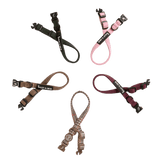
Most experienced dog owners keep both a collar and a harness. Use the collar for ID and the harness for walks. A matching harness and collar set keeps your dog looking smart while covering both bases.
How to Measure Your Dog for a Harness
A poorly fitting harness is worse than no harness at all. Too loose and your dog can wriggle free. Too tight and it restricts movement, causes chafing and makes walks miserable. Here is how to get it right.
Step 1: Measure the neck. Wrap a soft tape measure around the base of your dog's neck, where the collar would normally sit. You should be able to fit two fingers between the tape and the skin.
Step 2: Measure the chest girth. This is the most important measurement. Wrap the tape around the widest part of your dog's ribcage, just behind the front legs. Again, leave room for two fingers.
Step 3: Measure the back length (optional). Some harnesses require the distance from the base of the neck to the base of the tail. This is more common with vest-style harnesses.
Step 4: Check the size chart. Every harness brand uses different sizing. Never assume that a "Medium" in one brand matches a "Medium" in another. Always refer to the specific size chart. If you are ordering online, take measurements twice on different days to confirm consistency. Dogs can puff up their chest when excited, which can give a slightly larger reading than their resting size.
Step 5: Try the two-finger test. Once the harness is on, slide two fingers under every strap. If you cannot fit two fingers, the harness is too tight. If you can fit three or more fingers easily, it is too loose. The straps should sit flat against the body without twisting, and the chest plate should sit centred on the breastbone, not shifted to one side.
| Size | Neck (cm) | Chest (cm) | Typical Breeds |
|---|---|---|---|
| XXS | 20 - 29 | 22 - 41 | Chihuahua, Yorkie, Mini Dachshund, small puppies |
| XS | 24 - 34 | 26 - 50 | Chihuahua, Yorkshire Terrier, Miniature Dachshund |
| S | 30 - 45 | 35 - 66 | Pug, French Bulldog, Cockapoo, Shih Tzu |
| M | 35 - 50 | 40 - 71 | Cocker Spaniel, Beagle, Whippet, Border Collie |
| L | 40 - 60 | 55 - 83 | Labrador, Golden Retriever, Staffordshire Bull Terrier |
| XL | 55 - 83 | 71 - 99 | German Shepherd, Rottweiler, Husky, Bernese Mountain Dog |
Common Sizing Mistakes
Do not measure over thick fur without pressing the tape gently against the body. Do not size up "just in case" without checking the adjustment range. A harness that is one size too big will slide, chafe, and allow your dog to back out of it. If your dog falls between two sizes, choose the larger size only if the harness has enough adjustment points to tighten it down securely.
For breed-specific sizing advice, check our individual guides for Dachshunds, Cockapoos and Labradors.
What to Look for in a Quality Harness
Price alone does not tell you whether a harness is well made. Here are the six features that separate a quality harness from one that falls apart after a month.
Adjustability
A good harness should have at least two adjustment points, one at the neck and one at the chest. Three or four adjustment points are even better. More adjustment means a more precise fit, which means better comfort and security.
Why does this matter so much? Every dog's body is different, even within the same breed. A Labrador with a deep chest needs different strap lengths from a Labrador with a broader, stockier build. A harness with four adjustment points lets you fine-tune the fit until it sits perfectly on your individual dog, rather than relying on a "one shape fits all" approach. Avoid harnesses with fixed sizing and no room for fine-tuning. They are cheaper to manufacture but far more likely to cause discomfort or allow escape.
Padding and Comfort
Look for padding on the chest plate and any area where straps cross the body. Padding prevents rubbing and distributes pressure more evenly. Breathable mesh lining is a bonus, particularly for dogs who walk in warm weather or exercise heavily.
Hardware Strength
The D-ring, buckles, and clips take the full force of your dog's pulling. Zinc alloy or stainless steel hardware outlasts plastic. Check that the D-ring is welded shut rather than pressed together. A pressed D-ring can open under sustained force from a strong dog.
Reflective Elements
In winter, most UK dog walks happen in low light or complete darkness. Between November and February, the average UK dog owner walks in the dark for at least one of their daily walks. Reflective stitching or strips on the harness dramatically improve your dog's visibility to cyclists, drivers, and other pedestrians. Combined with a reflective lead, your dog becomes visible from over 100 metres away when car headlights hit the reflective material.
This is not a luxury feature. It is a safety essential for British conditions. Even if you walk in well-lit urban areas, reflective harness elements provide peace of mind on darker side streets, in parks, and during early morning or late evening walks.
Control Handle
A grab handle on the back of the harness gives you instant control in unpredictable situations. Whether you are lifting a small dog over a stile, guiding a reactive dog past another animal, or helping an elderly dog into the car, a sturdy handle makes life easier. Look for padded handles that sit flat when not in use.
Front and Back D-Rings
Dual D-rings give you the most flexibility. Clip to the back for relaxed walks and to the front for training or anti-pull work. If a harness only has a back clip, you lose the ability to redirect pulling behaviour. A front-clip-only harness can cause uneven gait over time if used exclusively, as the sideways redirect creates a slightly asymmetric walking pattern.
Dual-clip is the best of both worlds and the configuration most recommended by professional dog trainers. As your dog's lead walking improves, you can transition from front clip to back clip without buying a new harness. It also means you can use a double-ended lead clipped to both D-rings simultaneously for maximum control with reactive or unpredictable dogs.

Harness Materials Compared
The material your harness is made from affects durability, comfort, breathability, and how easy it is to clean. In the UK, where rain is a near-constant companion for dog walkers, material choice also determines how quickly your harness dries, whether it develops an odour, and how it holds up after hundreds of muddy walks. Here is how the most common UK harness materials stack up.
| Material | Durability | Comfort | Breathability | Easy to Clean | Best For |
|---|---|---|---|---|---|
| Nylon | High | Moderate | Good | Easy (machine wash) | Everyday walks, active dogs |
| Mesh | Moderate | High | Excellent | Easy (hand wash) | Warm weather, small breeds |
| Tweed | High | High (padded lining) | Good | Gentle machine wash | Style-conscious owners, all seasons |
| Neoprene | High | High | Moderate | Wipe clean | Water dogs, beach walks |
| Biothane | Very high | Moderate | Good | Wipe clean, waterproof | Muddy walks, rainy UK weather |
Top Tip
Consider owning two harnesses: a durable, easy-clean option for muddy winter walks and a smarter harness for dry days, pub visits, and social outings. A tweed harness paired with a waterproof option covers every UK weather scenario. See our water resistant vs waterproof dog gear guide for more on material performance.
Best Dog Harnesses by Breed Type
Different breeds have different body shapes, and what works beautifully on a Labrador can be a disaster on a Dachshund. Here is what to look for based on your dog's build.
Barrel-Chested Breeds (Bulldogs, Staffies, Pugs)
Barrel-chested dogs have wide, deep chests relative to their neck. Standard harnesses often ride up towards the throat or sit too loose around the chest. Look for a harness with a wide chest plate and generous chest adjustment. A Y-shape design works particularly well because it sits around rather than across the chest. Avoid step-in harnesses, as the flat design can shift on a barrel chest.
English Bulldogs, Staffordshire Bull Terriers and Pugs all benefit from harnesses with breathable lining, as these breeds overheat more easily than most. Pay close attention to the width of the chest strap. A narrow strap can dig into the skin folds common on barrel-chested breeds, causing irritation over time. Wider, padded straps distribute pressure more comfortably.
Deep-Chested Breeds (Greyhounds, Whippets, Lurchers)
Sighthounds have narrow, deep chests and slim necks. Most harnesses designed for "medium" dogs are too wide and not deep enough for a sighthound's unique proportions. The harness should sit well behind the front legs and the neck opening must be snug enough that the dog cannot reverse out. Sighthounds are notorious escape artists, particularly Whippets, who can flatten their ears and slip backwards out of a loose harness in seconds.
A Y-shape or over-the-head design with multiple adjustment points gives the best fit. Look for harnesses specifically noted as suitable for narrow-chested breeds. Avoid vest harnesses, which tend to be too bulky for sighthound proportions and can restrict the long, flowing stride these breeds are built for.
Long-Backed Breeds (Dachshunds, Corgis, Basset Hounds)
Long-backed breeds are at higher risk of spinal injuries, making harness choice critical. A harness that distributes pressure across the chest rather than concentrating it on the spine is essential. Y-shape harnesses keep the weight off the back. The harness should not extend too far down the dog's back, as this can interfere with hip movement. Size Extra Small or Small typically fits standard Dachshunds. Read our full Dachshund harness guide for detailed sizing.
Flat-Faced Breeds (Pugs, French Bulldogs, Shih Tzus)
Brachycephalic breeds have shortened airways and struggle to breathe efficiently. A collar puts direct pressure on the trachea, which can worsen breathing difficulties. A harness is not optional for these breeds. It is a medical recommendation from most UK veterinary practices. Choose a harness with no pressure on the neck at all, ideally a Y-shape with the connection point well below the throat. Breathability matters here. Mesh-lined harnesses with good airflow help prevent overheating, which brachycephalic breeds are already prone to.
Large and Strong Breeds (Labradors, German Shepherds, Rottweilers)
Large dogs generate serious force when they pull. A 30kg Labrador at full tilt can exert over 40kg of pulling force, enough to snap cheap plastic buckles and bend pressed D-rings. For these breeds, hardware quality matters above all else. Look for welded D-rings, reinforced stitching at all stress points, and heavy-duty zinc alloy or stainless steel buckles.
A dual-clip harness is strongly recommended so you can use the front clip for anti-pull training and the back clip for general walks. A sturdy back handle is also useful for guiding a large dog in close quarters, lifting them into the car, or holding them steady at road crossings. Make sure the harness has broad, padded straps rather than narrow webbing, as narrow straps concentrate force and can dig into the skin during sustained pulling. For detailed advice, see our Labrador harness guide.
Small and Toy Breeds (Chihuahuas, Yorkshire Terriers, Papillons)
Small dogs have delicate tracheas that are easily damaged by collar pressure. Tracheal collapse is one of the most common health issues in toy breeds, and using a collar for lead walking significantly increases the risk. A lightweight harness with soft padding is essential for these dogs.
Step-in harnesses work well for small breeds because they are easy to put on wriggly little dogs. Make sure the harness is genuinely designed for toy breeds and not just a scaled-down version of a large dog harness. The straps should be proportionally narrow and the hardware should be lightweight. Oversized buckles and thick webbing add unnecessary bulk and weight to a dog that may only weigh 2 to 4 kilograms. Our small dog guide covers collar and harness options for toy breeds.
| Breed | Recommended Type | Typical Size | Key Feature to Prioritise |
|---|---|---|---|
| Labrador Retriever | Dual-clip Y-shape | L or XL | Heavy-duty hardware, front clip |
| French Bulldog | Y-shape, mesh lined | S or M | Breathability, wide chest plate |
| Cockapoo | Over-the-head or Y-shape | S or M | Adjustability (curly coat varies bulk) |
| Dachshund | Y-shape (short back plate) | XS or S | Spinal support, no back pressure |
| Staffordshire Bull Terrier | Dual-clip, wide chest | M or L | Escape-proof fit, front clip |
| Whippet / Greyhound | Over-the-head, snug neck | M or L | Narrow fit, escape-proof |
| Pug | Y-shape, mesh lined | S | Breathability, zero neck pressure |
| German Shepherd | Dual-clip with handle | L or XL | Reinforced hardware, control handle |
| Cocker Spaniel | Over-the-head or Y-shape | M | Easy clean (muddy walks) |
| Yorkshire Terrier | Step-in or lightweight Y-shape | XS | Trachea protection, lightweight |
| Golden Retriever | Dual-clip Y-shape | L or XL | Durable material, front clip |
| Cavapoo | Over-the-head or Y-shape | S | Soft padding, adjustable |
The Bailey and Coco Harness Range
We designed our harness range to solve the problems we kept hearing about from UK dog owners: harnesses that slip on certain body shapes, hardware that breaks after a few months of daily use, and designs that look great in product photos but fall apart after a few weeks of real British weather. Every harness we make is tested across multiple breeds and sizes before it goes into production.
Trail and Glow Tweed Harnesses
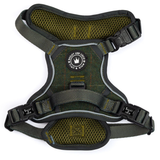
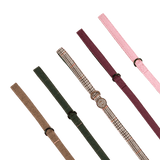
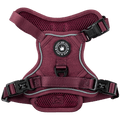
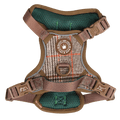
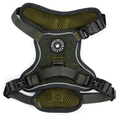
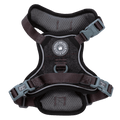
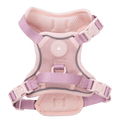
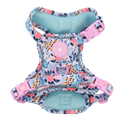
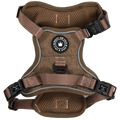
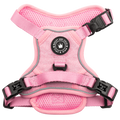
Our flagship harness. The Trail and Glow features a Y-shape design with four adjustment points at the neck and chest, a padded chest plate, zinc alloy D-rings on both front and back, and integrated reflective strips for low-light visibility. The outer shell is woven tweed in six patterns: Charcoal, Oxford, Mulberry, Forest, Lavender, and Heritage Plaid. The inner lining is breathable mesh. Every harness includes a lockable safety clasp on the neck strap and a reinforced back handle.
Available in sizes XXS to XL and machine washable on a cold gentle cycle. The tweed outer is backed by a durable nylon webbing base that provides the structural strength, while the tweed adds a distinctly British look that stands out from the sea of plain nylon harnesses in every park.
For the full pattern range, breed fit photos and styling ideas, see our best tweed dog harness guide or browse the Heritage Plaid collection across 10 breeds.

No-Pull Harnesses
Built on the same Trail and Glow platform with an emphasis on the front D-ring and anti-pull training. The front clip redirects your dog's forward motion to the side, discouraging pulling without discomfort. The back clip remains available for relaxed walks once training is established. Ideal for puppies learning lead manners and adult dogs who have developed a pulling habit.
Browse the full no-pull dog harness collection or read our no-pull harness guide for training tips.
Harness Bundles
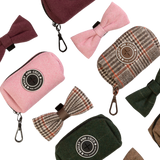
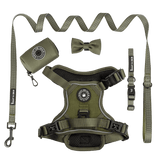
For the best value, our harness bundles pair a Trail and Glow harness with a matching lead, collar and accessories. Every piece is designed to work together and uses the same tweed pattern and hardware finish. Bundles save you the trouble of matching items individually and typically cost less than buying each item separately.
Whether you are putting together a complete walking kit for a new puppy or upgrading from worn-out gear, a bundle gets you everything in one order. Most customers pair their harness with a quality lead and a collar for ID tags to create the full walking setup.

Harness Care and Maintenance
A well-maintained harness lasts years. A neglected one becomes stiff, smelly and weakened. Here is how to keep your harness in top condition.
Nylon and fabric harnesses: Machine wash on a cold, gentle cycle inside a mesh laundry bag. Use a mild detergent without fabric softener, which can break down the material over time. Hang to dry. Never tumble dry a harness, as heat can warp plastic components and shrink fabrics.
Tweed harnesses: The same cold, gentle machine wash works well. Tweed is more durable than many owners expect. Avoid wringing the material. Hang dry in a well-ventilated area away from direct heat.
Biothane and waterproof harnesses: Wipe down with a damp cloth after walks. For a deeper clean, use warm soapy water and rinse thoroughly. These materials dry almost instantly.
When to replace your harness: Check the hardware regularly. If any buckle, clip, or D-ring shows signs of bending, cracking, or corrosion, replace the harness immediately. Frayed stitching, especially around stress points like the D-ring attachment and where straps cross the chest plate, is another sign the harness has reached the end of its working life.
For puppies, you will likely need to size up at least once as they grow. Check the fit weekly during growth spurts, typically between 4 and 12 months of age. For adult dogs, a well-maintained harness should last 12 to 18 months with twice-daily use. Dogs who swim regularly, walk in saltwater environments, or pull heavily may wear through a harness faster. If in doubt, inspect monthly and replace at the first sign of structural weakness. A harness that fails mid-walk is a safety risk, not just an inconvenience.
Top Tip
Rotate between two harnesses to extend the lifespan of both. While one dries after a muddy walk, the other is ready to go. This also prevents your dog from wearing the same damp harness on consecutive walks, which can cause skin irritation.
Key Takeaways
- A Y-shape harness with dual D-rings suits the widest range of breeds and walking styles
- Always measure your dog's chest girth before ordering and check the specific brand's size chart
- Choose a harness based on your dog's breed shape: barrel-chested, deep-chested, long-backed or flat-faced dogs each need different designs
- Quality hardware (welded D-rings, zinc alloy buckles) and reflective elements are non-negotiable for UK conditions
- Use a collar for legal ID requirements and a harness for walks to protect your dog's neck, throat and spine
Frequently Asked Questions
What is the best dog harness in the UK?
The best harness depends on your dog's breed, size and walking style. For most UK owners, a Y-shape harness with dual D-rings, adjustable straps and reflective elements offers the best combination of comfort, control and safety. Look for one with at least two adjustment points and hardware made from zinc alloy or stainless steel rather than plastic.
Do vets recommend harnesses over collars?
Most UK veterinary professionals recommend using a harness for walking, especially for brachycephalic breeds (Pugs, French Bulldogs, Bulldogs), breeds prone to tracheal collapse (Yorkies, Chihuahuas, Pomeranians), and puppies. A harness removes pressure from the throat and neck. However, a collar is still needed for carrying legally required ID tags under the Control of Dogs Order 1992.
What harness is best for a dog that pulls?
A dual-clip harness with a front D-ring is the best option for dogs that pull. When the lead is attached to the front clip, forward motion redirects the dog to the side, naturally discouraging pulling without causing pain. Combine the front-clip harness with positive reinforcement training for the best results. Avoid choke chains and prong collars, which cause discomfort and can lead to behavioural problems.
Should a dog harness be tight or loose?
Neither. A harness should be snug enough that your dog cannot back out of it, but loose enough that it does not restrict movement or cause chafing. The standard test is the two-finger rule: you should be able to slide two fingers comfortably between any strap and your dog's body. Check the fit regularly, especially on puppies and young dogs whose body shape changes as they grow.
Can a dog wear a harness all day?
It is generally best to remove the harness when your dog is indoors, resting, or unsupervised. Wearing a harness for extended periods can cause fur matting, skin irritation and pressure sores, particularly under the front legs. The harness straps can also catch on furniture, crate bars, or garden fencing, creating an entanglement risk. Put the harness on before walks and remove it when you get home.
Front clip vs back clip: which is better?
Each has its place. A front clip gives you more control and is better for dogs that pull or are in training. A back clip is more comfortable for everyday walks and gives your dog more freedom of movement. The ideal solution is a dual-clip harness that offers both options. Use the front clip when you need control and the back clip for relaxed walks.
How do I stop my dog pulling on a harness?
Start by switching to a front-clip harness, which naturally redirects pulling. Then use the stop-start method: when your dog pulls, stop walking completely and wait until the lead goes slack before moving again. Reward loose-lead walking with treats and praise. Consistency is everything. Most dogs improve significantly within two to four weeks of daily practice. For puppies, our puppy lead training guide covers the process step by step.
What size harness does my dog need?
Measure your dog's chest girth (the widest part of the ribcage, just behind the front legs) and neck circumference with a soft tape measure. Compare these measurements to the specific brand's size chart. Do not assume sizes are consistent across brands. If your dog falls between sizes, choose the larger size only if the harness has enough adjustment points to tighten down securely.
Are no-pull harnesses cruel?
No. A properly fitted no-pull harness is one of the kindest training tools available. It works by redirecting your dog's forward momentum rather than applying pain or discomfort. Unlike choke chains or prong collars, a front-clip harness does not restrict breathing, pinch the skin, or cause injury. It simply makes pulling mechanically less effective, encouraging your dog to walk beside you naturally.
What is the best harness for a puppy?
Choose a lightweight harness with plenty of adjustment range to accommodate growth. A Y-shape design protects developing bones and joints. Avoid heavy-duty harnesses designed for adult dogs, as the weight and bulk can overwhelm a young puppy. Look for soft padding, easy-on design, and size ranges that match your puppy's current measurements with room to grow. Our puppy leads guide covers first lead and harness selection in detail.
Still have questions about finding the right harness? Explore our complete range of dog harnesses, pair yours with a matching dog lead and dog collar, or contact our team for personalised advice.
New from Bailey & Coco
Browse our phone case collection - 24 bold designs for iPhone 14 to 17 Pro Max


