












Teaching a puppy to walk on a lead is one of the most important skills you will ever teach your new dog. Many first-time owners clip on a lead, head out the front door, and expect their puppy to trot along beside them. When the puppy freezes, pulls in every direction, or starts chewing the lead, frustration sets in quickly.
Lead walking is a completely unnatural behaviour for dogs. It is a learned skill that takes time, patience, and a structured approach. The good news is that with the right method, the right equipment, and a generous supply of treats, you can teach any puppy to walk beautifully on a lead.
This step-by-step UK guide covers everything from when to start and what equipment you need to progressing through five clear training phases. We also tackle common problems and explain exactly how to solve them. Whether you have a tiny Dachshund or a bouncy Cockapoo, this guide will get you both walking confidently together.
Quick Answer
Start lead training indoors from 8 weeks old. Let your puppy get used to wearing a collar or harness first, then introduce the lead in short 2 to 3 minute sessions. Move to the garden before attempting outdoor walks after vaccinations are complete. Most puppies can walk confidently on a lead by 16 to 20 weeks with consistent daily practice.
What We Cover
- When Can You Start Lead Training a Puppy?
- Equipment You Will Need
- Phase 1: Indoor Introduction (Weeks 1-2)
- Phase 2: Indoor Lead Walking (Weeks 2-3)
- Phase 3: Garden Practice (Weeks 3-4)
- Phase 4: First Outdoor Walks (Weeks 5-6)
- Phase 5: Building Confidence (Weeks 7-12)
- Puppy Training Milestones: Age, Lead Type, and Session Duration
- Common Mistakes to Avoid
- Troubleshooting Common Lead Problems
- When to Seek Professional Help
- Why Bailey & Coco Leads Are Perfect for Puppy Training
- Frequently Asked Questions
When Can You Start Lead Training a Puppy?
This is one of the first questions every new puppy owner asks, and the answer depends on whether you mean indoors or outdoors.
Indoor Introduction: From 8 Weeks
You can begin introducing your puppy to a collar, harness, and lead from the moment they arrive home, typically around 8 weeks of age. At this stage, you are not going for walks. You are simply helping your puppy get comfortable with wearing equipment. These early indoor sessions are the foundation of everything that follows.
Outdoor Walks: After Vaccinations Are Complete
In the UK, puppies typically complete their primary vaccination course between 10 and 12 weeks of age. Your vet will confirm exactly when it is safe for your puppy to walk on public ground. Until then, carry your puppy outside to experience new sights and sounds, and practise lead walking in your own garden. Understanding UK dog lead laws is important too, as there are situations where keeping your dog on a lead is a legal requirement.
The Socialisation Window
Puppies have a critical socialisation period between roughly 3 and 14 weeks of age. Positive experiences during this window shape their behaviour for life. Introducing the lead gently during this time means your puppy is far more likely to accept it as a normal part of daily life. Negative experiences can create lasting anxiety around walks.
Equipment You Will Need
Before you begin training, make sure you have the right kit. Getting this right from the start makes the entire process smoother for both you and your puppy.
A Lightweight Lead
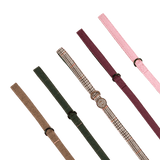
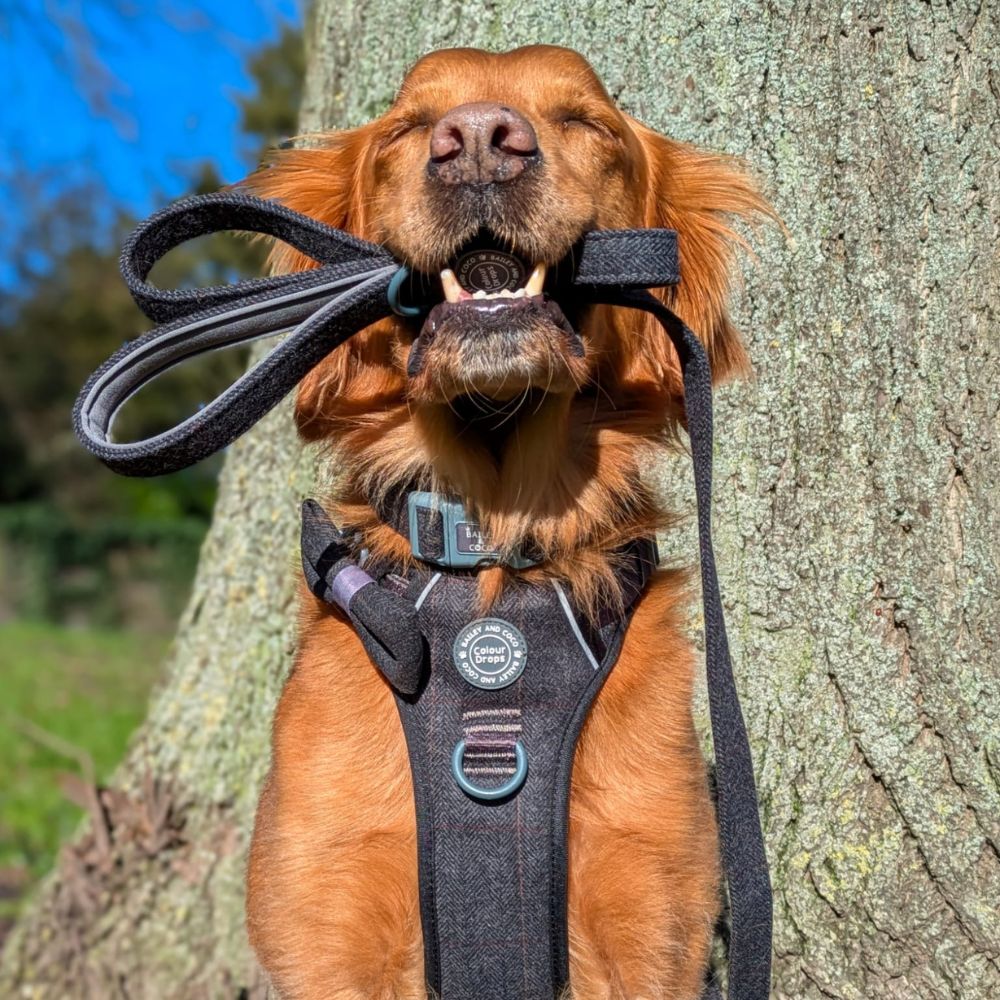
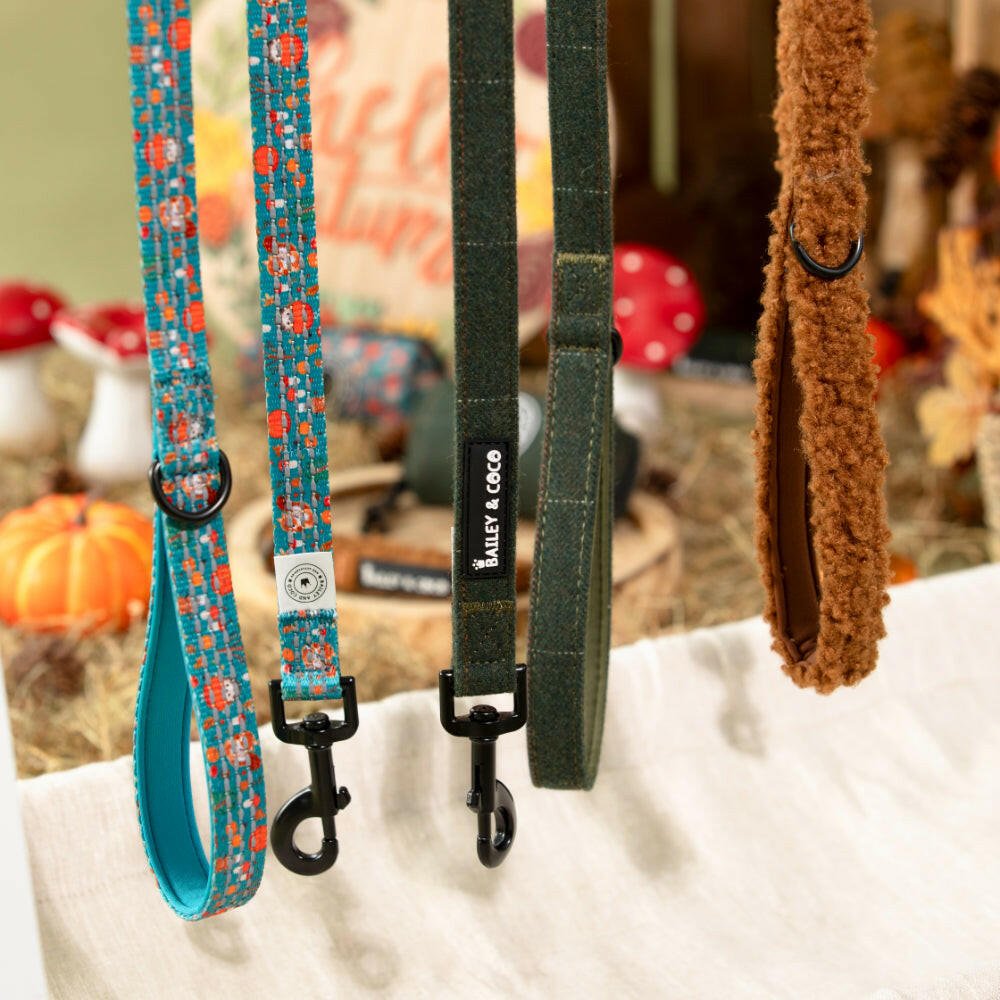
The single most important piece of equipment is a lightweight, fixed-length lead. A 5ft fabric lead is ideal because it gives your puppy room to move naturally while keeping them close enough for effective training. The Bailey & Coco Fabric Dog Leads are perfect for puppies: lightweight, padded neoprene handle, reflective stitching, and just £15 to £18. For a detailed guide on selecting the right one, read our complete guide to choosing your puppy's first lead.
Avoid retractable leads for puppy training. They teach puppies that pulling extends their freedom, which is the opposite of what you want.
A Collar or Harness
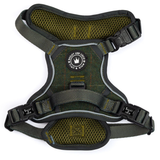
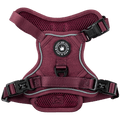
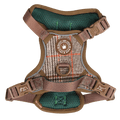
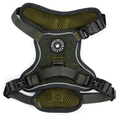
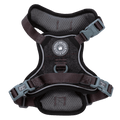
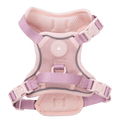
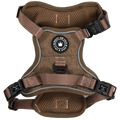
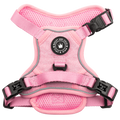
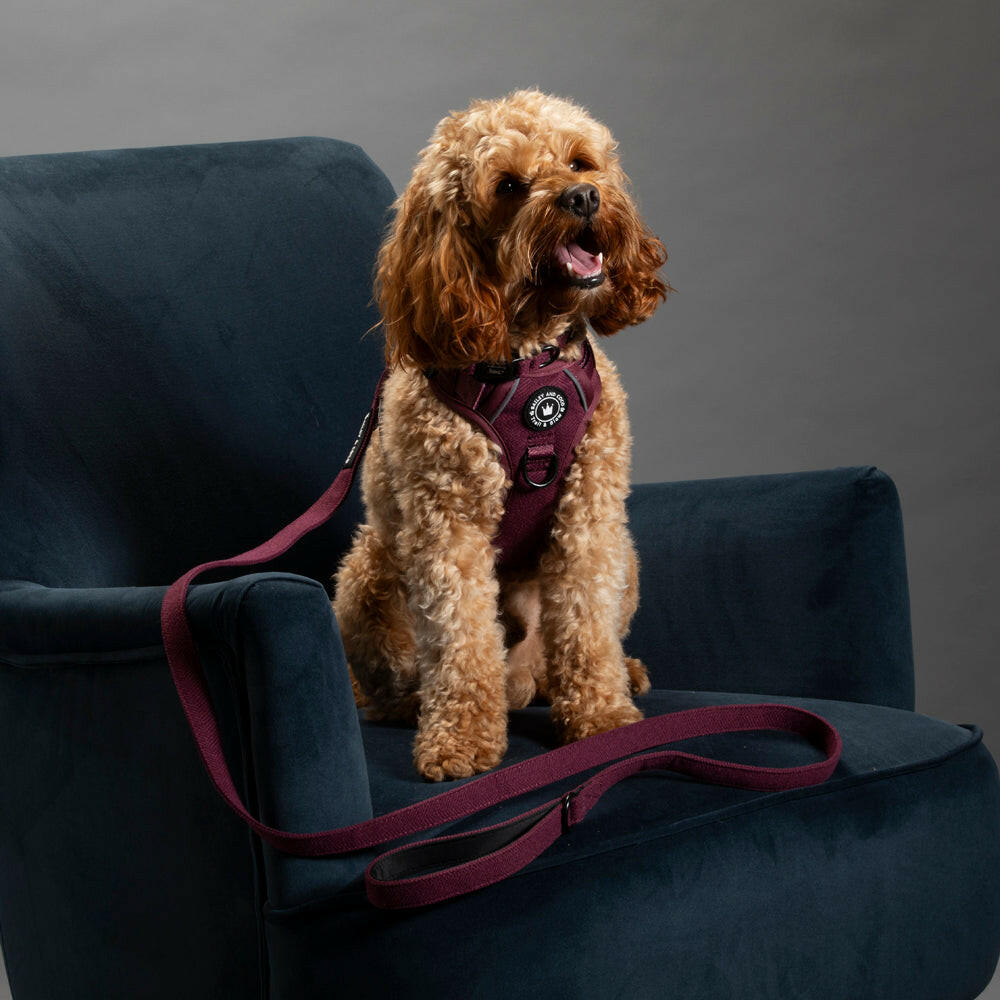
Your puppy needs either a well-fitted puppy collar or a harness. For lead training, a harness is often the better choice because it distributes pressure across the chest rather than the throat. Our harness buying guide covers sizing and fitting for puppies, including the XS sizes in the Bailey & Coco Trail Glow range. Even if you choose a harness for walking, your puppy should still wear a collar with an ID tag. UK law requires this.
You can see the full range of sizes in our puppy and dog harness collection, including the XS Trail Glow that works perfectly for puppies from around 12 weeks.
High-Value Training Treats
Small, soft treats that your puppy can eat quickly are essential. You will use a lot of them in the early stages, so choose something your puppy genuinely loves. A treat pouch clipped to your waistband keeps treats accessible without fumbling through pockets.
Patience and Consistency
Puppies learn through repetition and positive reinforcement. Short, frequent sessions are far more effective than long, infrequent ones. Aim for consistency in your approach, your commands, and your expectations.
Phase 1: Indoor Introduction (Weeks 1-2)
The goal of this phase is to help your puppy feel completely comfortable wearing a collar or harness and having a lead attached. There is no walking involved yet.
Getting Used to the Collar or Harness
Start by putting your puppy's collar or harness on for short periods indoors, around 10 to 15 minutes at a time while you play with them and offer treats. Most puppies will scratch at it initially. This is normal. Distract them with a toy and they will quickly forget it is there. Gradually increase the wear time over the first few days.
Introducing the Lead
Once your puppy is relaxed in their collar or harness, place the lead on the ground and let them sniff it. Then clip it on and let it trail along the ground while they move around the house. Supervise closely to prevent tangling. Let them drag the lead for a few minutes several times a day, pairing it with treats and praise.
Picking Up Your End
After two to three days of lead trailing, start picking up your end. Do not direct your puppy anywhere. Simply hold the lead with a relaxed grip and follow wherever they go. Reward them for moving around calmly. This teaches them that the lead creates a connection between you, not a restriction. Keep sessions to 3 to 5 minutes and always end on a positive note.
Top Tip
Keep training sessions under 3 minutes for puppies under 12 weeks. Their attention span is tiny. Five brilliant 2-minute sessions beat one frustrating 10-minute session every time.
Phase 2: Indoor Lead Walking (Weeks 2-3)
Now that your puppy is comfortable with the lead attached and you holding it, you can begin gentle guided movement indoors.
Lure and Reward
Hold a treat in the hand opposite the lead and lure your puppy in the direction you want to walk. Take a few steps, let them follow the treat, then reward. Keep the lead loose at all times. If there is tension, you are directing with the lead rather than the treat.
Building Short Sequences
Gradually increase the number of steps between treats. Start with two or three steps, then five, then eight. Your puppy is learning that walking beside you with a loose lead results in good things. If they wander off, simply stop, get their attention with a treat, and start again. Never drag them back to position.
Practise in Different Rooms
Once your puppy is walking beside you in one room, move to another. The hallway is excellent because it naturally channels movement in a straight line. Each new room builds your puppy's ability to focus on you in different environments.
Phase 3: Garden Practice (Weeks 3-4)
The garden is the perfect bridge between indoors and the outside world. It has outdoor smells, sounds, and distractions, but it is still a safe, controlled environment.
First Garden Sessions
Take your puppy into the garden on their lead and let them explore for a few minutes before you begin training. Once they have had a sniff around, begin the same lure-and-reward walking you practised indoors.
Adding Direction Changes
Start introducing changes of direction. Walk a few steps, then turn and walk the other way, using a cheerful voice and a treat to encourage your puppy to follow. This teaches them to pay attention to where you are going rather than forging ahead. Keep the lead loose throughout.
Introducing Gentle Stops
Practise stopping and waiting for your puppy to stop too. Hold the lead still (do not pull) and wait. The moment your puppy stops and looks at you, reward them. This teaches them to check in with you during walks.
Phase 4: First Outdoor Walks (Weeks 5-6)
Once your vet has confirmed that vaccinations are complete and your puppy is walking comfortably on the lead in the garden, it is time for the big moment: your first public walk.
Choosing the Right Route
Your first few walks should be on quiet, low-traffic streets close to home. Avoid busy high streets and popular dog-walking spots. A calm residential street where you can walk for 10 minutes and return home is ideal.
Keep It Short
The general guideline is five minutes of exercise per month of age, up to twice a day. So a 12-week-old puppy (3 months) should walk for no more than 15 minutes per session. This protects developing joints and prevents overtiredness, which often leads to poor lead behaviour. For more detail, our guide on how often you should walk your dog covers age-appropriate exercise for every life stage.
Let Them Explore
Resist the urge to march your puppy along at a brisk pace. Puppies need to stop, sniff, and process. Sniffing is not misbehaviour; it is how dogs understand their environment. These early walks are about positive experiences, not covering distance.
Reward Frequently
Reward your puppy generously for walking beside you, for checking in with you, and for responding to your voice. The outside world is intensely stimulating, and you need to make yourself more interesting than everything around you. Treats, a happy voice, and enthusiastic praise are your tools.
Top Tip
Choose quiet streets for your first outdoor walks, ideally during off-peak times. A busy park at lunchtime is overwhelming for a puppy who has never been outside the garden.
Phase 5: Building Confidence (Weeks 7-12)
With a few successful quiet walks under your belt, you can start gradually increasing the challenge.
Slightly Busier Routes
Introduce routes with a little more activity: a park during a quieter time of day, a residential area with passing cars, or a path where you might encounter another dog. If your puppy becomes overwhelmed, there is no shame in turning around and trying again another day.
Encountering Other Dogs
Meeting other dogs is one of the biggest challenges. Some puppies pull towards every dog they see; others try to hide behind your legs. Both reactions are normal. Keep your lead loose (a tight lead communicates tension), stay calm, and let your puppy observe from a distance before deciding whether to approach. Never force a greeting.
Practising Loose-Lead Walking
The principle is simple: when the lead is loose and your puppy is beside you, they get rewarded. When the lead goes tight, you stop and wait. When it goes slack again, you move forward and reward. This teaches your puppy that a loose lead means progress and a tight lead means everything stops.
Introducing Verbal Cues
Start using consistent verbal cues: "let's go" for moving off, "this way" for a change of direction, and "wait" for stopping. Use the same words every time. Your puppy will begin to associate the words with the behaviour.
Puppy Training Milestones: Age, Lead Type, and Session Duration
Every puppy develops at their own pace, but this table gives you a general roadmap of what to expect and work towards at each stage.
| Puppy Age | Training Milestone | Lead Type | Session Duration |
|---|---|---|---|
| 8-10 weeks | Indoor lead introduction; wearing collar/harness comfortably | Lightweight 5ft fabric lead | 3-5 minutes, 3-4 times daily |
| 10-12 weeks | Indoor guided walking; garden introduction | Lightweight 5ft fabric lead | 5-10 minutes, 2-3 times daily |
| 12-14 weeks | First public walks on quiet streets | Lightweight 5ft fabric lead | 10-15 minutes, twice daily |
| 14-16 weeks | Growing confidence; basic loose-lead technique | 5ft fabric lead | 15-20 minutes, twice daily |
| 4-6 months | Loose-lead walking in varied environments | 5ft fabric or rope lead | 20-30 minutes, twice daily |
| 6-9 months | Adolescent phase; maintaining consistency | 5ft fabric or rope lead | 30-45 minutes, twice daily |
| 9-12 months | Reliable lead walking in most settings | Standard adult lead (fabric, rope, or waterproof) | 45-60 minutes, twice daily |
Every puppy is different. Some breeds, particularly retrievers and spaniels, may take longer to settle due to higher energy levels. Use this table as a general guide and adjust to suit your individual puppy.
Common Mistakes to Avoid
Even with the best intentions, it is easy to make errors that slow your puppy's progress. Here are the most common mistakes and how to steer clear of them.
Using a Retractable Lead
Retractable leads teach your puppy that pulling extends their reach. The constant spring tension means the lead is never truly slack, so your puppy never learns what a relaxed lead feels like. Stick to a fixed-length 5ft lead. Our comparison of retractable versus fixed leads explains this in detail.
Pulling Back When Your Puppy Pulls
When a puppy pulls forward, the instinct is to pull them back. This creates a tug-of-war dynamic that puppies find rewarding through opposition reflex: the harder you pull, the harder they pull. Instead, simply stop walking and wait. Do not move forward again until the lead is loose.
Walking Too Far, Too Soon
Overexercising a puppy damages developing joints and leads to overtiredness, which makes lead behaviour worse. Follow the five-minutes-per-month-of-age guideline and resist the temptation to take your puppy on long adventures before they are physically ready.
Top Tip
Set a timer on your phone for puppy walks. It is easy to lose track of time when your puppy is having fun, and the 5-minutes-per-month rule is there to protect their developing joints.
Inconsistent Rules
If you let your puppy pull towards a dog on Monday but correct them for it on Tuesday, they learn nothing. Every household member must use the same approach, the same commands, and the same expectations.
Skipping Indoor Practice
Heading straight outdoors with a puppy that has never worn a lead indoors is overwhelming. Always start indoors, then garden, then quiet streets, then busier environments. Layer the experiences gradually.
Important
Never yank or pull a puppy back on the lead. Jerking the lead can cause serious neck injuries in puppies and creates a negative association with lead walking that is very difficult to undo.
Troubleshooting Common Lead Problems
Even with the best preparation, you will likely encounter at least one of these common issues. Here is how to handle them.
Pulling on the Lead
When your puppy pulls, stop immediately and wait until the lead goes slack. Then praise and continue. Your puppy learns that pulling gets them nowhere while a loose lead means forward progress. Some walks will feel painfully slow at first, but the investment pays off enormously.
Freezing or Refusing to Walk
Some puppies stop and refuse to move, especially during their first outdoor walks. Do not drag them. Crouch down, offer a treat, and encourage them gently. If they are truly overwhelmed, pick them up, carry them home, and try a quieter route the next day. Going back a phase to rebuild confidence is never a step backward.
Top Tip
If your puppy freezes on walks, try starting from your front door and walking just 10 metres before turning back. Gradually increase the distance each day. Small wins build confidence faster than big adventures.
Biting or Chewing the Lead
Lead biting is common and usually caused by excitement, teething, or frustration. Stop walking and stand still. Do not yank the lead away, as this turns it into a tug game. Wait until they drop it, redirect with a treat or toy, and resume walking. If it persists, try a bitter apple spray on the lead.
Sitting Down Mid-Walk
A puppy that plops down is telling you something. They might be tired, overwhelmed, or unmotivated. Check whether you have been walking too long for their age. If they are within their exercise limit, encourage them with a treat held just ahead. If they sit repeatedly, shorten your walks and build duration back up gradually.
Lunging at Other Dogs or People
Lunging is usually excitement-based in puppies. When you see a trigger approaching, get your puppy's attention before they fixate. Use a treat to turn them towards you and reward focusing on you. Increase the distance until you find a range where they can remain calm, then gradually decrease it over multiple sessions.
Zigzagging or Walking in Circles
Young puppies often have no concept of walking in a straight line. This is normal and improves with time. Use treats to encourage forward movement beside you and keep sessions short enough that your puppy stays engaged.
When to Seek Professional Help
Most puppy lead training challenges can be solved with patience, consistency, and the guidance in this article. However, there are situations where professional help is the right move.
- Severe anxiety or fear - If your puppy is trembling, panting heavily, trying to escape, or completely shutting down on walks despite gradual introduction, a qualified behaviourist can help identify the root cause.
- Persistent aggression - If your puppy is snapping, growling, or showing genuine aggression (not playful mouthing) on the lead, seek professional assessment promptly. Early intervention is key.
- No progress after 4-6 weeks - If you have been following a structured training plan consistently and see no improvement at all, a professional trainer can observe your sessions and identify what is going wrong.
- Reactivity towards other dogs - If your puppy's lunging escalates rather than improves, or if they become highly distressed around other dogs, a behaviourist specialising in reactivity can provide targeted support.
Look for trainers who use positive reinforcement methods. In the UK, accredited professionals can be found through the Animal Behaviour and Training Council (ABTC) or the Association of Pet Dog Trainers (APDT). Avoid anyone who recommends choke chains, prong collars, or shock collars.
Why Bailey & Coco Leads Are Perfect for Puppy Training
The right lead makes a genuine difference to your puppy's training experience. The Bailey & Coco Fabric Dog Lead range ticks every box for new puppy owners.
- Lightweight fabric construction - Light enough for even the smallest puppy to wear comfortably without being weighed down or thrown off balance.
- 5ft length - The ideal training length recommended by professional puppy trainers. Long enough for natural movement, short enough for effective control.
- Padded neoprene handle - Protects your hands during those inevitable moments when your puppy pulls, lunges, or tests the boundaries.
- Reflective stitching - Essential safety feature for early morning and evening walks, particularly during the darker UK months.
- D-ring attachment point - Handy for clipping poo bags, a treat pouch, or small accessories.
- Beautiful designs - Available in a range of colours and tweed patterns that look wonderful on puppies of every breed.
- £15-£18 price point - Excellent value for a well-crafted lead that will last from puppyhood into adulthood for most breeds.
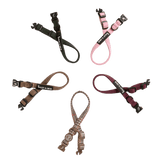
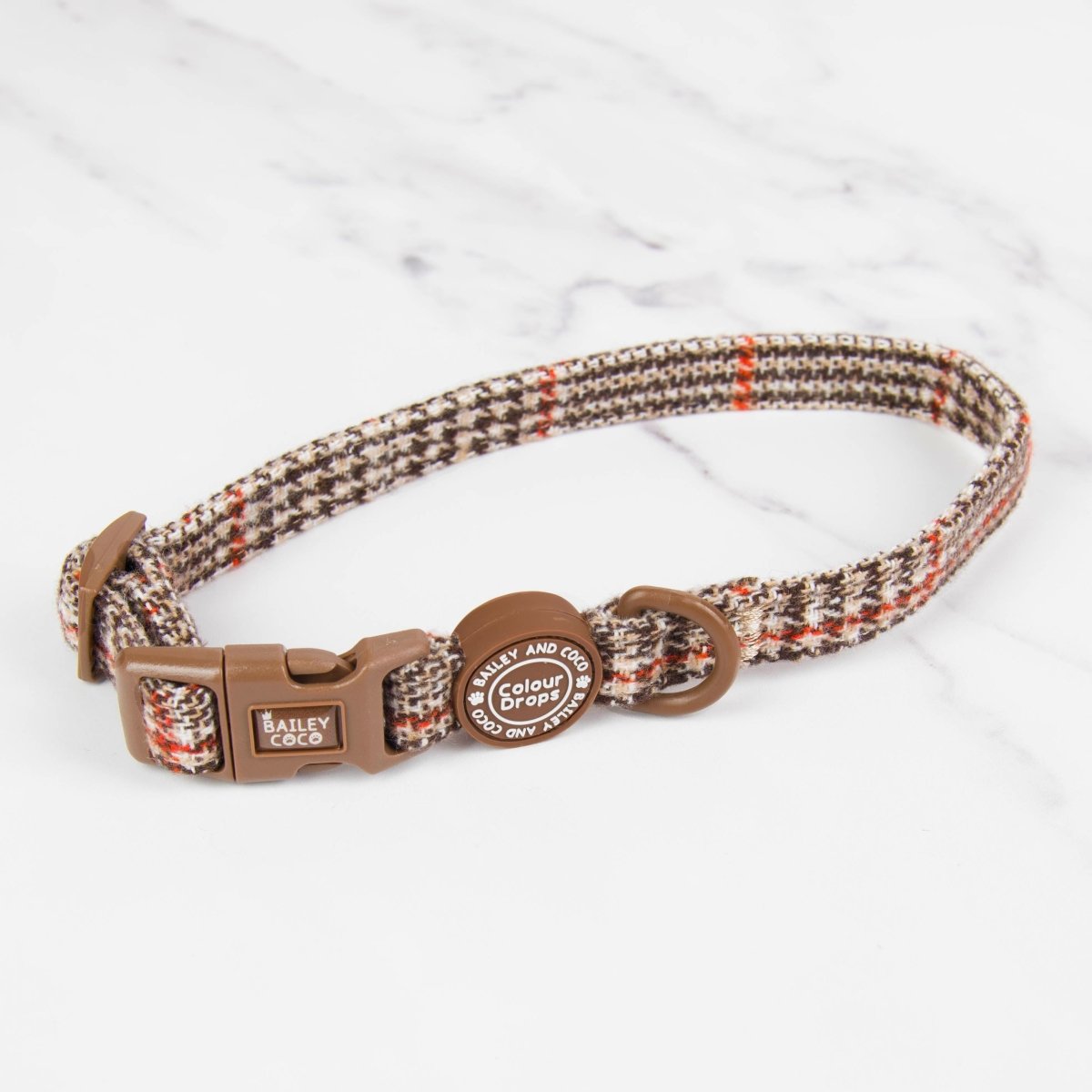
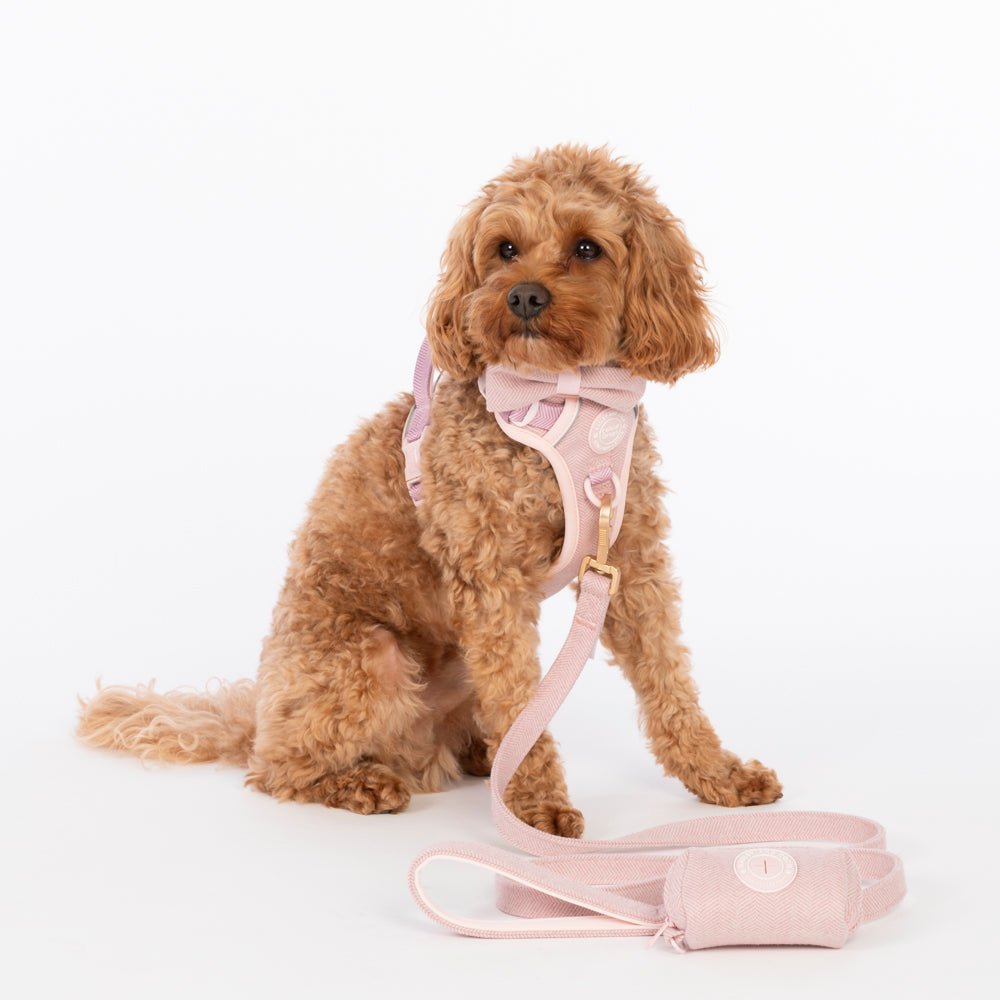
For puppies, pair a fabric lead with one of the Bailey & Coco adjustable puppy collars or an XS Trail Glow harness for a complete setup that looks great and works brilliantly.
Key Takeaways
- Begin lead training indoors from 8 weeks old; let your puppy wear the collar or harness before adding the lead
- Keep sessions under 3 minutes for young puppies; short, positive sessions build confidence faster
- Follow the 5-phase approach: indoor introduction, indoor walking, garden, first outdoor walks, building confidence
- Never yank the lead or pull your puppy back; this creates fear and can cause neck injuries
- Most puppies walk confidently on a lead by 16 to 20 weeks with consistent, patient daily practice
Frequently Asked Questions
At what age should I start lead training my puppy?
You can start introducing your puppy to a collar, harness, and lead indoors from 8 weeks of age. Keep sessions short and positive. For outdoor walks on public ground, wait until your vet confirms that vaccinations are complete, which is typically around 10 to 12 weeks in the UK. You can practise lead walking in your own garden before that point.
How long should a puppy's first walks be?
Follow the five-minutes-per-month-of-age guideline, up to twice a day. A 3-month-old puppy should walk for no more than 15 minutes per session. A 4-month-old puppy can manage 20 minutes. This protects developing joints and prevents the overtiredness that leads to poor lead behaviour.
Should my puppy wear a collar or a harness for lead walking?
For lead training, a harness is generally the better choice because it distributes pressure across the chest rather than the throat. This is particularly important during the early stages when pulling is common. However, your puppy should still wear a collar with an ID tag at all times, as UK law requires dogs to have identification in public.
Why does my puppy keep biting the lead?
Lead biting is very common in young puppies and is usually caused by excitement, teething, or frustration. When your puppy grabs the lead, stop walking and stand still. Do not pull the lead away as this makes it a game. Wait until they drop it, then redirect with a treat or toy and resume walking. If the problem persists, try a bitter apple spray on the lead.
What type of lead is best for a puppy?
A lightweight, fixed-length fabric lead is the best choice for puppies. A 5ft length gives your puppy enough room to move naturally while keeping them close enough for effective training. Avoid retractable leads, which teach puppies that pulling extends their freedom. The Bailey and Coco Fabric Dog Leads are ideal at just £15 to £18, with a padded neoprene handle and reflective stitching.
My puppy freezes and refuses to walk. What should I do?
Freezing is usually a sign of anxiety or sensory overload. Never drag your puppy. Crouch down to their level, speak gently, and offer a treat to encourage movement. If they are genuinely overwhelmed, pick them up and head home. Go back a training phase to rebuild their confidence, and try a quieter route next time. Some puppies simply need more gradual exposure.
How do I stop my puppy pulling on the lead?
The most effective method is to stop walking every time the lead goes tight. Stand still, do not pull your puppy back, and wait. The moment the lead goes slack, praise your puppy and continue walking. This teaches them that pulling gets them nowhere while a loose lead means forward progress. Be consistent and patient; early walks may be slow, but the results are worth it.
Choosing the right collar is just as important as choosing the right lead. Our best dog collars UK guide covers every type, material and sizing option to help you find the perfect collar for your growing puppy.


