




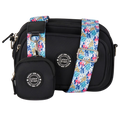
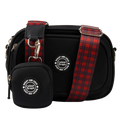
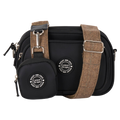
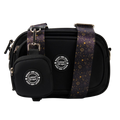









By Laura Unterlechner, Co-founder of Bailey & Coco
A double-ended dog lead is a lead with a clip at both ends. Clipping one end to the front of a harness and the other to the back gives you two points of contact and can provide greater steering control than a single attachment point, which is why many trainers recommend this setup for dogs that pull. It can also connect a harness and collar together for extra security, or walk two dogs from one centre handle.
Read the video transcript
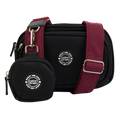
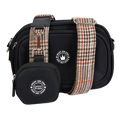
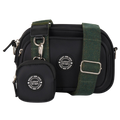
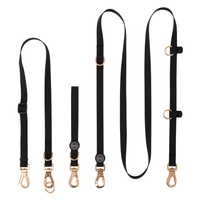
Meet the new Bailey & Coco double-ended dog lead. Available in three colours. Wear it crossbody or around your waist for hands-free walks. Simply slide to adjust for the perfect fit. Walking more than one dog? Simply clip on our Multi-Dog Lead Extension and adjust it to the perfect length. Walking two or more dogs? Our unique O-ring design helps reduce tangles even when your dog swaps sides. And for extra control, clip on the Traffic Handle Add-On for those busy moments. Or use the lead double-ended for added control and no-pull walking. One lead. Endless adventures.
If you have ever struggled with a dog that lunges to one side, pulls relentlessly towards every lamppost, or simply does not seem to respond to a standard lead and collar setup, a double-ended dog lead might be the piece of kit that changes everything. These clever, multi-clip leads have quietly become one of the most popular tools among UK dog trainers, behaviourists, and informed owners, and for very good reason.
A double-ended lead gives you two attachment points instead of one, allowing you to connect to both a harness and collar simultaneously, or use the front and back clips on a no-pull harness. The result is dramatically better control, smoother communication with your dog, and a more enjoyable walk for everyone involved. In this guide, we cover everything you need to know about double-ended dog leads: how they work, who they are best suited to, and how to pair them with the right hands-free double-ended dog lead and harness combination for your dog.
What Is a Double-Ended Dog Lead?
A double-ended dog lead, sometimes called a multi-clip lead, multi-point lead, or training lead, is a lead with a clip at each end rather than a clip at one end and a handle at the other. Between the two clips, you will typically find a handle in the middle and sometimes additional rings along the length that allow you to adjust the effective lead length.
The key feature is versatility. With two clips, you can attach the lead in several different configurations depending on what you and your dog need. The most common setup involves clipping one end to the front D-ring of a harness and the other end to the back D-ring, giving you two points of contact and significantly better steering ability.
Unlike a slip lead that relies on a tightening mechanism, or a retractable lead that extends and retracts, a double-ended lead works through balance and redirection. It does not cause discomfort. It simply gives you more precise control over your dog's direction and momentum.
How Does a Double-Ended Lead Work?
The mechanics are surprisingly simple, but the effect is transformative. Here is how the most common configurations work.
Configuration 1: Front and Back Harness Clips
This is the most popular setup and the one recommended by most UK trainers for dogs that pull. You clip one end of the lead to the front D-ring on your dog's chest and the other end to the back D-ring between the shoulder blades.
When the dog walks nicely, both clips share the load equally, and the lead hangs in a gentle loop beneath the dog's chest. When the dog tries to pull forward, the front clip engages first, gently turning the dog's shoulders to the side. This natural redirection breaks the pulling momentum without any jerking, choking, or discomfort.
The back clip provides stability and prevents the harness from shifting, while the front clip does the active steering work. Together, they create a balanced system that gives you far more influence over your dog's movement than a single-clip setup.
Configuration 2: Harness and Collar
Some owners prefer to clip one end to the harness and the other to the collar. This provides a safety backup: if the dog somehow slips out of the harness, they are still secured by the collar, and vice versa. This setup is particularly popular with rescue dogs, nervous dogs, or escape artists who have a talent for backing out of equipment.
Configuration 3: Two Dogs on One Lead
Some double-ended leads can be used as a coupler to walk two dogs simultaneously. By clipping each end to a different dog's collar or harness and holding the centre handle, you can manage two dogs on a single lead. This works best with dogs that walk at a similar pace and are comfortable walking close together.
Configuration 4: Hands-Free, Worn Crossbody or Around the Waist
A double-ended lead can also be worn rather than held. Clipping the two ends together turns the lead into a loop you can wear across your body or around your waist, which frees both hands for treats, poo bags, or a coffee. It suits steady walkers rather than dogs that lunge, because anything that pulls hard will pull against your body rather than your arm.
- Crossbody — over one shoulder, best for longer walks and larger dogs
- Around the waist — closer control, better for small dogs and jogging
- Adjustable hands-free setup — three integrated D-rings allow the 210cm lead to be configured for crossbody or waist-worn walking
- Traffic handle — a 30cm add-on for close control at roads and gates, which also clips to a harness back D-ring as a grab handle
- Multi-dog extension — adjustable from 65cm to 100cm, with an O-ring so further extensions can be added for a third dog

Hands-free walking is not right for every dog. If your dog is reactive, still learning loose-lead walking, or strong enough to unbalance you, keep the lead in your hand where you can release pressure quickly.
You can watch how to wear a hands-free lead crossbody, around the waist and set up for two dogs in our short demonstration.
Benefits of Double-Ended Dog Leads
The advantages of a double-ended lead go beyond simple pulling prevention. Here is why they have become so popular among informed dog owners.
Superior control without discomfort. Two attachment points give you significantly more control than a single clip, but without any aversive mechanism. There is no tightening, no choking, and no correction. The lead simply redirects your dog's momentum through physics rather than pressure.
Excellent for anti-pull training. When paired with a front-clip no-pull harness, a double-ended lead is one of the most effective tools for teaching loose-lead walking. The front clip gently steers the dog back towards you every time they try to forge ahead, while the back clip keeps the harness stable and comfortable.
Better communication. With two points of contact, your signals travel through the lead more clearly. You can gently guide your dog's direction with subtle hand movements, making it easier to navigate busy streets, pass other dogs, or redirect attention. This is particularly valuable for reactive dogs that need careful management around triggers.
Increased safety. Having two attachment points means that if one clip fails or one piece of equipment slips, your dog is still secured by the other. This redundancy is a significant safety advantage, especially in high-traffic areas or with dogs that are flight risks.
Versatility. The same lead can be used in multiple configurations. Walking a puller? Front and back clip. Walking a nervous rescue? Harness and collar. Walking two small dogs? Clip to each. This adaptability makes a double-ended lead one of the most useful leads you can own.
Recommended by professionals. Double-ended leads are standard equipment in many UK dog training classes and are frequently recommended by behaviourists for dogs with pulling, reactivity, or anxiety issues. They align with positive reinforcement training principles, which is why force-free trainers endorse them.
Who Should Use a Double-Ended Dog Lead?
While any dog owner can benefit from a double-ended lead, they are particularly valuable for specific situations and dog types.
Dogs that pull. This is the number one use case. If your dog drags you down the street on every walk, a double-ended lead paired with a front-clip harness will give you immediately noticeable improvement. The front-clip redirection naturally discourages pulling without the need for yanking, stopping, or turning around.
Reactive dogs. Dogs that lunge, bark, or fixate on other dogs, cats, or people benefit enormously from the increased control that two attachment points provide. You can gently redirect your dog's attention and body position before they hit the end of the lead, giving you a crucial extra half-second to manage the situation.
Dogs in training. Whether you are working on loose-lead walking, heel position, or general manners, a double-ended lead gives you finer control during training sessions. Many professional trainers use them as a standard part of their toolkit.
Rescue dogs. Newly adopted dogs are often an unknown quantity in terms of behaviour, recall, and escape risk. The dual attachment provides a safety net during those crucial first weeks when you are still learning your dog's habits and triggers.
Large or strong breeds. If your dog outweighs you or has a powerful build, single-point control can feel inadequate. Two points of contact distribute the load and give you a mechanical advantage that makes managing a large dog significantly easier. Owners of breeds like Labradors, German Shepherds, and Staffies often find double-ended leads transformative.
Multi-dog households. If you regularly walk two dogs together, a double-ended lead simplifies the process by allowing you to manage both dogs with a single lead rather than juggling two separate leads in your hands.
How to Attach a Double-Ended Lead to a Harness
Getting the setup right matters. Here is a step-by-step guide to the most effective configuration.
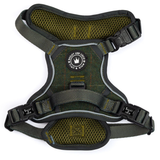
Step 1: Choose the right harness. You need a harness with both a front D-ring (on the chest) and a back D-ring (between the shoulder blades). Most modern no-pull harnesses include both. Check that the harness fits snugly without rubbing; you should be able to fit two fingers underneath the straps.
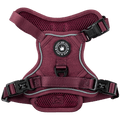
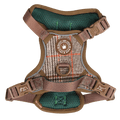
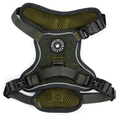
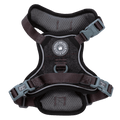
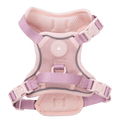
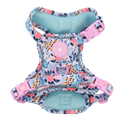
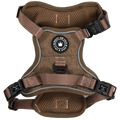
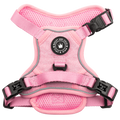
Our Trail & Glow harnesses include both front and back D-rings as standard, making them an ideal match for double-ended leads.
Step 2: Clip the front end. Attach one clip to the front chest D-ring. This is the active steering end that will redirect your dog when they pull. Make sure the clip is securely fastened and the lead runs cleanly without twisting.
Step 3: Clip the back end. Attach the other clip to the back D-ring between the shoulder blades. This end provides stability and acts as a backup connection. The lead should now form a loop that hangs gently beneath your dog's chest.

Step 4: Hold the centre handle. Grip the centre handle with your dominant hand. You can also gather some of the slack in the same hand for shorter control in tight spaces. Your other hand stays free for treats, gestures, or managing poo bags.
Step 5: Walk and adjust. Start walking and observe how the lead behaves. The loop beneath the chest should hang with a gentle drape, not drag on the ground. If it is too long, gather more slack. If the lead feels tight when the dog is walking nicely, it may be too short for your dog's build.
Double-Ended Lead vs Standard Lead: A Comparison
How does a double-ended lead compare to a traditional single-clip lead like the Bailey and Coco fabric dog leads? Here is the breakdown.
| Feature | Double-Ended Lead | Standard Lead (e.g. Bailey & Coco 5ft Lead) |
|---|---|---|
| Attachment points | Two clips | One clip |
| Anti-pull capability | Excellent (with front-clip harness) | Good (relies on harness type) |
| Steering control | High (two-point directional) | Standard (single-point) |
| Safety redundancy | Yes (dual attachment backup) | No (single point of failure) |
| Best for | Pullers, training, reactive dogs | Well-trained dogs, everyday walks |
| Ease of use | Moderate (setup required) | Very easy (clip and go) |
| Multi-dog capability | Yes (can walk two dogs) | No |
| Comfort features | Varies by brand | Padded neoprene handle, reflective stitching |
| Style options | Limited (mostly plain webbing) | Wide range (tweed, patterns, colours) |
The takeaway is straightforward. If your dog walks well and does not pull, a quality standard lead like the Bailey and Coco fabric dog leads is all you need. They are more comfortable to hold, more stylish, and simpler to use. If your dog is in training, pulls consistently, or needs extra management, a double-ended lead paired with the right harness is worth considering as a training tool alongside your everyday lead.
Using Double-Ended Leads with No-Pull Harnesses
The combination of a double-ended lead and a no-pull harness is widely considered the most effective humane equipment setup for dogs that pull. Here is why the pairing works so well.
A no-pull harness with a front chest clip is designed to redirect your dog's forward momentum to the side when they pull.
On its own, this is already effective. But with a single-clip lead, the harness can sometimes twist or shift as the dog moves, reducing the effectiveness of the front clip.
When you add a double-ended lead, the back clip anchors the harness in position while the front clip does the steering. The harness stays centred and balanced on the dog's body, the front clip redirects consistently, and you have smooth, even control that feels natural in your hands.
This setup is particularly effective for medium to large breeds that have the strength to overpower a single attachment point. Breeds like Labradors, Huskies, Boxers, and Staffies respond exceptionally well to this combination because it manages their strength without relying on discomfort or restriction.
Walking Two Dogs on One Lead
Multi-dog households face a unique challenge: walking two dogs simultaneously without ending up tangled in leads like a maypole. A double-ended lead offers an elegant solution.
By clipping one end to each dog, you can walk both from the centre handle. This keeps the dogs at a similar distance from you and prevents the classic problem of two separate leads crossing over and wrapping around your legs.
However, there are some important caveats. This setup works best when both dogs are a similar size and walk at a similar pace. If one dog is significantly larger or stronger than the other, the bigger dog can inadvertently pull the smaller one around, which is uncomfortable for both. Similarly, if one dog is reactive and the other is calm, the shared lead means any lunge or sudden movement from one dog affects the other.
For the best results with two dogs, look for a double-ended lead with a centre ring or handle that keeps the two sides balanced. Start with short, low-distraction walks to let both dogs adjust to the shared setup before taking on busier environments.
If you are managing multiple dogs regularly, whether personally or professionally, our guide on how many dogs a dog walker can walk at once covers the UK legal limits, insurance requirements, and practical safety advice for group walks.

Double-Ended Lead Length and Material Guide
Choosing the right length and material makes a significant difference to how well the lead performs.
Length
Most double-ended leads range from 1.5 metres to 2.5 metres in total length. For the front-and-back harness configuration, the lead needs to be long enough to loop comfortably beneath the dog's chest without dragging on the ground. As a general rule, smaller dogs need a shorter lead (around 1.5 metres) and larger dogs need something closer to 2 metres or slightly longer.
If you plan to use the lead primarily for walking two dogs, you will want something at the longer end of the range, ideally 2 metres or more, so each dog has enough room to walk comfortably without being pressed together.
Material
Nylon webbing. The most common material for double-ended leads. It is durable, lightweight, and affordable. However, cheaper nylon can be rough on the hands and may fray over time. Look for padded or cushioned handles.
Biothane. A synthetic material that feels like leather but is waterproof, easy to clean, and virtually indestructible. Biothane double-ended leads are excellent for dogs that walk in rain, mud, or water, which covers most of us in the UK.
Rope. Double-braided rope leads offer a comfortable grip and a premium feel. While less common in double-ended configurations, some brands offer rope leads with clips at both ends.
Leather. Traditional and beautiful, but heavier than alternatives and requires maintenance to keep supple. Leather double-ended leads are available but less common than nylon or biothane options.
Hardware
The clips are arguably the most important component. Look for trigger clips or lockable carabiner-style clips that are rated for your dog's weight. Cheap clips can fail under pressure, and with a strong dog, that is a genuine safety concern. Brass or stainless steel hardware is more durable than zinc alloy, and it resists corrosion from rain and sea spray.
Double-Ended Leads vs Other Lead Types
Wondering how a double-ended lead stacks up against other lead styles? Here is where it fits in the broader landscape of dog leads.
| Lead Type | Best For | Limitations |
|---|---|---|
| Double-Ended Lead | Pullers, training, reactive dogs, two-dog walks | Requires compatible harness, more complex setup |
| Standard Fixed Lead (5ft) | Everyday walks, well-trained dogs | Single attachment point, less steering control |
| Slip Lead | Working dogs, vets, emergencies | Tightening mechanism, not for pullers or puppies |
| Retractable Lead | Open spaces with well-trained dogs | Poor control, mechanism failure risk, not for training |
| Long Line (10-30ft) | Recall training, open fields | Not practical for pavement walks |
For most families, the ideal setup is a quality everyday lead, such as the Bailey and Coco fabric leads, for daily walks when your dog is walking well, plus a double-ended lead and no-pull harness combination for training sessions or days when extra control is needed. Check our complete guide to the best dog leads in the UK for a full breakdown of every lead type.
Common Mistakes to Avoid
Double-ended leads are effective tools, but they work best when used correctly. Here are the mistakes to watch out for.
Using with a harness that only has one D-ring. A double-ended lead needs at least two attachment points to function as intended. If your harness only has a back clip, you will need to upgrade to a harness with both front and back D-rings.
Letting the lead drag on the ground. If the loop beneath the dog's chest hangs too low, it can catch on the dog's legs, trip them, or get snagged on objects. Adjust the length by gathering slack in your hand.
Using too much tension. The lead should be loose when the dog is walking nicely. If you are constantly holding it tight, you are creating the very tension you are trying to eliminate. Let the lead do the work; it only needs to engage when the dog pulls.
Expecting instant results. A double-ended lead is a tool, not a magic solution. It makes training easier and more effective, but you still need to actively teach your dog to walk on a loose lead through consistent practice and positive reinforcement.
Forgetting to check the clips. With two clips doing twice the work, wear and tear accumulates faster. Check both clips regularly for smooth operation and replace the lead if either shows signs of weakening.

Pairing Your Double-Ended Lead with the Right Bailey and Coco Lead
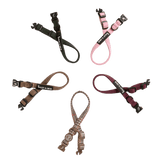
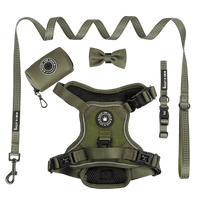
Bailey & Coco now make a Hands-Free Double Ended Dog Lead of our own. The 210cm lead can be worn crossbody or around the waist and clipped to the front and back of a suitable harness for the two-point setup described above. The matching Multi-Dog Lead Extension adjusts from 65cm to 100cm, while the Traffic Handle Add-On provides quick close control near roads, gates and other busy areas. Many owners use a double-ended lead for structured training walks and then switch to a Bailey and Coco fabric lead for relaxed everyday strolls once their dog's lead manners improve.

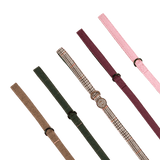
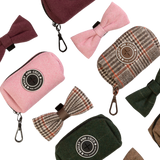
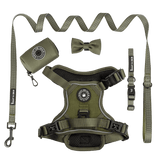
The Bailey and Coco fabric leads feature a 5ft length, padded neoprene handle, secure D-ring, and reflective stitching. Available in stunning patterns like Heritage Plaid, Charcoal Tweed, Lavender Tweed, Mulberry Tweed, and Forest Tweed, they are the lead you reach for when you want your walk to feel enjoyable rather than like a training session.
The goal with any training tool, including a double-ended lead, is to eventually not need it. A double-ended lead helps you get there faster, and a Bailey and Coco lead is what you use when you arrive.
Frequently Asked Questions About Double-Ended Dog Leads
What is a double-ended dog lead used for?
A double-ended dog lead has a clip at each end, allowing you to attach it to two points simultaneously. The most common use is clipping one end to the front D-ring of a harness and the other to the back D-ring, providing better steering control and anti-pull redirection. They are also used to attach to both a harness and collar for extra security, or to walk two dogs on one lead.
Do double-ended leads stop dogs pulling?
When paired with a front-clip no-pull harness, double-ended leads are one of the most effective tools for reducing pulling. The front clip gently redirects the dog's momentum to the side when they pull, while the back clip keeps the harness stable. However, the lead is a management tool rather than a training solution on its own. Consistent positive reinforcement training alongside the equipment produces the best long-term results.
Can I use a double-ended lead with any harness?
You need a harness with at least two D-ring attachment points, typically a front chest ring and a back ring between the shoulder blades. Most modern no-pull harnesses include both. If your harness only has a single back clip, a double-ended lead will not work in the recommended front-and-back configuration. Check your harness has both points before purchasing a double-ended lead.
Are double-ended leads good for reactive dogs?
Yes, double-ended leads are excellent for reactive dogs. The two attachment points give you significantly more control and the ability to gently redirect your dog's body position before they reach a full reaction. Many UK behaviourists specifically recommend double-ended leads for managing reactivity during walks, as they allow subtle steering without harsh corrections.
What length double-ended lead should I get?
For the front-and-back harness configuration, many dogs do well with a lead between 1.5 and 2.1 metres. The right length depends on your dog's size, the position of the harness attachment points and whether you also want to wear the lead crossbody or around your waist. For walking two dogs, choose a setup that gives each dog enough room to move comfortably without excessive slack.
Can I walk two dogs on a double-ended lead?
Yes, you can clip one end to each dog and hold the centre handle. This works best with dogs of similar size and walking pace. It is not recommended for dogs with significant size differences, or if one dog is reactive, as sudden movements from one dog will directly affect the other. Start with short, quiet walks to let both dogs adjust to the shared setup.
Is a double-ended lead better than a standard lead?
It depends on your dog. For dogs that pull, are in training, or are reactive, a double-ended lead paired with a no-pull harness offers superior control and training support. For well-trained dogs that walk nicely on a loose lead, a quality standard lead is simpler, more comfortable, and perfectly sufficient. Many owners keep both: a double-ended lead for training and a premium standard lead for everyday walks.


