





















Whether you are thinking about hiring a professional dog walker or considering launching a dog walking business yourself, one question crops up almost immediately: how many dogs can a dog walker walk at once? It sounds simple, but the answer involves a tangle of UK law, local bylaws, insurance requirements, practical safety considerations, and the individual temperament of every dog on the lead.
The short answer is that there is no single national legal limit in the UK. But that does not mean anything goes. Local councils, insurers, and professional bodies each impose their own guidelines, and the practical reality of walking multiple dogs safely sets its own ceiling regardless of what the law allows. In this guide, we cover the full picture: what UK law actually says, what insurers expect, what experienced professionals recommend, and what you should look for if you are hiring a walker for your own dog.
Quick Answer
There is no single UK-wide legal limit, but most professional bodies recommend a maximum of 4 to 6 dogs per walker. Local council bylaws, insurance requirements, and the dogs' behaviour all affect the practical limit.
What We Cover
- Is There a Legal Limit on How Many Dogs You Can Walk at Once in the UK?
- Dog Walking Licensing: Do You Need One?
- Insurance Requirements and Dog Numbers
- What Do Professional Bodies Recommend?
- Practical Factors That Affect How Many Dogs You Can Walk
- Dog Walking Scenarios: A Comparison
- Breed and Behaviour Considerations for Group Walks
- Tips for Professional Dog Walkers
- A Dog Owner's Checklist for Hiring a Dog Walker
- Frequently Asked Questions
Is There a Legal Limit on How Many Dogs You Can Walk at Once in the UK?
There is no single piece of UK-wide legislation that sets a maximum number of dogs a person can walk at one time. No act of Parliament says "you may walk four dogs but not five." This surprises many people, because it feels like such an obvious thing to regulate. But the legal framework around dog walking in the UK is patchwork rather than uniform, built from overlapping layers of national law, local bylaws, and licensing requirements.
That said, several pieces of national legislation are directly relevant.
The Animal Welfare Act 2006
This is the primary piece of UK animal welfare legislation in England and Wales (Scotland has the Animal Health and Welfare (Scotland) Act 2006). It places a duty of care on anyone responsible for an animal, whether permanently or temporarily. A dog walker who takes charge of dogs, even for an hour, is legally responsible for their welfare during that time. If a walker takes on more dogs than they can safely manage and a dog suffers as a result, the walker could face prosecution under this act.
The Dangerous Dogs Act 1991
This act makes it a criminal offence for a dog to be dangerously out of control in a public place. If a walker is handling too many dogs and loses control, resulting in a dog injuring a person or another animal, the walker could face charges. The key phrase is "dangerously out of control," and courts will consider whether the handler had reasonable control given the number of dogs in their care.
The Dogs Act 1871 and Dogs (Protection of Livestock) Act 1953
These older pieces of legislation cover dogs worrying livestock and dogs that are dangerous. For walkers operating in rural areas or near farmland, managing multiple dogs around livestock adds significant risk. A single dog chasing sheep is a serious offence; several dogs doing so while a walker struggles to regain control is a much worse situation.
Top Tip
Before walking in any new area, search your local council's website for Public Spaces Protection Orders. These change regularly and can vary between parks within the same borough.
Local Council Bylaws: The Real Limits
While national law stays silent on specific numbers, many local councils have stepped in with their own rules. Public Spaces Protection Orders (PSPOs) give councils the power to set enforceable limits on the number of dogs one person can have in a public space. These limits vary significantly from one council to another.
Common limits set by PSPOs include:
- Four dogs per person: this is the most common limit found across English and Welsh councils
- Six dogs per person: some councils set a slightly higher ceiling
- Two dogs per person: a few councils, particularly those managing heavily used urban parks, go as low as two
Breaching a PSPO is a criminal offence that can result in a fixed penalty notice of up to 100 pounds. If it goes to court, fines can reach 1,000 pounds. Professional dog walkers need to check the specific PSPOs for every park and public space they use, because limits can vary even within the same borough.
Scotland and Northern Ireland
Scotland operates under slightly different legislation but follows similar principles. The Control of Dogs (Scotland) Act 2010 focuses on irresponsible dog ownership and can apply to walkers who fail to maintain proper control. Northern Ireland has its own set of rules under the Dogs (Northern Ireland) Order 1983, amended in 2011, which again places emphasis on control rather than setting a numerical cap.
Dog Walking Licensing: Do You Need One?
At the time of writing, there is no mandatory national licence for professional dog walkers in the UK. Unlike dog breeders or boarding kennels, which require licences under the Animal Welfare (Licensing of Activities Involving Animals) (England) Regulations 2018, dog walking falls outside the current licensing framework.
However, this is an area of active discussion. Several industry bodies and animal welfare organisations have called for mandatory licensing, and some local authorities have introduced voluntary registration schemes. If you are starting a dog walking business, it is worth checking whether your local council has any registration requirements.
Even without a legal requirement, many professional walkers voluntarily join accreditation schemes run by organisations like the National Association of Pet Sitters and Dog Walkers (NARPS), the Pet Industry Federation (PIF), or the Institute of Modern Dog Trainers (IMDT). These memberships signal professionalism and typically come with requirements around insurance, training, and maximum dog numbers.
Important
Some local councils, including parts of London and Edinburgh, have specific bylaws limiting dog numbers. Fines for non-compliance can reach several hundred pounds. Check your local authority's website before walking commercially.
Insurance Requirements and Dog Numbers
If national law is vague on numbers, insurance companies are not. Professional dog walking insurance is essential for anyone walking dogs for payment, and insurers set very clear limits on how many dogs a walker can handle at once.
Most UK pet business insurers cap coverage at four to six dogs per walker at any one time. Some key points to understand:
- Public liability insurance typically covers injury to third parties or damage to property caused by dogs in the walker's care. Exceeding the insurer's dog limit can void the policy entirely.
- Care, custody, and control (CCC) insurance covers injury or loss of the dogs themselves while in the walker's care. Again, exceeding the stated number of dogs per walk can invalidate claims.
- Some insurers differentiate between the walker's own dogs and client dogs. Walking three client dogs plus two of your own might push you over the limit, even if you feel perfectly comfortable with five dogs.
- Premium increases are common as the number of dogs per walk goes up. Insuring for six dogs per walk costs more than insuring for four, reflecting the increased risk.
The insurance limit is arguably more important than the legal one. If a walker's insurance is voided because they had too many dogs, and something goes wrong, they face unlimited personal liability. A single dog bite claim can run into tens of thousands of pounds. Walking without valid insurance is a risk no responsible professional should take.
Top Tip
Always check your public liability insurance covers the specific number of dogs you walk. Most policies cap at 6 dogs and require each dog to be assessed individually.
What Do Professional Bodies Recommend?
Most UK professional dog walking organisations recommend a maximum of four dogs per walker. This number comes up consistently across the industry and is based on both safety evidence and practical experience.
The reasoning is straightforward: with four dogs, an experienced walker can maintain visual contact with every dog, respond quickly if one dog reacts, manage lead handling without becoming tangled, and safely cross roads. Beyond four, the difficulty increases exponentially rather than linearly. Five dogs is not just 25% harder than four; it is significantly more demanding, because the number of potential dog-to-dog interactions multiplies rapidly.
Some organisations, including the RSPCA, have publicly supported a maximum of four dogs per walker. The Kennel Club has also weighed in, suggesting that walkers should consider each dog's individual needs and never take on more than they can safely control.
Practical Factors That Affect How Many Dogs You Can Walk
The "right" number of dogs is not a fixed figure. It depends on a web of practical factors that experienced walkers learn to assess on a walk-by-walk basis.
Dog Size and Strength
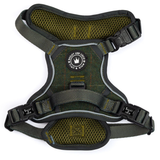
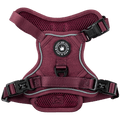
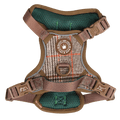
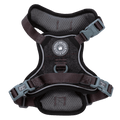
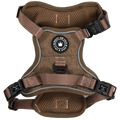
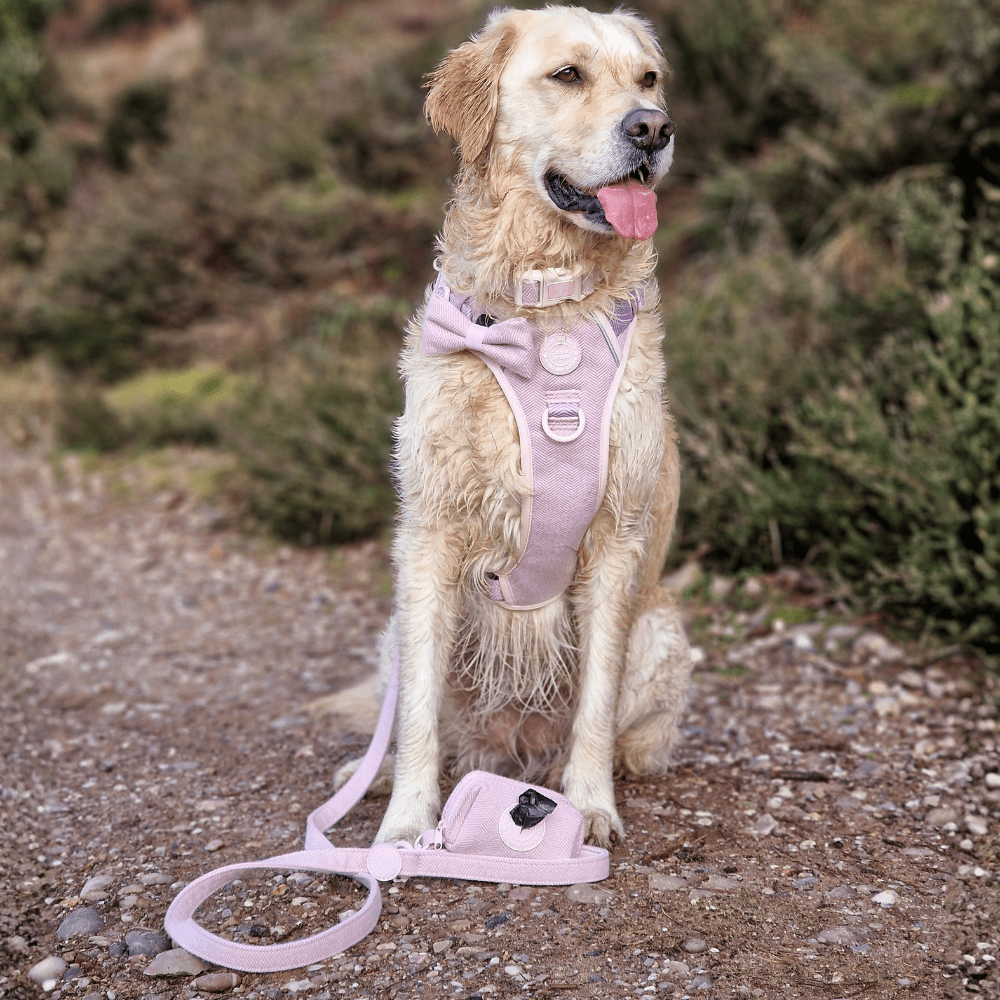
Four small, well-mannered Cavalier King Charles Spaniels are a very different proposition from four boisterous young Labradors. The physical strength required to restrain a large dog that suddenly lunges is considerable, and when multiple large dogs react simultaneously, even strong walkers can find themselves overwhelmed. Using a quality no-pull harness on each dog makes a significant difference, distributing force more evenly and reducing the pulling power that reaches the walker's hands.
Behaviour and Training Level
Well-trained dogs with solid recall and good lead manners are far easier to manage in groups. A single reactive dog in a group of four can absorb all of the walker's attention, leaving the other three effectively unsupervised. Professional walkers typically assess every dog before accepting them and will match group compositions carefully.
Terrain and Environment
Walking four dogs through a quiet, enclosed meadow is far simpler than walking them along a busy high street with traffic, other dogs, and pedestrians. Near roads, the stakes are higher and the margin for error is smaller. Parks with wildlife, livestock, or off-lead areas introduce additional variables that a walker must manage. Understanding UK lead laws is essential for knowing when dogs must be on-lead and when off-lead time is appropriate.
Weather Conditions
Wet, muddy, or icy conditions reduce a walker's physical control. Dogs may slip, leads become harder to grip, and the walker's own footing is less secure. In extreme cold weather, walks may need to be shorter, which affects scheduling for walkers managing multiple groups per day.
Equipment Quality
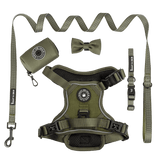
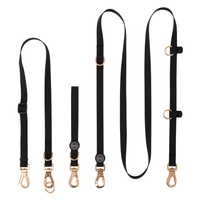
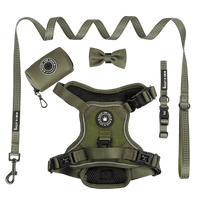
The right equipment makes a measurable difference. Professional walkers who use well-fitted harnesses rather than just collars, quality leads with comfortable handles, and accessories like treat pouches for reward-based management find multi-dog walks considerably easier. Double-ended leads are particularly useful for dogs that need additional guidance, as they provide two points of contact and better steering.

Dog Walking Scenarios: A Comparison
To illustrate how these factors interact, here is a practical comparison of different dog walking scenarios. Each row shows how the number of dogs, their behaviour level, and the terrain combine to produce a different level of difficulty and risk.
| Number of Dogs | Behaviour Level | Terrain | Difficulty | Recommended? |
|---|---|---|---|---|
| 2 | Well-trained, calm | Quiet park or countryside | Low | Yes, ideal for new walkers |
| 3 | Mixed (1 puller, 2 calm) | Suburban streets and park | Moderate | Yes, with no-pull harness on the puller |
| 4 | All well-trained | Enclosed park, no livestock | Moderate | Yes, industry-standard maximum |
| 4 | Mixed (1 reactive, 3 calm) | Urban park with other dogs | High | Only for experienced walkers with proper equipment |
| 5 | All well-trained | Quiet countryside path | High | Risky; may exceed insurance limits |
| 6 | Mixed behaviour | Any public space | Very high | Not recommended; safety and control compromised |
| 6+ | Any | Any | Extreme | No; exceeds most insurance and bylaw limits |
Breed and Behaviour Considerations for Group Walks
Not all dogs are suited to group walking, and a responsible walker will screen dogs before adding them to a pack. Here are the key considerations.
Breed Temperament
Some breeds are naturally more sociable and easygoing in groups. Retrievers, Spaniels, and many smaller companion breeds tend to do well on group walks, provided they have been properly socialised. Breeds with strong prey drives, guarding instincts, or a tendency towards dog-selectivity may need more careful management or one-to-one walks.
Age and Energy Levels
Mixing an elderly dog with three young, high-energy dogs is a recipe for problems. The senior dog may be stressed, stepped on, or unable to keep pace. Good walkers match their groups by energy level and walking speed, ensuring every dog in the group has an appropriate experience.
Socialisation History
Dogs that have not been well socialised may find group walks overwhelming or frightening. A dog that is uncomfortable around unfamiliar dogs can become defensive, and adding more dogs to the group only increases the pressure. Professional walkers typically introduce new dogs to their groups gradually, starting with a one-to-one assessment walk.
Top Tip
Always conduct a one-to-one assessment walk with every new dog before adding them to a group. Fifteen minutes together is enough to spot potential issues with reactivity, recall, or lead manners.
Reactivity and Lead Behaviour
Reactive dogs, those that bark, lunge, or fixate on other dogs, people, or vehicles, demand a disproportionate amount of the walker's attention. One reactive dog in a group of four means the walker is effectively managing a reactive dog while also supervising three others, which is extremely demanding. For reactive dogs, a no-pull harness with a front chest clip is essential, as it gives the walker the steering control needed to redirect the dog before a full reaction occurs.
Medical or Special Needs
Dogs with medical conditions, mobility issues, or dietary restrictions need additional attention and monitoring. They may need shorter walks, more frequent rest breaks, or medication during the walk. Each special-needs dog in the group effectively reduces the walker's capacity for additional dogs.

Tips for Professional Dog Walkers
If you are running or starting a dog walking business, these best-practice guidelines will help you operate safely, professionally, and within the law.
1. Know Your Local Bylaws
Before walking in any public space, check the local council's PSPOs. These can change, so review them annually. If you work across multiple boroughs, you may need to comply with different limits in different parks. Keep a written record of the limits for each location you use.
2. Get Proper Insurance
Professional dog walking insurance is non-negotiable. Ensure your policy covers the number of dogs you intend to walk simultaneously, includes public liability (minimum one million pounds, though two million or more is preferable), and includes care, custody, and control cover. Review your policy annually and notify your insurer of any changes to your operations.
3. Carry Identification and Emergency Information
Carry identification for every dog in your care, including the owner's contact details, the dog's veterinary practice, and any medical or behavioural notes. In an emergency, whether a dog escapes, is injured, or is involved in an incident, you need immediate access to this information.
4. Assess Every Dog Before Accepting Them
Conduct a thorough assessment walk with every new dog before adding them to a group. Observe their lead behaviour, recall, reaction to other dogs, response to distractions, and general temperament. Not every dog is suitable for group walking, and it is better to turn down a booking than to put the group at risk.
5. Match Your Groups Carefully
Group composition matters more than group size. Three well-matched dogs will be safer and more enjoyable than four dogs with clashing temperaments or energy levels. Consider size, energy, sociability, and walking pace when assembling groups.
6. Use Quality Equipment
Invest in proper equipment for every walk. Well-fitted harnesses give better control than collars alone, particularly for dogs that pull. Double-ended leads provide two points of contact for dogs that need extra management. Long training leads can be useful in enclosed spaces where you want to give dogs more freedom while maintaining a safety line. A good treat pouch keeps rewards accessible for reinforcing good behaviour throughout the walk.
Our professional-grade dog harnesses are built to handle daily use and come in sizes from XS to XL, making them a reliable choice for dog walkers managing multiple breeds.
7. Have an Emergency Plan
Know what you will do if a dog escapes, if there is a dog fight, if a dog is injured, or if you are injured. Having a clear plan, rather than trying to think on the spot while managing multiple dogs, could prevent a difficult situation from becoming a dangerous one.
Top Tip
Group dogs by energy level and size rather than owner preference. A calm senior Labrador and a reactive young Collie in the same group is a recipe for stress.

A Dog Owner's Checklist for Hiring a Dog Walker
If you are on the other side of the equation, looking to hire a professional dog walker for your own dog, here is what to look for and what questions to ask.
Questions to Ask
- How many dogs do you walk at once? The answer should be no more than four, and ideally they should explain why they have chosen that number.
- Are you insured? Ask to see proof of insurance, including public liability and care, custody, and control cover. Check that the policy covers the number of dogs they walk.
- Do you do an assessment walk? A good walker will always want to meet your dog before the first group walk. Be wary of anyone who will add your dog to a group sight unseen.
- How do you group your dogs? Look for answers about matching temperament, size, energy level, and walking pace. Generic answers like "they all get along" are a red flag.
- Where do you walk? They should be able to name specific routes and explain why they choose those locations. Ask about proximity to roads, livestock, and off-lead policy.
- What equipment do you use? Professional walkers will have opinions about leads and harnesses. If they use slip leads on every dog regardless of size and temperament, that is worth questioning.
- What happens in an emergency? They should have a clear plan for escapes, injuries, and incidents.
- Can I see references or reviews? Established walkers will have client testimonials. New walkers should at least be able to provide character references and evidence of relevant training or qualifications.
Red Flags to Watch For
- Walking more than six dogs at once
- No insurance or unwilling to show proof
- No assessment process for new dogs
- Using one type of equipment for all dogs regardless of need
- Unable to name their insurance provider
- No emergency plan or emergency contact protocol
- Reluctant to answer questions about group sizes or walking locations
Prepare Your Dog for Group Walks
You can help your dog succeed in group walks by ensuring they have reliable lead manners, basic socialisation with other dogs, and properly fitted equipment. A well-fitted no-pull harness is one of the best investments you can make, as it gives the walker better control and is more comfortable for your dog than a collar during extended walks. If your dog pulls on the lead, fitting them with a no-pull harness before they start group walks will make the transition significantly smoother for everyone involved.
Key Takeaways
- There is no national UK law setting a maximum number of dogs per walker
- Most professional bodies and insurers recommend 4 to 6 dogs maximum
- Local council bylaws may impose specific limits; always check your area
- Public liability insurance is essential and most policies cap coverage at 6 dogs
- Group dogs by energy level, size, and temperament for safer, calmer walks
Frequently Asked Questions
Is there a legal limit on how many dogs you can walk in the UK?
There is no single national legal limit. However, many local councils set limits through Public Spaces Protection Orders (PSPOs), commonly capping the number at four to six dogs per person in public spaces. The Animal Welfare Act 2006 also requires that anyone responsible for dogs, including walkers, provides adequate care, which effectively limits the number to however many the walker can safely manage.
Do dog walkers need insurance in the UK?
There is no legal requirement for dog walkers to carry insurance, but it is considered essential by every professional body in the industry. Without public liability insurance, a walker faces unlimited personal financial liability if a dog in their care injures someone or causes damage. Most insurers cap cover at four to six dogs per walk. Walking without insurance is a serious risk that no responsible professional should take.
What is the recommended maximum number of dogs for a professional walker?
Most professional bodies, insurers, and animal welfare organisations recommend a maximum of four dogs per walker. This number allows the walker to maintain visual contact with every dog, respond quickly to incidents, manage leads safely, and cross roads without risk. Some experienced walkers work with up to six in very specific circumstances, but four is the widely accepted best-practice standard.
Can I walk different breeds together in one group?
Yes, but group composition requires careful thought. Dogs should be matched by energy level, walking pace, and temperament rather than purely by breed. A calm, well-socialised group of mixed breeds can work beautifully, while a group of same-breed dogs with clashing temperaments can be difficult. Professional walkers assess each dog individually and build groups based on compatibility rather than breed alone.
Do I need a licence to be a dog walker in the UK?
At present, there is no mandatory national licence for dog walkers in the UK. Unlike dog boarding or breeding, which require licences under the Animal Welfare (Licensing of Activities Involving Animals) Regulations 2018, dog walking is not currently a licensable activity. However, many professionals join voluntary accreditation schemes and some local councils operate registration programmes. The regulatory landscape is evolving, so it is worth checking current requirements with your local authority.
What equipment should a dog walker use for walking multiple dogs?
Professional walkers should use well-fitted harnesses rather than collars alone, as harnesses provide better control and are safer for the dogs. No-pull harnesses with front chest clips are particularly effective for dogs that pull. Double-ended leads offer two points of contact for dogs needing extra guidance, and a treat pouch keeps rewards accessible for reinforcing good behaviour. Quality equipment makes a measurable difference to safety and control.
What should I check before hiring a dog walker?
Ask about insurance (request to see proof), maximum group sizes, assessment processes for new dogs, walking locations, emergency procedures, and equipment choices. A good walker should walk no more than four dogs at once, carry full insurance, conduct assessment walks with every new dog, and be happy to answer all your questions openly. Check reviews or ask for references, and pay attention to how they interact with dogs during the initial meeting.


