

























If you have ever Googled “dog lead laws UK”, you have probably noticed the same frustrating answer: “it depends.” And honestly, that is true. In the UK, there is no single rule that says dogs must be on a lead everywhere, all the time. Instead, lead rules come from a mix of:
- National rules about control and safety
- Rules for roads and certain designated areas
- Local council rules, often through Public Spaces Protection Orders (PSPOs)
- Extra countryside protections, especially around livestock and ground nesting birds
- Different systems in Scotland and Northern Ireland
Contents
This guide explains what applies across the UK, what changes by area, and how to check the exact rules where you live or where you are walking today. It is written using official sources only, including GOV.UK, legislation.gov.uk, mygov.scot and nidirect.gov.uk. Collar and tag requirements sit alongside the lead rules; our separate UK dog tag law guide covers the Control of Dogs Order 1992 in plain English.

Quick answer: when do you need a lead in the UK?
In everyday life, you are most likely to need a lead in these situations:
- Near roads and shared paths, because the Highway Code says dogs should be kept on a short lead on the pavement, road, or paths shared with cyclists or horse riders (Rule 56). Official Highway Code rules 47 to 58
- On a designated road, where it is an offence to have a dog on that road without being held on a lead. Road Traffic Act 1988, section 27
- On open access land at certain times, where GOV.UK says you must keep your dog on a lead no more than 2 metres long between 1 March and 31 July, and at all times around livestock. GOV.UK right to roam guidance
- In areas with local council restrictions, often through a PSPO, where councils can require dogs on leads in certain zones (parks, cemeteries, sports pitches, promenades and more). GOV.UK PSPO guidance for dogs
- Anywhere your dog could be considered dangerously out of control, because it is against the law for a dog to be dangerously out of control in any place. GOV.UK overview and Dangerous Dogs Act 1991, section 3

Use this graphic
You’re welcome to use this graphic in your own article or resource page. Please credit Bailey & Coco and link back to this page.
Copy this credit line:
Quick reference table: where you usually need a lead
| Place | Safest rule of thumb | Why | Official source |
|---|---|---|---|
| Near roads, pavements, shared paths | Short lead | Reduces risk around traffic, cyclists, horses | Highway Code rules 47–58 |
| Open access land (1 March–31 July) | Lead up to 2m | Protects ground-nesting birds | GOV.UK open access guidance |
| Around livestock (open access land) | Lead up to 2m | Helps prevent livestock worrying incidents | GOV.UK open access guidance |
| Parks, beaches, promenades, play areas (varies) | Check PSPO + signs | Local rules can require leads or exclusions | GOV.UK PSPO guidance |
| Anywhere your dog may cause fear or risk | Use a lead for control | “Dangerously out of control” can apply anywhere | GOV.UK overview |

Is it illegal to have a dog off lead in the UK?
Usually, no. There is no single UK-wide law that says dogs must be on a lead at all times in all public places.
But it can become illegal very quickly if any of the following apply:
- Local rules require a lead (for example a council PSPO in a park, beach, promenade, cemetery or sports area). If signs say “dogs on leads”, treat that as the rule for that area. GOV.UK PSPO guidance
- You are on open access land at certain times. GOV.UK says dogs must be on a lead no more than 2 metres long on open access land between 1 March and 31 July, and at all times around livestock. GOV.UK right to roam guidance
- Your dog is “dangerously out of control”. This can apply anywhere, even where dogs are usually allowed off lead. GOV.UK controlling your dog
Is it illegal to let dogs off lead in England?
Not automatically. In England, the most common reason it becomes a problem is local council rules (PSPOs) or a situation where a dog is not under proper control. If you are unsure, check your council’s PSPO page and look for signs at the entrance. GOV.UK PSPO guidance
Can dogs be off lead on public footpaths?
Often, yes as long as there are no local restrictions and your dog is under reliable control.
However, if the footpath crosses open access land, or you are near livestock, or you see wildlife protection signs, it is safest to use a lead. On open access land, GOV.UK says leads should be no more than 2 metres long between 1 March and 31 July, and at all times around livestock. GOV.UK right to roam guidance
Is it illegal to let your dog run loose in England?
If “run loose” means out of control, yes, it can be. Even where dogs are allowed off lead, you are responsible for keeping your dog under control and preventing situations where someone feels threatened or there is a risk of injury. GOV.UK controlling your dog
Simple rule: If there are signs, livestock, shared paths, or your recall is not 100% today, clip the lead on.
How to check the lead rules in your exact area (in 2 minutes)
The biggest reason people get caught out is not national law, it is local rules. Councils can set restrictions for specific parks, promenades, nature reserves, play areas and sports pitches. These rules are often created using Public Spaces Protection Orders (PSPOs).
Here is a simple method that works almost every time:
- Search your council name + “dog PSPO” or “public spaces protection order dogs”. Example search: “Westminster Council dog PSPO”.
- Look for a map or list showing dogs on lead zones, exclusion zones, and “dogs on lead by direction” zones (where an authorised officer can tell you to put your dog on a lead).
- Check for seasonal rules, especially for beaches, wildlife areas, nature reserves and popular promenades.
- On the day of your walk, look for signs at entrances and along key paths. If a sign says dogs must be on a lead, treat it as the rule for that area.
For example, Westminster City Council notes its Dog Control PSPO was renewed in June 2024 and is due to expire on 24 June 2027 unless extended. Read Westminster’s PSPO details here.
Worked example: Westminster Council “dog PSPO”
- Search: Westminster Council dog PSPO
- Open the official Westminster City Council PSPO page (it’s usually one of the first results).
- Look for the Dog control section, which explains where dogs are excluded, where leads are required, and where owners may be directed to put a dog on a lead.
- If you want the exact wording of the rules and any zone details, open the council’s Dog Control PSPO document linked on the same page.
Official Westminster PSPO page: https://www.westminster.gov.uk/pspo
If you want to understand what councils are allowed to do, GOV.UK lists common dog-related PSPO requirements, including keeping your dog on a lead, putting your dog on a lead if told to by a council officer, stopping dogs going to certain places, and limiting the number of dogs you have with you. GOV.UK PSPO guidance
PSPO rules you’ll see most often (what they mean in plain English)
Most councils use PSPOs to set dog rules for specific places. The wording can look official and confusing, but it usually comes down to a few common rule types like the ones below.
| Common PSPO rule | What it means day-to-day | Where you’ll usually see it | What to do |
|---|---|---|---|
| Dogs on lead in specified zones | Your dog must be on a lead in the named area (sometimes only on certain paths or at certain times). | Busy parks, promenades, cemeteries, sports pitches, shared paths | Clip on before you enter and keep the lead short if the area is crowded. |
| Dogs excluded zones | Dogs are not allowed at all in the named area (even on a lead). | Children’s play areas, some sports grounds, some beach zones (often seasonal) | Do not enter with your dog. Use an alternative path or dog-friendly zone. |
| Dogs on lead “by direction” | An authorised officer can tell you to put your dog on a lead at that moment. | Parks and open spaces where councils want flexibility based on conditions | Carry a lead even if you prefer off-lead. If directed, put it on straight away. |
| Maximum dogs per person | Limits how many dogs one person can walk at once in that area. | Urban parks, promenades, busy visitor areas | Check the number before group walks, especially if you help friends or family with their dogs. |
| Dog fouling / “carry bags” rules | You must clear up after your dog, and some areas also require you to carry poo bags (even if your dog doesn’t go). | Most public parks and streets; sometimes stricter zones like promenades and town centres | Bring spare bags and use a walking bag so you’re never caught short. |
If you want the official list of what PSPOs can require for dogs (including leads, exclusions, and limits), GOV.UK summarises it here: GOV.UK PSPO guidance.

UK nations at a glance (what changes by area)
| Nation | What to know | Official starting point |
|---|---|---|
| England | PSPOs often set local lead zones and exclusions. Highway Code guidance applies near roads. | GOV.UK PSPOs |
| Wales | Similar PSPO approach via councils. Countryside restrictions matter on open access land. | GOV.UK open access guidance |
| Scotland | Dog Control Notices can set lead/muzzle requirements for specific dogs if concerns are raised. | mygov.scot Dog Control Notices |
| Northern Ireland | Leads required in some designated zones and around livestock. Local byelaws can apply in parks. | nidirect controlling your dog |
England and Wales: the key rules you need to know
1) Roads and pavements: what the Highway Code says
The Highway Code is not written just for drivers. It includes advice on walking dogs safely near roads and shared paths. Rule 56 says:
- Do not let a dog out on the road on its own.
- Keep it on a short lead when walking on the pavement, road or path shared with cyclists or horse riders.
You can read the official Highway Code rule text here: GOV.UK Highway Code rules about animals.

Practical takeaway: if you are walking near traffic, junctions, school runs, cyclists or horse riders, a short lead is the safest choice even when you are not sure what the local rules are.
2) Designated roads: a lead can be required by law
Some people are surprised to learn that “designated roads” exist. Under the Road Traffic Act 1988, section 27, it is an offence to cause or permit a dog to be on a designated road without the dog being held on a lead. Road Traffic Act 1988, section 27
In plain English, this means a local authority can designate certain roads, and in those areas a lead is legally required. If your area has designated roads, there should be signage.
3) PSPOs: why lead rules change from park to park
PSPOs are one of the main reasons lead rules change by area. Councils can introduce PSPO conditions for specific locations, and those conditions can include:
- Keeping your dog on a lead
- Putting your dog on a lead if told to by an authorised person
- Preventing dogs from entering certain places
- Limiting the number of dogs one person can walk
- Requiring owners to clear up after their dog
This is listed on GOV.UK here: Public Spaces Protection Orders guidance.
Because PSPOs are local, your best move is always to check your own council’s PSPO page before you assume anything. As an example of how specific councils can be, some councils publish clear “dogs on leads” rules for road carriageways, footpaths and other named areas as part of their PSPO guidance. Example PSPO guidance on a council website
What this means for you: it is possible to be perfectly fine off lead in one local park, then be required to use a lead in another park 10 minutes away. Signs and council pages matter.
4) “Dangerously out of control”: the rule that applies everywhere
Even where you are allowed off lead, you are still responsible for control. GOV.UK explains it is against the law to let a dog be dangerously out of control anywhere, including in public places, private places and the owner’s home. GOV.UK controlling your dog in public
The underlying law is in the Dangerous Dogs Act 1991, section 3. Dangerous Dogs Act 1991, section 3
In real life, “dangerously out of control” is not only about biting. It can include situations where someone feels worried that a dog might injure them. If your dog is reactive, over-friendly, jumpy, or has unreliable recall, a lead is often the simplest way to keep everyone comfortable and safe.
Countryside walks: open access land, livestock and seasonal rules
The countryside is one of the most common places where lead laws catch people out. GOV.UK’s guidance on open access land is clear:
- You must keep your dog on a lead no more than 2 metres long on open access land between 1 March and 31 July to protect ground nesting birds.
- You must keep your dog on a lead no more than 2 metres long on open access land at all times around livestock.
Read it directly here: GOV.UK right to roam, dogs on open access land.
It is also worth knowing that “open access land” is different from a public footpath. GOV.UK notes that these lead restrictions apply to open access land, and that other local restrictions may apply. GOV.UK right to roam guidance
A sensible rule of thumb: if you can see livestock, or you are in a place with lambing signs, nesting bird signs, or ground nesting bird warnings, keep your dog on a lead even if you normally walk off lead elsewhere.
Livestock worrying: why it matters
Livestock worrying is treated seriously. In England and Wales, the longstanding offence sits under the Dogs (Protection of Livestock) Act 1953. Dogs (Protection of Livestock) Act 1953
Even if your dog does not attack, chasing livestock can cause injury and distress. The safest approach is simple: if there is any chance of encountering livestock, use a lead and keep your dog close.
Scotland: what changes?
Scotland has its own approach through Dog Control Notices. If a dog is considered out of control, a notice can include requirements such as keeping the dog on a lead in public, using a muzzle, or attending training. mygov.scot Dog Control Notice
More detail sits in Scottish Government guidance on the Control of Dogs (Scotland) Act 2010. gov.scot guidance
Practical takeaway for Scotland: there is still no single rule that all dogs must be on a lead everywhere. But if your dog’s behaviour triggers complaints or safety concerns, Scotland’s system can impose clear lead requirements through a formal notice. Dog Control Notice overview
Northern Ireland: what changes?
Northern Ireland guidance explains that it is not necessary for dogs to be leashed at all times, but dogs must be kept on a lead in designated pedestrian zones and on land where livestock is present. Councils can also have byelaws showing where leashing is required, such as public parks. nidirect controlling your dog in public
Northern Ireland also republishes the Highway Code dog rules, including the short lead guidance for shared paths and roads. nidirect rules about animals 47 to 58
Dog collar and tag laws in the UK (and why this matters on walks)
People often ask: “If my dog is microchipped, do they still need a collar and tag?” In many situations, yes. The Control of Dogs Order 1992 states that every dog, while in a highway or in a place of public resort, shall wear a collar with the name and address of the owner inscribed on the collar or on a plate or badge attached to it. The Control of Dogs Order 1992
Practical takeaway: if you walk your dog in public places, a visible ID tag is still a very sensible part of staying compliant. Many owners also choose to add a phone number for speed, even though the Order focuses on name and address. Always make sure the tag is readable. To see what a compliant, readable tag looks like in practice, our real UK dog tag layouts page walks through genuine orders.
Microchipping is also required
Microchipping is a separate requirement. For England, the rules sit in the Microchipping of Dogs (England) Regulations 2015. Microchipping of Dogs (England) Regulations 2015
Microchipping helps reunite lost dogs, but it does not replace a visible tag in places where the collar and tag rule applies. For choosing a tag that actually stays legible across years of UK walks, see our best dog tags in the UK round-up.
Dogs in cars: what the Highway Code says
If you are heading out for a long walk, a beach day, or a weekend away, dog travel safety matters. The Highway Code says dogs and other animals should be suitably restrained so they cannot distract you while driving or injure you or themselves if you stop quickly. It gives examples such as a seat belt harness, pet carrier, dog cage or dog guard. Highway Code rules about animals

Common places where local lead rules are most likely
Because PSPOs vary so much, it helps to know the most common locations where councils introduce lead requirements. You will often see leads required in:
- Children’s play areas
- Sports pitches and marked playing fields
- Cemeteries and memorial gardens
- Promenades and busy seafront paths
- Nature reserves and wildlife protection zones
- Shared use paths, especially where cyclists or horses are common
If you are unsure, look for signage at entrances. If there is no signage and no council rule, your dog may be allowed off lead, but only if they are under reliable control and not causing fear, nuisance or danger. GOV.UK is clear that a dog being dangerously out of control is illegal anywhere. GOV.UK controlling your dog
A calm, simple approach that keeps you on the right side of the rules
If you want one practical mindset for dog walks across the UK, it is this:
- Default to a lead in busy, shared, high-risk places like roads, school runs, cyclists, horse riders and crowded parks.
- Use a lead around livestock and wildlife, especially on open access land between 1 March and 31 July. GOV.UK right to roam guidance
- Check local council PSPO rules before you assume anything about beaches, parks and promenades. GOV.UK PSPO guidance
- Choose control over confidence. If recall is not rock solid, a lead protects your dog as much as it protects everyone else.

What to bring on a compliant, stress-free walk
A few simple extras can prevent problems, especially when rules vary by location:
- A sturdy lead for busy areas and roads
- A comfortable harness for control and safety
- A collar with an ID tag (where required)
- Poo bags, plus one spare roll
- Water, especially for longer walks


Sources used
- GOV.UK: Controlling your dog in public
- GOV.UK: Public Spaces Protection Orders (PSPOs)
- GOV.UK: Highway Code rules about animals
- GOV.UK: Open access land and dogs
- Road Traffic Act 1988, section 27
- Dangerous Dogs Act 1991, section 3
- Dogs (Protection of Livestock) Act 1953
- Control of Dogs Order 1992
- Microchipping of Dogs (England) Regulations 2015
- mygov.scot: Dog Control Notices
- nidirect: Controlling your dog in public
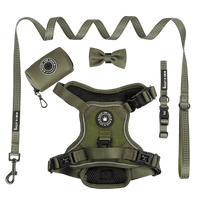
Bailey & Coco walking essentials
If you are refreshing your dog’s everyday walking kit, you can explore our collections here:

Related Reading
Need a reliable lead to keep your dog safe and legal? Browse our best dog leads to stay compliant guide. If you want to give your dog more freedom while still meeting the rules, consider long leads for recall training in parks and open spaces.
Frequently asked questions
Is it legal to walk a dog without a lead in the UK?
There is no single UK-wide rule that says dogs must always be on a lead in all public places. However, many places do require a lead through local council PSPOs, and there are national rules that make a lead the safest choice in common situations. GOV.UK explains that PSPOs can require you to keep your dog on a lead, or put your dog on a lead if told to by a council officer. GOV.UK PSPO guidance
Separately, it is against the law to let a dog be dangerously out of control anywhere. GOV.UK overview and Dangerous Dogs Act 1991, section 3
Do dogs have to be on a lead on a public footpath?
Public footpaths do not always have a blanket lead requirement. But specific areas can have local restrictions, and the countryside rules on open access land are stricter. GOV.UK explains that on open access land you must keep your dog on a lead no more than 2 metres long between 1 March and 31 July, and at all times around livestock. GOV.UK right to roam guidance
If your footpath passes through fields with livestock or near wildlife protection areas, using a lead is the safest approach.
What are the legal requirements for dogs in the UK when out in public?
Common requirements include keeping your dog under control and complying with local restrictions. In many situations, dogs are also expected to wear a collar and tag with the owner’s name and address while in a highway or place of public resort under the Control of Dogs Order 1992. Control of Dogs Order 1992
Do dogs have to be restrained in cars?
The Highway Code says dogs and other animals should be suitably restrained so they cannot distract the driver, or injure you or themselves if you stop quickly. It gives examples like a seat belt harness, pet carrier, dog cage or dog guard. Highway Code rules about animals
How many dogs can one person walk at once in the UK?
There is not one UK-wide number for everyone. Local councils can limit the number of dogs you have with you through PSPOs, and GOV.UK lists limiting the number of dogs as a possible PSPO requirement. GOV.UK PSPO guidance
If you walk multiple dogs, check your local council PSPO page because limits can vary by area and may apply differently to professional dog walkers.
Quick memory trick
- Roads + shared paths = short lead
- Signs = follow them
- Livestock / countryside = lead and keep close
- Open access land (1 Mar–31 Jul) = lead up to 2m
- Busy day / unsure / recall off = lead
- poop bag holder guide — Stay prepared with stylish and practical options for keeping bags to hand.
Final checklist before you head out
- Check your council PSPO rules for your local park or beach if you are unsure.
- Use a short lead near roads and shared paths. Highway Code Rule 56
- On open access land, keep your dog on a lead no more than 2 metres long from 1 March to 31 July, and at all times around livestock. GOV.UK right to roam guidance
- Keep your dog under control at all times, and do not risk “dangerously out of control” situations. GOV.UK controlling your dog
- Make sure your dog’s collar tag details are correct when walking in public places where the rule applies. Control of Dogs Order 1992
Shop the Bailey & Coco walking edit:


