

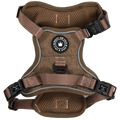
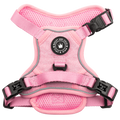








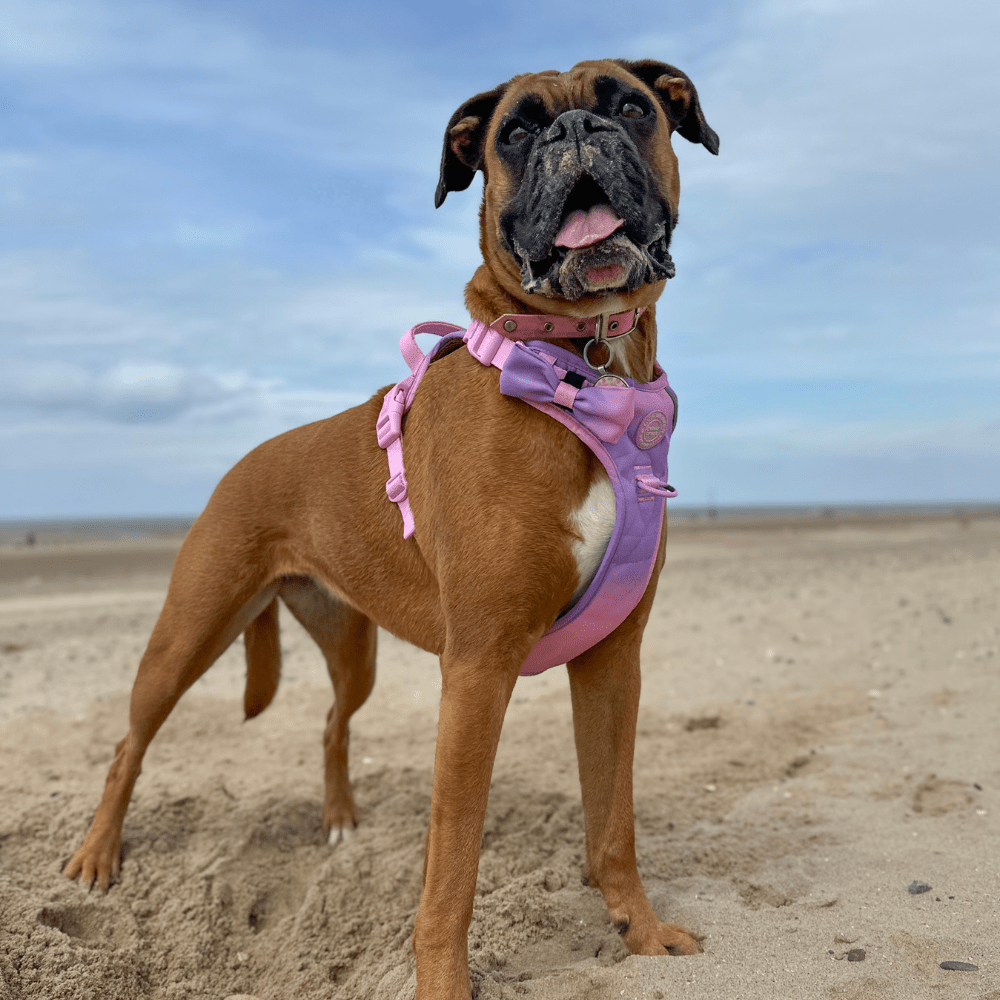
If you share your life with a Boxer, you already know the drill. The full-body wiggle when you reach for the lead. The explosive bounce at the front door. The sheer, unstoppable joy of a dog who treats every single walk like the greatest event of their entire life. Boxers are wonderful, hilarious, powerful dogs, and they deserve a harness that can keep up with all of that energy without compromising their comfort or breathing.
The problem? Most harnesses are designed for "average" dogs. They ride up on broad chests, dig into muscular shoulders, or worse, put pressure on a Boxer's already-compromised airway. Finding the right boxer harness means understanding what makes this breed unique, from their brachycephalic anatomy to their bouncy walking style, and choosing gear that works with their body rather than against it.
This guide covers everything you need: what to look for in a harness for boxer dog breeds, how to get the sizing right, and why the Trail & Glow range is built for exactly this kind of powerful, playful companion.
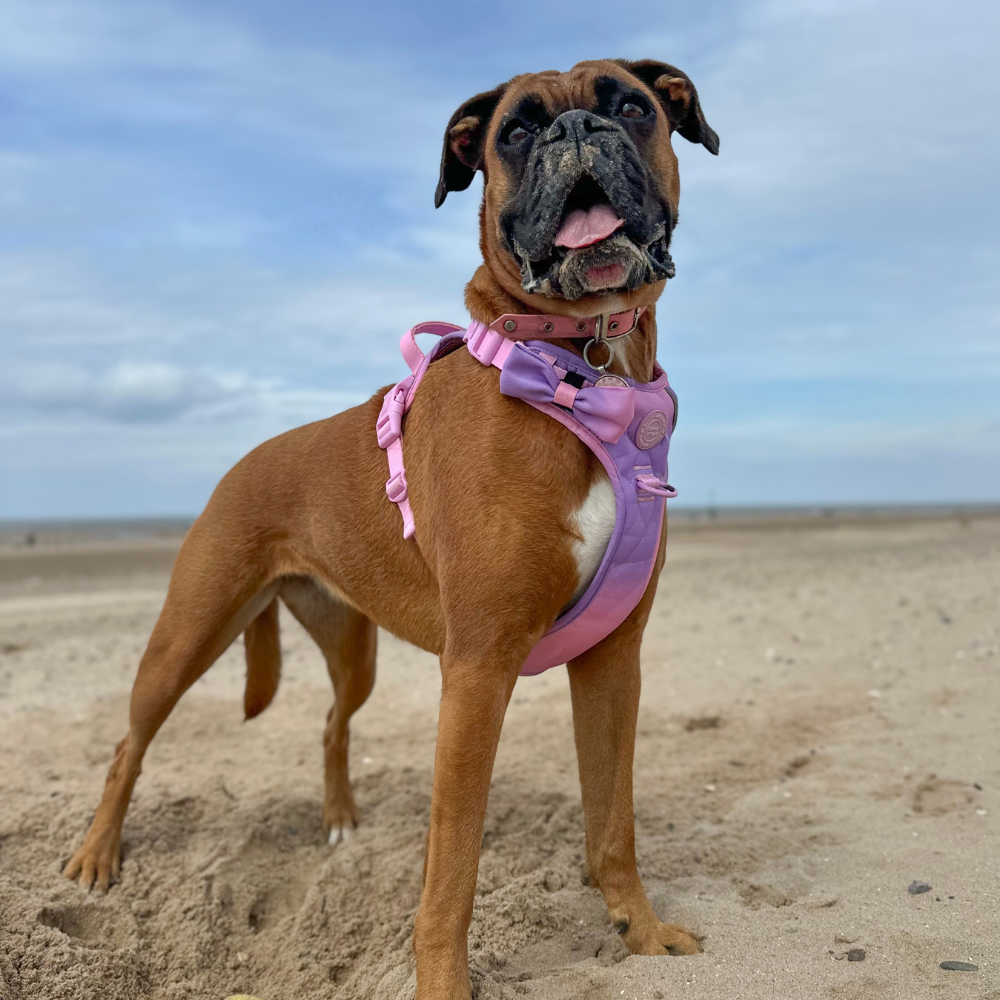
Why Boxers Need a Harness Built for Power and Play
Boxers aren't delicate dogs. Weighing between 25 and 35kg of solid muscle, they carry their strength across a broad chest and powerful shoulders. When a Boxer decides something is exciting (which is approximately every four seconds), that strength goes straight through the lead and into your arm.
But raw pulling power is only half the story. Boxers are brachycephalic, meaning they have shortened skulls and compressed airways. Traditional collars press directly against the trachea, and for a breed already prone to breathing difficulties, that pressure can cause real harm. Wheezing, gagging, reduced airflow, and in serious cases, tracheal collapse are all risks when a strong, excitable Boxer pulls against a collar.
Then there's the skin. That gorgeous short coat offers almost no protection against rough materials. Cheap, narrow straps create friction points that lead to chafing, redness, and bald patches, particularly around the chest and under the front legs where most harnesses sit.
A proper boxer dog harness needs to tick several boxes at once: distribute force across the chest rather than the throat, sit comfortably on a wide ribcage, use soft materials against sensitive skin, and hold its position even when your Boxer is doing their best impression of a kangaroo. That's a tall order, but it's exactly what separates a good boxer harness UK option from a generic one-size-fits-all design.
What to Look for in a Boxer Harness
Not every harness that claims to be suitable for large breeds will actually work well on a Boxer. Their body shape, energy levels, and respiratory needs create a specific set of requirements. Here's what matters most.
Wide, Padded Chest Straps
Boxers carry their weight across a broad, barrel-shaped chest. Narrow straps concentrate pressure into thin lines that dig in during pulls, causing discomfort and restricting movement. Look for straps that are at least 25mm wide with dense padding. This spreads the load across a larger surface area so your Boxer can move freely without pressure points building up. For a deep dive into choosing the right fit, our dog harness buying guide covers the details.
Adjustable Fit Points
Boxers have a unique silhouette: deep chest, tucked waist, and muscular shoulders. A harness with only one or two adjustment points will gap in some places and pinch in others. Multiple adjustment straps around the chest and belly let you dial in a custom fit that follows the contours of your Boxer's body. The harness should sit snug without restricting shoulder movement or riding up into the armpits.
Soft, Breathable Lining
With their short coat and sensitive skin, Boxers need a lining that won't cause friction burns or irritation. Neoprene or dense foam padding creates a smooth layer between the harness and the skin. Breathability matters too; Boxers overheat quickly thanks to their brachycephalic anatomy, so materials that allow airflow help regulate temperature during walks.
Back Handle for Control
Every Boxer owner knows the moment: another dog appears, a squirrel makes a break for it, or a friendly stranger approaches, and suddenly you have 30kg of pure excitement lunging forward. A sturdy dog harness with handle on the back gives you an instant grip point for those moments, without yanking on the lead or fighting against the harness. It's particularly useful for Boxers who jump up at people, as you can redirect them calmly and quickly.
No-Pull Functionality
Boxers pull from excitement, not stubbornness. They're genuinely thrilled to be outside and their body simply cannot contain the joy. A no-pull harness with a front clip attachment redirects that forward momentum by gently steering them back towards you when they surge ahead. Combined with consistent training, a front-clip design can transform walks from a battle of strength into something you both enjoy.
Secure, Quick-Release Buckles
Getting a harness onto an excited Boxer is an experience. They're wiggling, spinning, trying to lick your face, and generally making the process as challenging as possible. Quick-release buckles with a step-in or overhead design mean you can get the harness on and secured in seconds, even when your Boxer is vibrating with anticipation.
Trail & Glow: Why It Works for Boxers
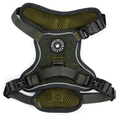
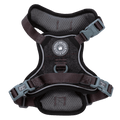
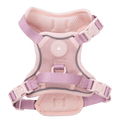
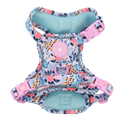
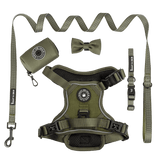
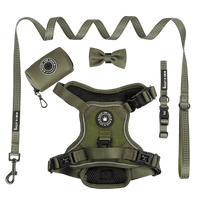
The Trail & Glow range was designed with exactly these requirements in mind. It's not a generic large-breed harness with a Boxer label slapped on; every feature addresses the real-world needs of powerful, broad-chested, short-nosed breeds.
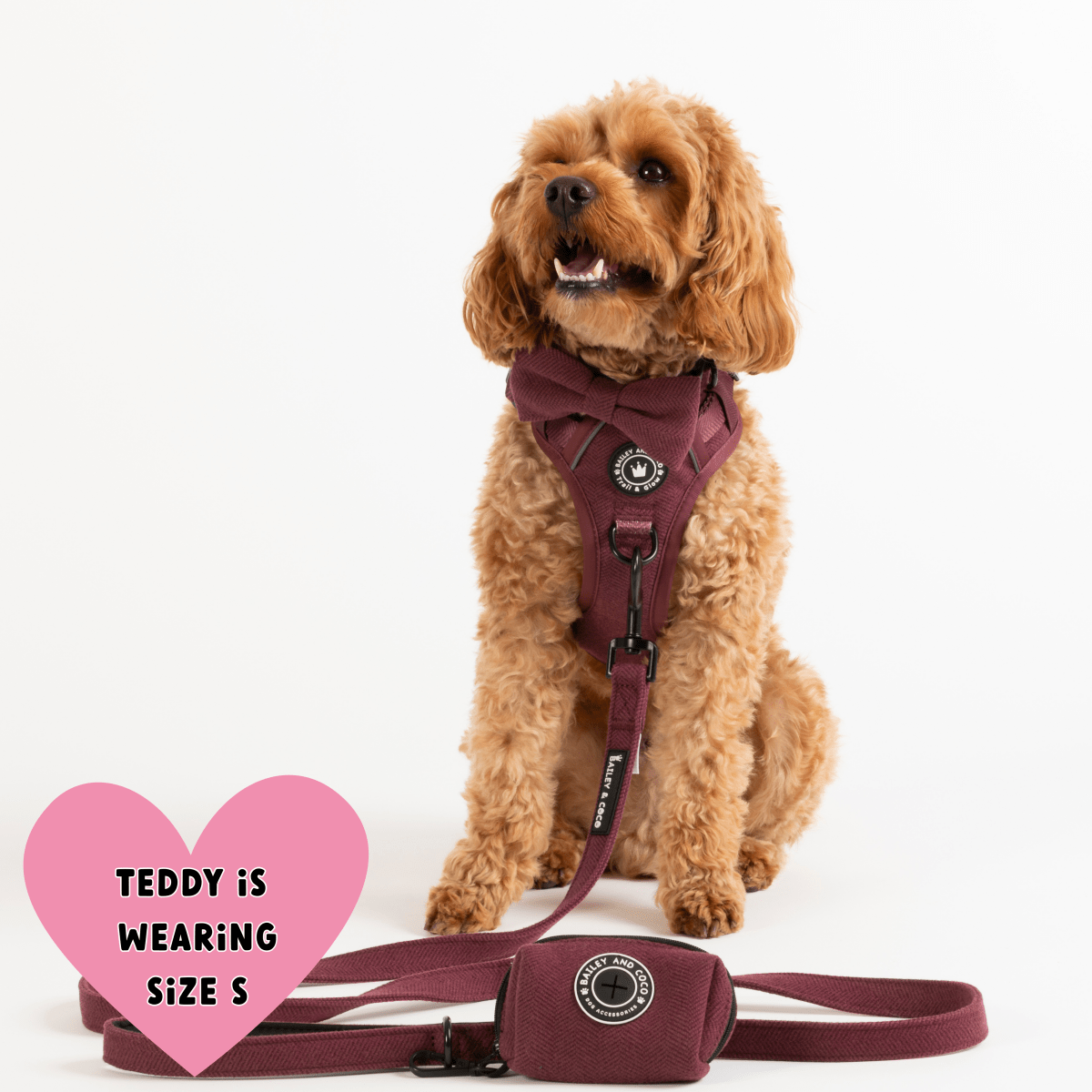
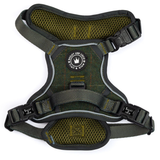
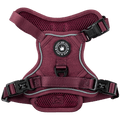
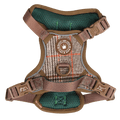
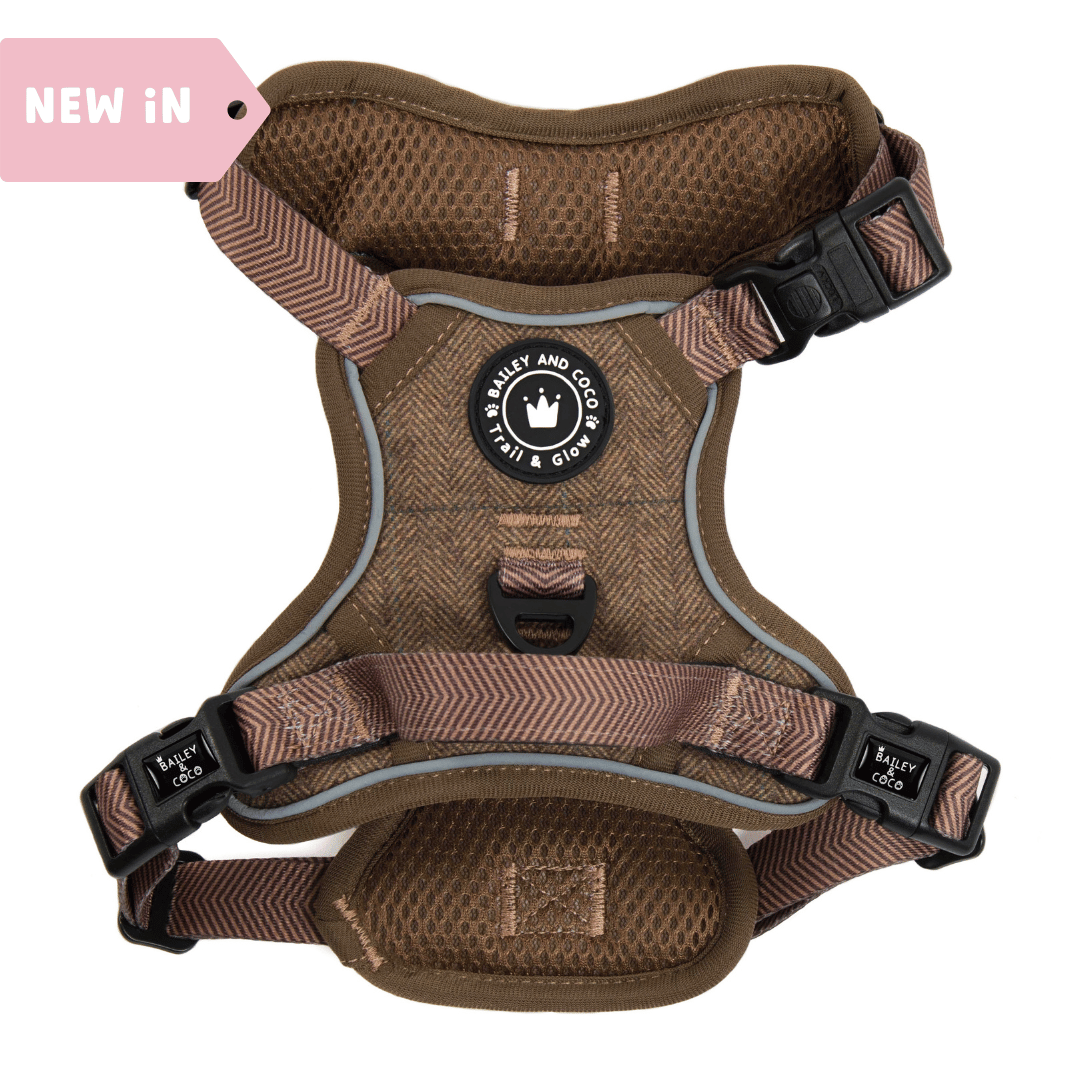
Wide padded straps sit across the chest and ribcage, distributing pulling force across a large area. There are no thin edges to dig in when your Boxer spots a pigeon and decides today is the day they finally catch one.
Dense neoprene padding lines every contact point. Against a Boxer's short coat, it creates a smooth, breathable barrier that prevents chafing even on longer walks. No rubbing, no bald patches, no angry red marks under the front legs.
Four adjustment points let you shape the harness to your Boxer's unique proportions. That broad chest and tucked waist can be accommodated properly, so the harness stays centred without shifting forward over the shoulders or sliding back towards the belly.
A reinforced back handle gives you immediate control. When your Boxer launches themselves at a visitor with all the subtlety of a friendly wrecking ball, one hand on the handle brings them back to earth without drama.
Dual lead attachment points, both front and back, mean you can switch between no-pull training mode and standard walking mode depending on the situation. Front clip for high-excitement environments, back clip for calm countryside strolls.
Reflective stitching runs through the straps for visibility during early morning and evening walks. Given that Boxers need regular exercise but are sensitive to heat, cooler parts of the day are often the best walking times, and visibility becomes essential.
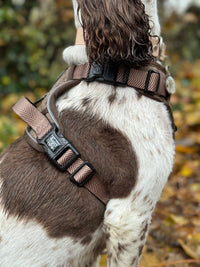
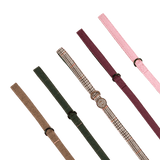
Browse the full range of dog harnesses to find the colour and style that suits your Boxer's personality. From classic tweeds to bold colours, there's something for every taste.
Boxer Harness Size Guide
Getting the size right is critical, especially for Boxers. Too loose and the harness shifts during walks, causing rubbing and reducing control. Too tight and it restricts shoulder movement, compresses the chest, and makes breathing harder for a breed that already works harder to breathe.
How to Measure Your Boxer
Use a flexible tape measure (a cloth sewing tape works perfectly). Measure around the widest part of the ribcage, just behind the front legs. Keep the tape snug but not tight; you should be able to slide two fingers underneath. Take the measurement with your Boxer standing in a natural, relaxed position. If they're mid-wiggle (likely), wait for a brief calm moment or enlist a second pair of hands with treats.
Trail & Glow Size Chart for Boxers
| Size | Girth Range (cm) | Typical Weight (guide only, kg) | Typical Boxer Fit |
|---|---|---|---|
| Medium | 40 – 71 | 12 – 22 | Junior Boxers (under 12 months) |
| Large | 55 – 83 | 22 – 32 | Most adult Boxers (female and lean males) |
| XL | 71 – 99 | 30 – 42 | Larger males, broad-chested Boxers |
Most adult Boxers will need a Size L or XL. If your Boxer's girth measurement falls in the overlap zone between two sizes, go with the larger size. A slightly larger harness can be tightened down with the adjustment straps, but a too-small harness cannot be made comfortable. For Boxer puppies still growing, size up and adjust; they grow quickly through the chest between 6 and 18 months.
Fit Check
Once the harness is on, run through these quick checks:
- Two-finger rule: You should be able to slide two flat fingers between any strap and your Boxer's body.
- Shoulder freedom: Watch your Boxer walk. The chest strap should not ride up over the shoulder blades or restrict their front leg movement.
- No gapping: The harness should sit flush against the body. If it lifts away from the chest or belly when they move, tighten the relevant adjustment strap.
- Breathing check: Listen for any change in your Boxer's breathing with the harness on. There should be no wheezing, snorting, or increased effort compared to being harness-free.
Harness vs Collar for Boxers
This is one of the most common questions from Boxer owners, and the answer is fairly clear-cut. While dog collars are great for holding ID tags and looking smart, they are not ideal as the primary walking attachment for a brachycephalic breed that pulls. Our detailed collar vs harness comparison covers the general debate, but here's the Boxer-specific breakdown.
| Factor | Collar | Harness |
|---|---|---|
| Pressure point | Concentrated on throat and trachea | Distributed across chest and ribcage |
| Breathing impact | Can restrict airflow, dangerous for brachycephalic breeds | No throat pressure, maintains open airway |
| Pull control | Minimal; dog can still lunge forward | Front clip redirects forward momentum |
| Escape risk | Higher; Boxers can slip collars when excited | Lower; wraps around torso, much harder to escape |
| Skin comfort | Can rub the neck, especially with short coat | Padded straps protect sensitive skin |
| Emergency grab point | Grabbing a collar pulls against the throat | Back handle allows safe, quick control |
| Best use for Boxers | ID tags, casual wear at home | All walks, training, car travel |
The ideal setup for most Boxer owners is both: a lightweight collar for ID tags worn at all times, and a well-fitted harness for every walk and outing. This gives you the legal requirement of visible identification plus the safety and control benefits of a harness.
Brachycephalic Breathing: Why Harnesses Matter More for Boxers
Brachycephalic literally means "short head," and it describes the compressed skull shape that gives Boxers their distinctive, loveable face. But that flat face comes with a genuine health consideration: Brachycephalic Obstructive Airway Syndrome (BOAS). The shortened airways mean Boxers have to work harder to breathe, particularly during exercise, in warm weather, or when they're excited. You've heard the snoring, the snorting, the heavy panting on warm days. That's BOAS at work.
Now imagine adding collar pressure on top of that. When a Boxer pulls against a collar, the force compresses the trachea from the outside. For a dog whose airways are already narrowed on the inside, this creates a double restriction. The result can range from mild wheezing to genuine respiratory distress, especially during high-energy moments like meeting another dog or chasing a ball.
A well-fitted harness removes throat pressure entirely. All pulling force routes through the chest and ribcage, which are strong, bony structures designed to handle load. The airway stays completely unobstructed, letting your Boxer breathe as freely as possible during walks and play.
If you own another flat-faced breed, the same principles apply. Our guides for English Bulldogs and Staffordshire Bull Terriers cover similar muscular, broad-chested breeds with comparable harness needs.
This isn't about preference. For brachycephalic breeds, a harness is a genuine welfare decision. Vets routinely recommend harnesses over collars for Boxers, Bulldogs, Pugs, and other short-nosed breeds. It's one of the simplest things you can do to protect your Boxer's long-term respiratory health.
Walking and Training Tips for Boxer Owners
A great harness is the foundation, but how you use it matters just as much. Boxers are intelligent, eager to please, and extremely food-motivated. That combination makes them highly trainable; they just need the right approach.
Managing the Excitement Pulling
Boxers don't pull because they're being difficult. They pull because the world is incredible and they want to experience all of it immediately. Understanding this changes your approach from "correcting bad behaviour" to "channelling enthusiasm."
- Use the front clip. Attach your lead to the front harness ring. When your Boxer surges forward, the front attachment naturally turns their body back towards you instead of allowing them to power straight ahead.
- Stop-start method. When the lead goes tight, stop walking completely. Wait for your Boxer to look back at you or release the tension, then move forward again. Boxers learn quickly that pulling makes the walk stop and loose-lead walking makes the walk continue.
- Reward the check-in. Every time your Boxer voluntarily looks at you during a walk, mark it with a "yes" and reward. Boxers are people-focused dogs and this builds a habit of checking in rather than fixating on distractions.
- Burn energy first. A quick five-minute play session in the garden before a walk takes the edge off that initial explosion of excitement. A slightly tired Boxer is a much more manageable walking companion.
Managing the Heat
Boxers overheat faster than most breeds. Their brachycephalic anatomy makes panting (a dog's primary cooling mechanism) less efficient. For more on building a healthy walking routine, see our guide on how often you should walk your dog.
- Walk during cooler hours. Early morning and evening walks are best during spring and summer. Avoid midday walks from May through September.
- Carry water. Always bring a portable bowl and fresh water. Offer drinks every 10 to 15 minutes during warm-weather walks.
- Watch for signs. Excessive panting, drooling, bright red gums, stumbling, or reluctance to walk are all signs of overheating. Stop immediately, find shade, and offer water.
- Choose a breathable harness. Materials matter. A padded, breathable harness like the Trail & Glow allows airflow against the skin, while non-breathable nylon traps heat against the body.
Managing the Jumping
Boxers are famously bouncy. They jump to greet, jump from excitement, and jump because gravity is merely a suggestion. The back handle on the Trail & Glow is your best friend here. When your Boxer begins to launch, a calm hand on the handle keeps all four paws on the ground. Pair this with "four on the floor" training, where your Boxer only receives attention and treats when all four feet are on the ground, and the jumping reduces significantly over time.
Complete the Look
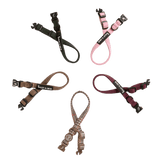
Once you've found the perfect best harness for boxer dogs, why not put together a full walking kit? Matching accessories aren't just about looking good (though your Boxer will look absolutely stunning). Coordinated gear makes you easier to spot, creates a consistent brand of quality across all your equipment, and honestly, a Boxer in a matching set is a sight that brightens everyone's day.
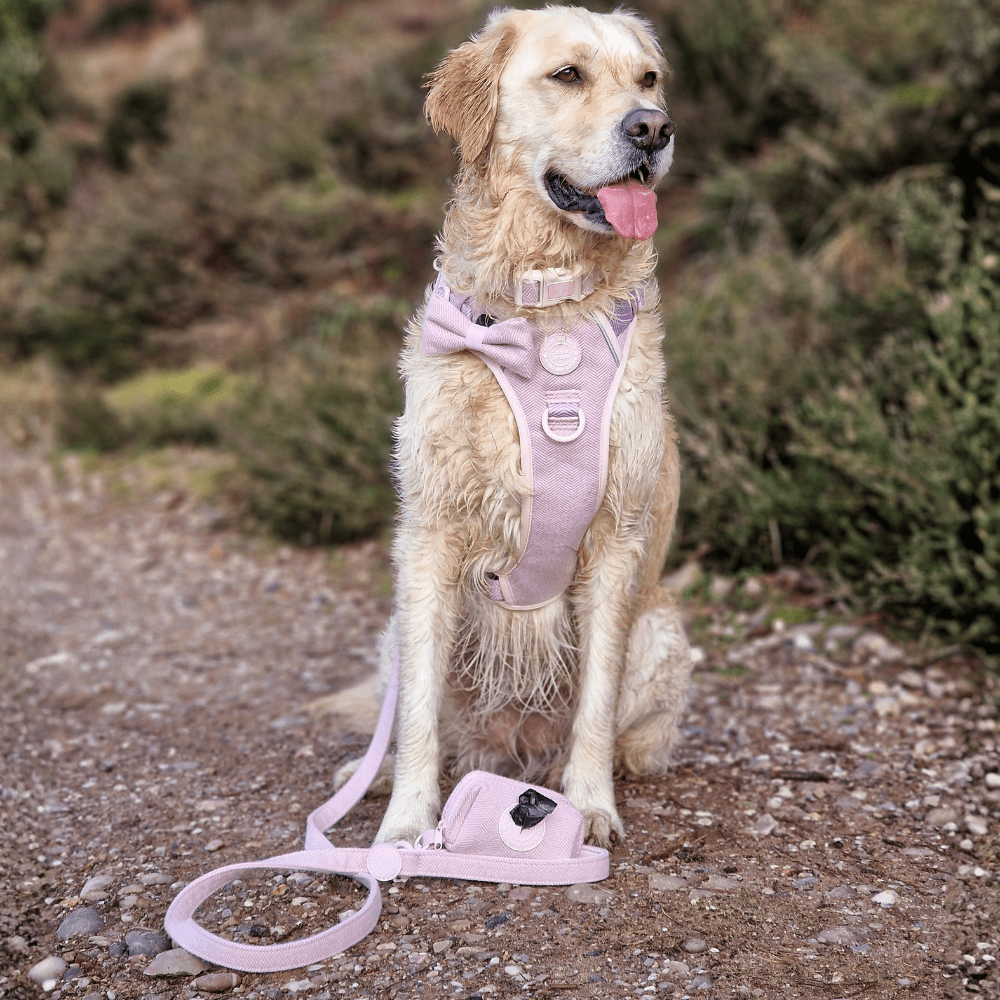
- Dog Collars – Lightweight collars for ID tags and everyday wear. Match your collar to your harness for a polished look.
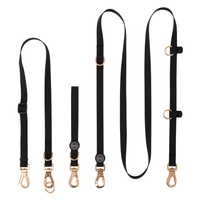
- Dog Leads – Padded leads that are as comfortable in your hand as the harness is on your Boxer. Available in matching colours and patterns.
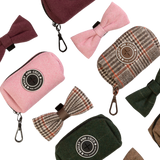
- Dog Bow Ties – Because a Boxer in a bow tie is peak happiness. Clip-on designs that attach to any collar for special occasions or just a Tuesday.
- Bundles – Save when you buy a coordinated harness, collar, and lead set together. The easiest way to get everything your Boxer needs in one go.
Frequently Asked Questions
What size harness does a Boxer need?
Most adult Boxers need a Size L or XL in the Trail & Glow range. Female Boxers and leaner males typically fit a Large (55 to 83cm girth), while broader, heavier males usually need an XL (71 to 99cm girth). Always measure around the widest part of the ribcage, just behind the front legs, and choose the larger size if your Boxer falls between two sizes.
Is a harness better than a collar for a Boxer?
Yes, for walking and exercise. Boxers are brachycephalic (flat-faced), so collar pressure on the throat can restrict their already-compromised airways. A harness distributes force across the chest, keeping the airway clear. Use a collar for ID tags and a harness for all walks and outings. Read our full collar vs harness guide for more detail.
How do I stop my Boxer pulling on the lead?
Start with a front-clip no-pull harness that redirects forward momentum. Combine this with the stop-start method: when the lead goes tight, stop walking and wait for your Boxer to release the tension before continuing. Consistency is key. Boxers are intelligent and learn quickly when the rules are clear and rewards are consistent. A short play session before walks also helps burn off that initial burst of excitement.
Can a Boxer wear a harness all day?
It's best to use the harness only for walks, training, and outings rather than leaving it on all day. Extended wear can trap moisture against a Boxer's short coat, potentially causing skin irritation. Remove the harness when you're back home and check the skin underneath for any signs of rubbing, especially during the first few weeks while your Boxer adjusts to a new harness.
Do Boxers overheat easily in a harness?
Boxers overheat more easily than most breeds due to their brachycephalic anatomy, but a breathable, well-designed harness like the Trail & Glow won't make this worse. The padded lining allows airflow and doesn't trap heat against the body. The bigger factors are ambient temperature, exercise intensity, and walk timing. Stick to cooler hours during warm months, carry water, and watch for signs of overheating like excessive panting or bright red gums.
What harness is best for a Boxer puppy?
For Boxer puppies, start with the size that matches their current girth measurement and expect to size up as they grow. Boxers grow rapidly through the chest between 6 and 18 months. A Medium Trail & Glow suits most Boxer puppies from around 4 months, moving to a Large as they approach their adult frame. Check the fit weekly during growth spurts and adjust the straps regularly.
How do I clean my Boxer's harness?
Hand wash in lukewarm water with a mild detergent. Avoid harsh chemicals or bleach, as these can break down the padding and irritate your Boxer's sensitive skin. Rinse thoroughly, squeeze out excess water (don't wring), and air dry completely before the next use. Most harnesses benefit from a wash every two to four weeks depending on how muddy your walks get.