














It is one of the most debated topics in the dog world: should your dog wear a collar or a harness? Ask ten dog parents and you will get ten different answers, each backed by personal experience, vet advice, or simply what their dog seems to prefer. The truth is that both collars and harnesses have their place, and the right choice depends on your dog's breed, behaviour, health, and the activities you do together.
This guide takes a balanced, honest look at the collar vs harness debate. We will cover when collars are the better option, when a harness makes more sense, which breeds suit which, and how to use both together for the safest, most comfortable setup. No agenda, no hard sell. Just practical advice to help you make the right decision for your dog.
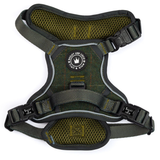
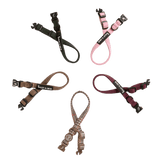
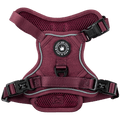
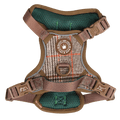
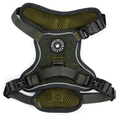
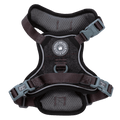
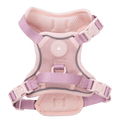
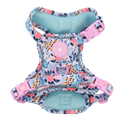
At Bailey & Coco, we design both premium collars and harnesses because we believe every dog deserves the right tool for the right situation. Our adjustable tweed collars and Trail Glow harnesses even come in matching patterns, so your dog can look coordinated whatever setup you choose.

The Great Collar vs Harness Debate
Walk through any UK park and you will see dogs in collars, dogs in harnesses, and dogs wearing both. There is no single right answer because the choice depends entirely on the individual dog.
Collar advocates love the simplicity, the style, and the fact that collars are a legal requirement for ID display. Harness supporters point to the comfort, the control, and the reduced risk of neck injury, especially for dogs that pull. The good news is that you do not have to choose one over the other. Most dog professionals now recommend a combined approach, and we will explain exactly how that works later in this guide.
First, let us look at the strengths of each option individually.
When Collars Are the Better Choice
Collars have been the default dog accessory for centuries, and for good reason. They are simple, practical, and serve several important functions that harnesses cannot replace.
ID Display and Legal Compliance
Under UK law, specifically the Control of Dogs Order 1992, every dog must wear a collar with an ID tag showing the owner's name and address when in a public place. This is not optional. Even if your dog wears a harness for walking, they still need a collar with a tag. Microchipping is also compulsory under the Microchipping of Dogs (England) Regulations 2015, but a microchip does not replace the legal requirement for a visible tag on a collar.
A collar is the simplest and most reliable way to carry ID. It stays on your dog all day, whether they are at home, in the garden, or out on a walk. For a complete guide to choosing the right collar, read our best dog collars UK guide. UK law also requires a visible ID tag on the collar in public, covered in plain English in our dog tag law guide.
Quick Trips and Casual Walks
For a quick pop to the postbox, a brief garden visit, or a calm stroll around the block with a well-trained dog, a collar and lead is often all you need. It is faster to clip on and off than a harness, with no straps to adjust or buckles to fasten around the body.
Well-Trained Dogs That Do Not Pull
If your dog walks beautifully on a loose lead without pulling, lunging, or reacting to distractions, a collar is perfectly safe and comfortable for lead attachment. Many well-trained adult dogs spend their entire lives walking happily on a collar with no issues whatsoever.
Style and Personality
Let us be honest: collars are a style statement. From classic fabric collars in tweed patterns to waterproof designs for adventurous pups, there is an enormous range of collar styles to suit every dog's personality. While harnesses have become more fashionable in recent years, collars still offer the widest variety of designs, colours, and materials.
When Harnesses Are the Better Choice
Harnesses have surged in popularity over the past decade, and for many dogs, they are genuinely the safer and more comfortable option for lead walking.
Dogs That Pull
This is the number one reason to choose a harness. When a dog pulls against a collar, all of that force concentrates on the neck, compressing the trachea and straining the cervical spine. When a dog pulls against a harness, the force is distributed across the chest, shoulders, and torso. For persistent pullers, a no-pull harness with a front clip can discourage pulling by redirecting the dog's forward momentum.
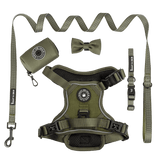
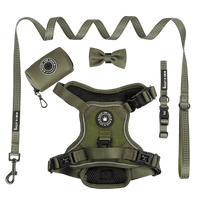
Our adjustable dog harnesses are designed with both front and back clip options, giving you the flexibility to choose the right setup for your dog's walking style.
Puppies and Young Dogs
Puppies are still learning lead manners, and even the most promising pup will have moments of excitement, lunging, and pulling. A harness protects their developing bodies during the training phase while you teach them to walk nicely. Once they are trained, many dog parents transition to a collar for everyday walks. For puppies just starting out, our puppy collars guide covers the transition process.
During the colder months, puppies may also benefit from wearing a coat alongside their harness. Our guide on whether dogs need coats in the UK explains which dogs benefit most and how to ensure a coat works comfortably with a harness.
Small and Toy Breeds
Small dogs are more vulnerable to tracheal damage from collar pressure. Breeds like Chihuahuas, Yorkshire Terriers, Pomeranians, and Toy Poodles are at higher risk of tracheal collapse, a condition that collar pressure can aggravate. For these breeds, a harness for walking and a collar for ID is the standard veterinary recommendation. Read our guide to the best collars for small dogs for more detail on managing this balance.
Brachycephalic Breeds
Flat-faced breeds like French Bulldogs, Pugs, and English Bulldogs already have compromised airways due to their shortened skull structure. Adding collar pressure to an already restricted airway is a recipe for breathing difficulties. Harnesses are the clear winner for brachycephalic breeds, and most breed clubs recommend them as standard.
Dogs with Neck or Spinal Issues
Dogs recovering from neck injuries, those with intervertebral disc disease (common in Dachshunds), or older dogs with cervical spondylosis should always use a harness. Any condition affecting the neck or spine means collar pressure is contraindicated. A well-fitted harness keeps the neck completely free from strain. Our harness buying guide covers how to choose the right harness for dogs with health considerations.
Escape Artists
Some dogs are remarkably talented at backing out of collars. Sighthounds with their narrow heads, anxious dogs that panic and reverse, and smooth-coated breeds can all slip a collar. A well-fitted harness is significantly harder to escape from because it wraps around the torso, not just the neck.
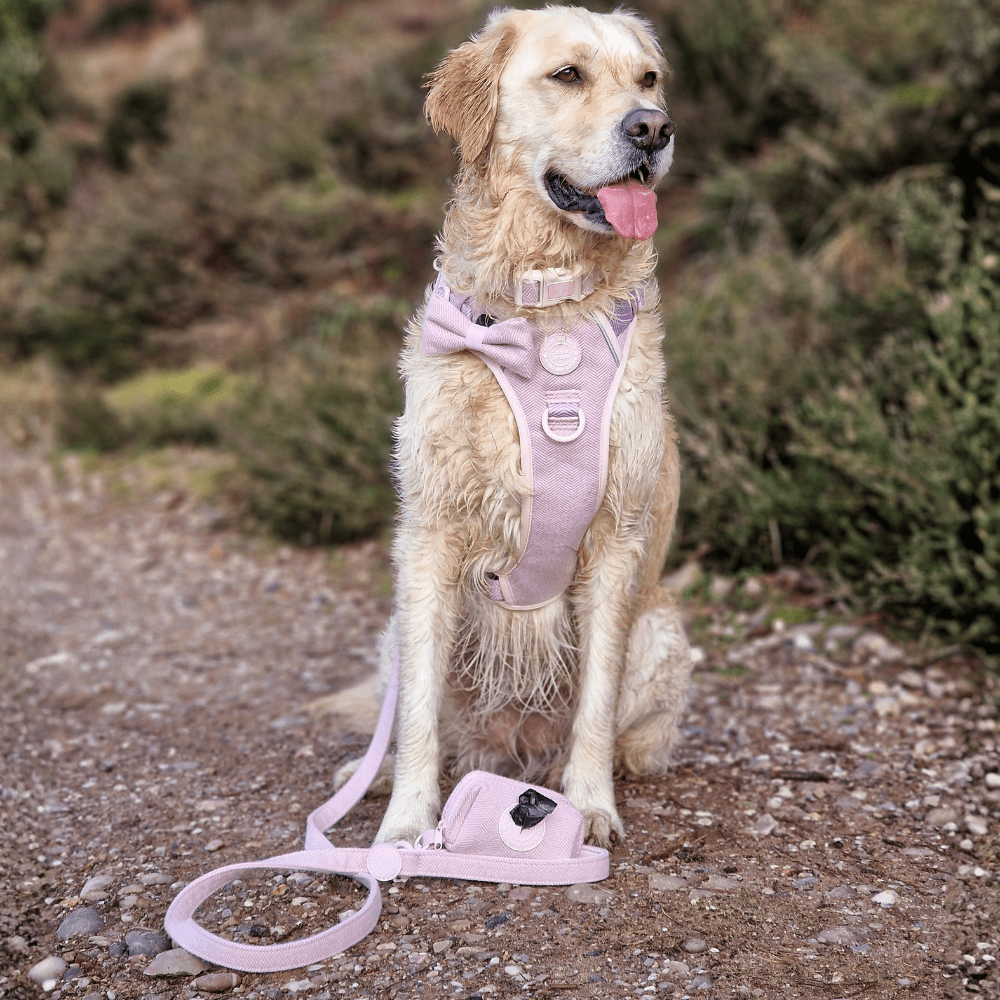
Collar vs Harness: Full Comparison
Here is a detailed side-by-side comparison across every important criterion. Use this table to see where each option excels and where it falls short.
| Criterion | Collar | Harness |
|---|---|---|
| Control | Good for trained dogs; limited for pullers | Excellent; front-clip options discourage pulling |
| Comfort | Comfortable for non-pullers; pressure on neck if pulling | Distributes pressure across chest and shoulders |
| Trachea Safety | Risk of pressure on trachea, especially for pullers | No trachea pressure; safe for vulnerable breeds |
| Escape Risk | Some dogs can back out of collars | Very difficult to escape from when fitted properly |
| Ease of Use | Very quick to put on and remove | Takes longer; requires leg and body adjustment |
| ID Display | Excellent; designed to carry tags | Not designed for tags; collar still needed |
| UK Legal Compliance | Meets ID tag requirement | Does not meet ID tag requirement alone |
| Training | Useful for basic lead training with trained dogs | Better for training pullers; front-clip aids loose-lead training |
| Style Options | Widest range of patterns, materials, and designs | Growing range; fewer options than collars |
| Suitability for Small Dogs | Good for ID; not ideal for walking alone | Recommended for walking small breeds |
| Suitability for Large Dogs | Fine for trained dogs; less control for strong pullers | Excellent control; essential for strong breeds that pull |
| All-Day Wear | Yes, designed for continuous wear | Not recommended; can cause rubbing with prolonged wear |
Can You Use Both? Absolutely.
The collar vs harness debate creates a false either/or choice. In reality, the best approach for most dogs is to use both, and this is exactly what most vets, trainers, and experienced dog parents recommend.
The Recommended Setup
Here is the setup that works for the vast majority of dogs:
- Collar worn all day: A comfortable, well-fitted collar stays on your dog at all times. It carries their ID tag (a legal requirement in the UK) and gives you a quick grab point in emergencies. A lightweight fabric collar in a soft material is ideal for all-day wear.
- Harness for walks: Before heading out, slip on a harness and attach the lead to the harness clip. This keeps all pulling pressure off the neck and gives you better control. After the walk, remove the harness.
This combination gives you the best of both worlds: legal compliance, visible ID, neck protection, and walking control.
How to Set It Up
When using a collar and harness together, there are a few practical tips to keep things comfortable:
- Make sure the collar sits higher on the neck and the harness straps sit lower, so they do not overlap or rub against each other.
- Always attach the lead to the harness, not the collar. The whole point of the dual setup is to keep pressure off the neck.
- If your harness has a back clip and a front clip, use the front clip for dogs that pull and the back clip for dogs that walk calmly.
- Remove the harness after walks. Leaving a harness on all day can cause rubbing, overheating, and matted fur. The collar stays on; the harness comes off.
Breed-Specific Recommendations
Different breeds have different physical characteristics that make them better suited to collars, harnesses, or a combination. Here is a breed-by-breed guide to help you decide.
Breeds Best Suited to Harnesses
Brachycephalic breeds (French Bulldogs, Pugs, English Bulldogs, Shih Tzus, Boston Terriers): Always use a harness for walking. Their compromised airways make collar pressure a genuine health risk. Keep a collar on for ID only.
Small and toy breeds (Chihuahuas, Yorkshire Terriers, Pomeranians, Maltese, Toy Poodles): Harness for walking, collar for ID. The tracheal collapse risk is too significant to ignore. See our small dog collars guide for more detail.
Breeds prone to neck issues (Dachshunds, Basset Hounds, Beagles): These breeds have specific spinal or structural considerations that make harnesses the safer walking option.
Strong pullers (Huskies, Malamutes, Staffies, young Labradors): A no-pull harness with a front clip gives you significantly more control than a collar ever could.
Breeds That Can Use Collars for Walking
Well-trained medium breeds (Cocker Spaniels, Border Collies, Whippets): If they walk calmly on a loose lead, a collar is perfectly fine for everyday walks.
Sighthounds with martingale collars (Greyhounds, Whippets, Lurchers): These breeds have narrow heads that can slip standard collars, so a martingale collar provides a secure, humane fit. Many sighthound owners prefer a martingale collar for walking over a harness.
Well-trained large breeds (Golden Retrievers, Labradors, German Shepherds): Once fully trained, many large breeds walk beautifully on a collar. However, if they have any tendency to pull, a harness is the smarter choice.
Breed Suitability at a Glance
| Breed Group | Walking Recommendation | Collar Role | Key Reason |
|---|---|---|---|
| Brachycephalic (Pug, Frenchie, Bulldog) | Harness always | ID tags only | Compromised airways |
| Toy breeds (Chihuahua, Yorkie, Maltese) | Harness recommended | ID tags only | Tracheal collapse risk |
| Sighthounds (Greyhound, Whippet, Lurcher) | Martingale collar or harness | Walking or ID | Narrow heads, escape risk |
| Strong pullers (Husky, Staffie, young Labs) | Harness (front-clip preferred) | ID tags only | Pulling force too high for collar |
| Trained medium breeds (Cocker Spaniel, Border Collie) | Collar or harness | Walking and ID | Personal preference |
| Trained large breeds (Retriever, Shepherd) | Collar or harness | Walking and ID | Personal preference; harness if any pulling |
What Vets and Trainers Say
Veterinary and training professionals are increasingly aligned on the collar vs harness question. Here is the consensus from the UK dog professional community.
The Veterinary Perspective
Most UK vets recommend harnesses for walking, particularly for small breeds, brachycephalic breeds, puppies, and dogs with any respiratory or cervical issues. The British Veterinary Association has noted the risks of tracheal pressure from collars on susceptible breeds. However, vets also acknowledge that for well-trained dogs of appropriate breeds, collars are perfectly safe for walking.
The universal veterinary recommendation is that every dog should wear a collar with ID at all times, regardless of whether they use a harness for walking. For choosing the ID tag itself, see our guide on what a good engraved ID tag actually looks like.
The Trainer Perspective
Professional dog trainers in the UK generally recommend harnesses during the training phase, when dogs are learning lead manners and are most likely to pull. A front-clip harness gives the trainer (and the owner) more control without causing discomfort. Many trainers transition dogs to collar walking once they have mastered loose-lead walking, though some prefer to keep their clients on harnesses permanently.
Certified behaviourists also note that anxious or reactive dogs often do better in harnesses, as the pressure distribution feels less threatening than collar pressure around the neck, which can increase stress in already anxious dogs.
The Bailey & Coco Approach
At Bailey & Coco, we believe in giving dog parents the tools to make the best choice for their individual dog. That is why we offer both premium collars and harnesses, and we have designed them to work beautifully together.
Matching Patterns Across Collars and Harnesses
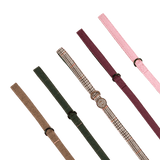
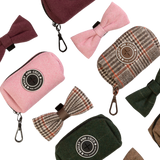
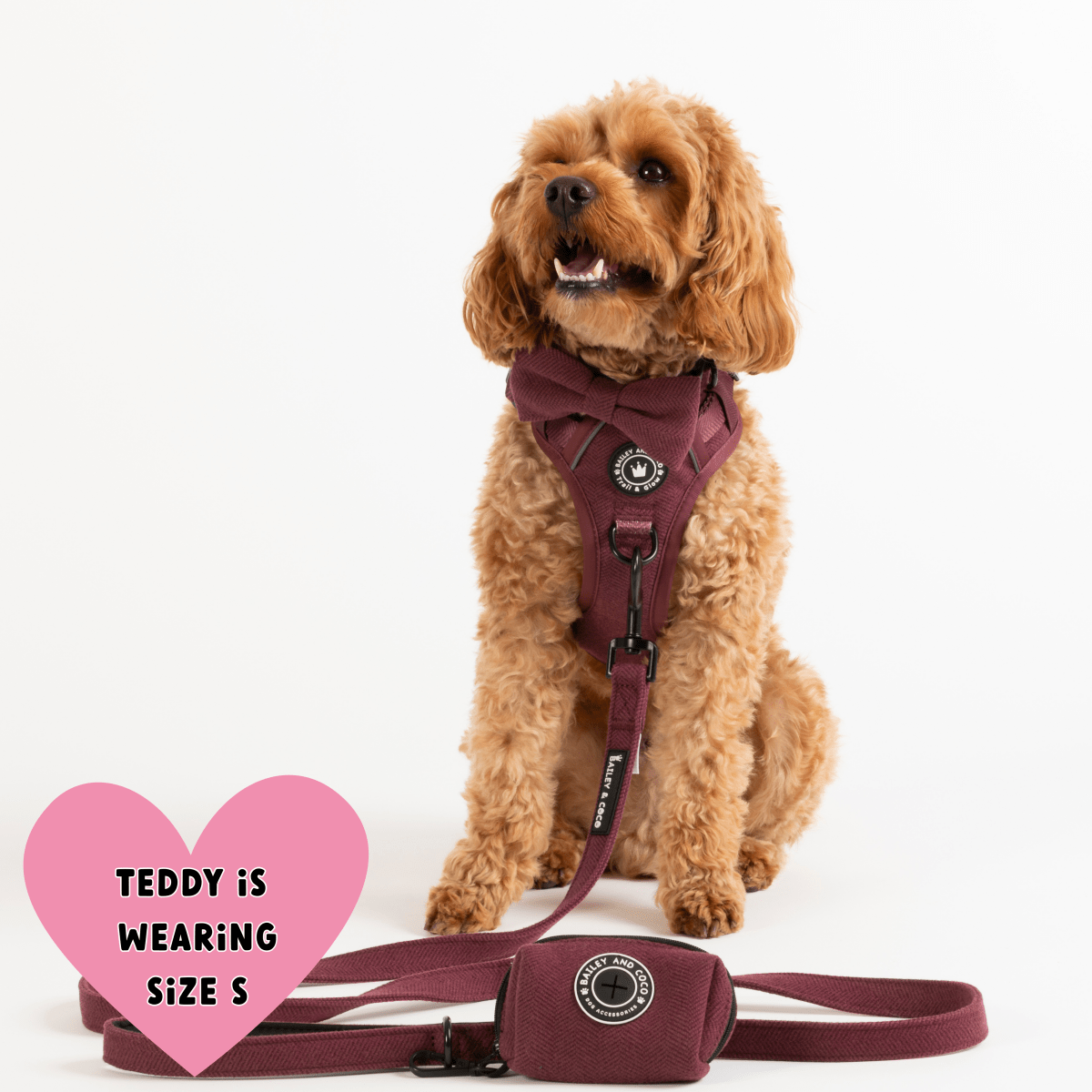
Our adjustable fabric collars and Trail Glow harnesses come in the same five signature tweed patterns: Charcoal, Mulberry, Heritage Plaid, Lavender, and Forest. This means you can pair a Lavender Tweed collar with a Lavender Tweed harness for a perfectly coordinated look. Add a matching lead and your dog is the most stylish pup in the park.
Collars Built for Comfort
Our adjustable collars use soft tweed fabric and lightweight hardware, making them comfortable enough for all-day wear. They are the ideal ID collar, whether your dog walks on a collar or a harness. For sizing help, check our collar size guide.
Harnesses Built for Control
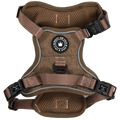
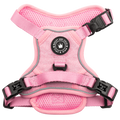
Our Trail Glow harnesses feature adjustable straps for a custom fit, padded contact points for comfort, and secure clips that keep your dog safe. They are designed to be easy to put on and take off, because we know that a harness that is a battle to fit will end up in the drawer.
UK Law: What You Need to Know
The legal position in the UK is clear and worth understanding, as it directly affects the collar vs harness decision.
The Legal Requirements
Under the Control of Dogs Order 1992, your dog must wear a collar with a tag bearing your name and address when in any public place. There is no legal requirement to include your phone number on the tag, though it is strongly recommended for practical reasons. Since April 2016, all dogs in England must also be microchipped under the Microchipping of Dogs (England) Regulations 2015.
What This Means for the Collar vs Harness Decision
The law requires a collar with a tag. It does not require the lead to be attached to the collar. This means you can legally walk your dog on a harness with the lead clipped to the harness, as long as they are also wearing a collar with an ID tag. This is the setup most vets and trainers now recommend. For the tag itself, our best dog tags UK picks cover which styles actually stay readable after a year of walks.
It is worth noting that there are very limited exemptions to the collar requirement. Working dogs on duty, such as police dogs and certain farm dogs, may be exempt in specific circumstances, but pet dogs must always have a collar and tag in public.
Making Your Decision
Here is a simple framework to help you decide what setup is right for your dog.
Use a collar for walking if: Your dog is well-trained, walks on a loose lead, is not a brachycephalic breed, has no neck or trachea issues, and is not a small or toy breed.
Use a harness for walking if: Your dog pulls, is a puppy, is a small or toy breed, is a brachycephalic breed, has neck or spinal issues, is anxious or reactive, or is an escape artist.
Use both (the recommended approach): Collar on at all times for ID. Harness on for walks. Lead attached to harness. This covers every safety base and is the setup endorsed by most UK vets and trainers.

Frequently Asked Questions
Is a collar or harness better for my dog?
It depends on your dog's breed, size, behaviour, and health. For most dogs, using both is the best approach: a collar for ID tags and a harness for walking. This protects the neck from lead pressure while keeping your dog legally compliant with UK ID tag requirements. If your dog is well-trained and does not pull, a collar alone is fine for walking.
Do dogs legally need to wear a collar in the UK?
Yes. Under the Control of Dogs Order 1992, all dogs must wear a collar with an ID tag showing the owner's name and address when in a public place. This applies even if your dog wears a harness for walking. A harness does not replace the legal requirement for a collar and tag.
Can I walk my dog on just a harness without a collar?
You can attach your lead to a harness, but your dog must still wear a collar with an ID tag in public to comply with UK law. Walking on a harness without a collar means your dog has no visible identification, which is a legal offence. Always use a collar for ID even if the lead is attached to the harness.
Are harnesses bad for dogs?
No, well-fitted harnesses are not bad for dogs. Some concerns have been raised about certain harness styles restricting shoulder movement, but a properly designed and fitted harness avoids this. Look for harnesses with a Y-shaped front strap that sits on the breastbone, not across the shoulders. Remove the harness after walks to prevent rubbing and overheating.
Why does my dog pull more in a harness?
Some dogs pull more in a back-clip harness because the design gives them something to lean into, similar to how sled dogs pull. If this happens, switch to a front-clip harness, which redirects your dog towards you when they pull. Combine the front-clip harness with positive reinforcement training for the best results.
Can my dog wear a collar and harness at the same time?
Yes, and this is the recommended setup for most dogs. The collar sits higher on the neck and carries ID tags, while the harness wraps around the chest and shoulders for lead attachment. Make sure the collar and harness straps do not overlap or rub against each other. Always attach the lead to the harness, not the collar, to keep pressure off the neck.
What is the best harness for a dog that pulls?
A front-clip, no-pull harness is the best option for dogs that pull. The front clip sits on the chest and redirects forward momentum, making it harder for the dog to pull ahead. Look for padded straps, adjustable fit points, and a Y-shaped front to avoid restricting shoulder movement. Our Trail Glow harnesses offer adjustable fit and comfortable padding for controlled walks.


