













Already know the basics? If you are just deciding between collar types, our guide to the best puppy collar types compares adjustable, waterproof and tweed side by side.
Bringing a new puppy home is one of life's greatest joys, but it also comes with a long checklist of essentials to sort out. Right near the top of that list? Their very first collar. A puppy collar is far more than an accessory; it is a legal requirement in the UK, a vital identification tool, and one of the earliest steps in helping your pup feel comfortable and confident in the big wide world. Whether you have just collected your eight-week-old bundle of fluff or you are preparing for their arrival, this guide covers everything you need to know about choosing, sizing, fitting, and introducing a puppy collar the right way.
From understanding UK law to avoiding the most common mistakes new puppy owners make, we have put together the definitive resource for getting your puppy's first collar spot on. Let's get started.
When Should a Puppy Start Wearing a Collar?
You can begin introducing a collar to your puppy from the day you bring them home, which is typically at eight weeks old. In fact, starting early is one of the best things you can do. Even before your puppy has had their full set of vaccinations and is cleared for outdoor walks, getting them used to wearing a collar indoors is a smart move.
Those first few weeks at home are a golden window for socialisation and habituation. Your puppy is absorbing everything, learning what is normal and what is not. If wearing a collar becomes part of their daily routine from the very beginning, they are far less likely to scratch at it, panic, or try to pull it off later on.
Start with short sessions of 10 to 15 minutes at a time. Let your puppy wear the collar during play, feeding, or cuddle time, so they associate it with positive experiences. Within a few days, most puppies forget the collar is even there.
Once your puppy is comfortable wearing a collar, the next step is introducing the lead. Our guide on how to teach a puppy to walk on a lead walks you through each phase, from indoor introduction to confident outdoor walks.
UK Law: Why Your Puppy Needs a Collar and Tag
Here is something every new puppy owner in the UK needs to know: it is a legal requirement for your dog to wear a collar and tag in any public place. This comes from the Control of Dogs Order 1992, which states that every dog in a public place must wear a collar with the owner's name and address inscribed on it or attached to it. A phone number is strongly recommended but not strictly required by this specific law.
This applies to puppies too. The moment your puppy steps outside your front door, whether for a garden visit, a trip to the vet, or their first proper walk, they need a collar with an identification tag. Failure to comply can result in a fine of up to 5,000 pounds. If you want the full legal picture on the tag requirement specifically, our UK dog tag law guide covers the Control of Dogs Order 1992 in plain English.
It is also worth noting that microchipping is a separate legal requirement under the Microchipping of Dogs (England) Regulations 2015 (with equivalent legislation in Scotland, Wales, and Northern Ireland). However, a microchip does not replace the need for a visible collar and tag. Both are required.
So even if your puppy is not yet venturing far, getting them used to a collar early means they are ready and legally compliant the moment they do.
What to Look for in a Puppy Collar
Not all collars are created equal, and what works for an adult dog is rarely the best choice for a young puppy. Here is what to prioritise when choosing your puppy's first collar.
Lightweight Construction
Puppies have delicate necks and are still growing. A heavy collar with chunky hardware will feel uncomfortable and may even cause irritation. Look for collars made from lightweight materials with slim, low-profile buckles and fittings. Your puppy should barely notice it is there.
Soft, Comfortable Materials
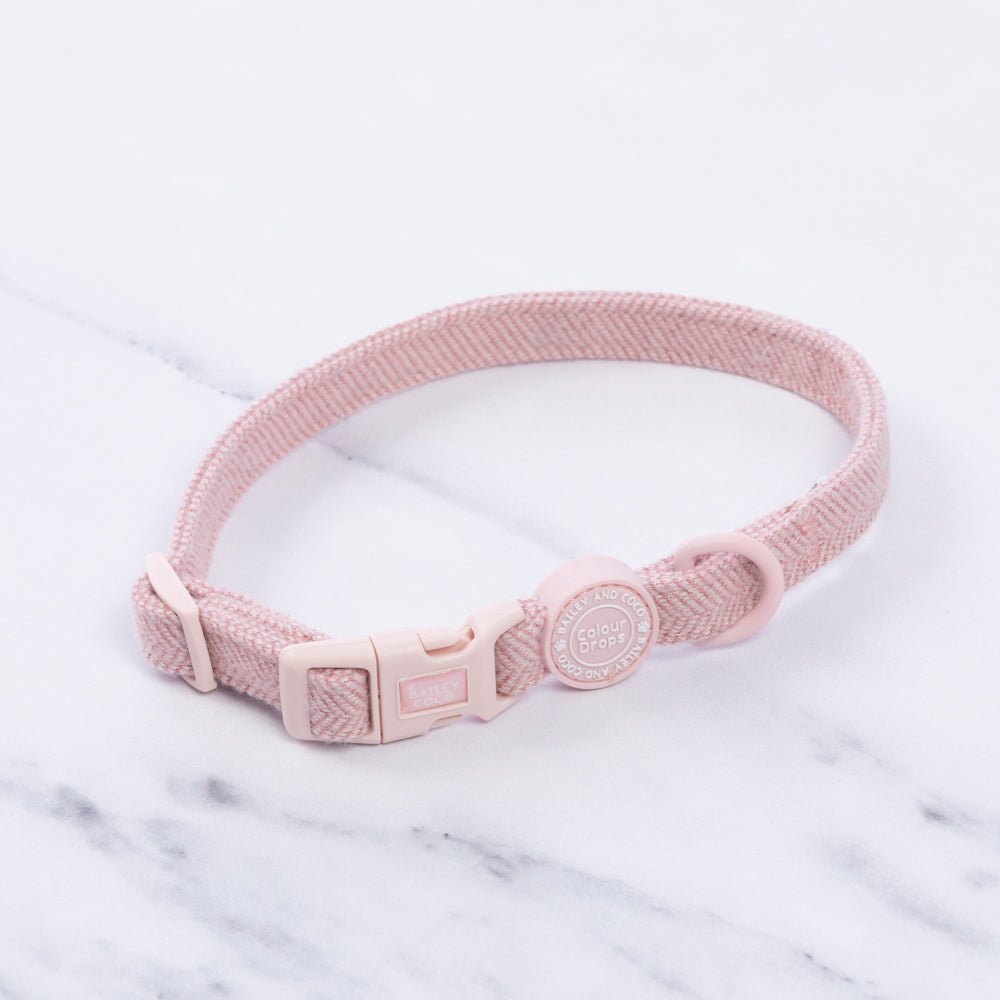
Stiff leather or rough nylon can rub and irritate a puppy's sensitive skin, especially around the neck where fur may be thinner. Soft fabric collars, particularly those made from woven textiles like tweed or padded nylon, sit comfortably against the coat without causing friction. Fabric dog collars are an excellent choice for puppies because they combine softness with durability.
Adjustability
Puppies grow at an astonishing rate. A collar that fits perfectly today may be too snug in a fortnight. Choose a collar with a generous adjustment range so you can loosen it as your puppy grows, reducing the number of collar replacements you need in those first few months. The best dog collars offer a wide adjustment range that can accommodate significant growth.
Quick-Release or Breakaway Buckle
Safety is paramount with puppies because they are curious, clumsy, and have a talent for getting into tight spots. A quick-release buckle allows you to remove the collar instantly if it gets caught on furniture, crate bars, or garden fencing. Some owners also opt for breakaway collars designed to snap open under pressure, though a standard quick-release buckle is perfectly adequate for supervised wear.
D-Ring for Tags
You will need somewhere to attach an ID tag (remember, it is the law). Make sure the collar has a sturdy but lightweight D-ring. Avoid collars with oversized rings that will dangle and annoy a small puppy. If you are choosing the tag itself at the same time, our guide on what to look for in an engraved dog tag walks through the quality signals that actually matter.

How to Size a Puppy Collar
Getting the right fit is essential for both comfort and safety. A collar that is too tight can restrict breathing and cause skin irritation, while one that is too loose can slip over your puppy's head. For a detailed breakdown of measuring techniques, see our dog collar size guide.
The Two-Finger Rule
The gold standard for collar fitting is simple: once the collar is fastened, you should be able to slide two fingers (flat, side by side) between the collar and your puppy's neck. If you can fit more than two fingers, the collar is too loose. If you cannot fit two fingers comfortably, it is too tight. For more guidance on achieving the perfect fit, check our guide on how tight a dog collar should be.
Where to Measure
Use a soft tape measure or a piece of string around the base of your puppy's neck, where the collar will sit. This is typically the thickest part of the neck, just above the shoulders. Add approximately 2 to 3 centimetres to the measurement to allow for comfort and the two-finger rule.
Expect to Resize Every 2 to 4 Weeks
Puppy growth is rapid, and it is easy to forget that a collar that fitted perfectly three weeks ago may now be too snug. Make it a habit to check the fit at least once a week by performing the two-finger test. Most owners find they need to loosen the collar every two to four weeks during the first six months. Keep a reminder on your phone if it helps.
Puppy Collar Sizing by Breed
| Breed Size | Example Breeds | 8-Week Neck Size | Recommended Collar Width |
|---|---|---|---|
| Toy / Miniature | Chihuahua, Yorkie, Toy Poodle | 15-20 cm | 1.0-1.5 cm |
| Small | Jack Russell, Cavalier King Charles, Miniature Schnauzer | 20-25 cm | 1.5-2.0 cm |
| Medium | Cocker Spaniel, Border Collie, Beagle | 25-30 cm | 2.0-2.5 cm |
| Large | Labrador, Golden Retriever, German Shepherd | 28-35 cm | 2.5-3.0 cm |
| Giant | Great Dane, Newfoundland, Saint Bernard | 30-40 cm | 2.5-3.5 cm |
Collar Materials for Puppies: What Works Best
The material of your puppy's collar affects comfort, durability, and safety. Here is a breakdown of the most common options and how they stack up for young dogs.
Soft Fabric and Tweed
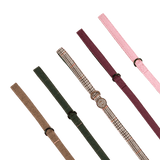
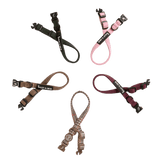
Soft fabric collars are arguably the best choice for puppies. They are lightweight, gentle on the skin, and come in a wide range of colours and patterns. Tweed collars, in particular, offer a lovely combination of softness and structure. They look smart without being stiff, and they tend to sit flat against the coat rather than bunching or folding. Bailey and Coco's adjustable tweed collars are a fantastic example of this; they are designed to be soft enough for a puppy yet durable enough to last through the early months of rapid growth.
Nylon
Standard nylon webbing collars are widely available and affordable. They are lightweight and come in every colour imaginable. However, cheap nylon can be rough and may cause rubbing, particularly if the edges are not finished well. If you go with nylon, look for collars with rounded or padded edges.
Leather
Leather collars are a classic choice and they age beautifully, but they are rarely ideal for puppies. They tend to be stiffer and heavier than fabric alternatives, and they need to be broken in before they become truly comfortable. Leather also does not adjust as easily, and the hardware is often heavier. Save leather for when your dog has reached their adult size.
Biothane
Biothane is a waterproof, easy-to-clean material that has gained popularity in recent years. It is lightweight and durable, making it a decent option for puppies who love puddles and mud. However, it can feel slippery and does not have the same soft, natural feel as fabric or tweed.
| Material | Weight | Softness | Adjustability | Durability | Puppy Suitability |
|---|---|---|---|---|---|
| Soft Fabric / Tweed | Very Light | Excellent | Excellent | Good | Excellent |
| Nylon | Light | Variable | Good | Good | Good |
| Leather | Medium to Heavy | Stiff (initially) | Limited | Excellent | Poor |
| Biothane | Light | Good | Good | Excellent | Good |
Getting Your Puppy Used to Wearing a Collar: A Step-by-Step Daily Plan
Most puppies will accept a collar quickly, but some need a bit more patience. Here is a simple day-by-day plan to make the introduction as smooth as possible.
Day 1: Introduction and Sniffing
Before putting the collar on, let your puppy sniff it and investigate it. Place it on the floor near their food bowl or favourite toy. Let them approach it on their own terms. The goal is to make the collar a familiar, non-threatening object.
Day 2: First Fitting (5 to 10 Minutes)
Gently place the collar around your puppy's neck and fasten it. Immediately offer a treat or begin a game. Keep this first session short, around 5 to 10 minutes. If your puppy scratches at the collar, distract them with play rather than removing it straight away. Remove the collar calmly after the session.
Day 3 to 4: Extending Wear Time (15 to 30 Minutes)
Gradually increase the time your puppy wears the collar. Put it on during meal times, play sessions, or when they are happily occupied with a chew. Most puppies will stop noticing the collar by this stage. Continue pairing collar time with positive experiences.
Day 5 to 7: Full Indoor Wear
By mid-week, your puppy should be comfortable wearing the collar for extended periods while supervised indoors. You can begin leaving it on for a few hours at a time. Always remove it at bedtime and during unsupervised crate time to prevent any risk of the collar catching on something.
Week 2 Onwards: Adding the Lead
Once your puppy is fully comfortable with the collar, you can introduce a lightweight lead. Attach it and let it trail on the ground while you supervise (never leave a trailing lead unattended). Then begin gently picking up the lead and following your puppy around before adding any directional guidance. For a complete guide on this next step, see our puppy leads and first lead guide.
Common Puppy Collar Mistakes (And How to Avoid Them)
New puppy owners make the same handful of collar mistakes again and again. Here are the ones to watch out for.
1. Collar Too Tight
A collar that is too snug restricts breathing, causes discomfort, and can even lead to skin sores over time. If you cannot comfortably fit two fingers between the collar and your puppy's neck, loosen it immediately.
2. Collar Too Loose
A loose collar is a safety hazard. If your puppy can slip their head through it, the collar is not doing its job. This is particularly dangerous near roads or in unfamiliar environments. Puppies with narrow heads, such as Whippet or Greyhound puppies, are especially prone to slipping out of loose collars.
3. Collar Too Heavy
A chunky collar designed for an adult dog will weigh down a puppy and make them miserable. Stick to lightweight options specifically suited to your puppy's current size, not the size they will eventually be.
4. Forgetting to Resize
This is perhaps the most common and most dangerous mistake. Puppies grow fast, and a collar that was perfectly fitted three weeks ago could now be dangerously tight. Set a weekly reminder to check the fit.
5. Using a Harness Instead of a Collar
While harnesses are brilliant for walks (and many owners rightly prefer them for lead training), they do not replace the need for a collar. Remember, UK law requires a collar and tag in public. Many owners use both: a collar for identification and a harness for lead attachment. You can explore the differences further in our collar vs harness comparison guide.
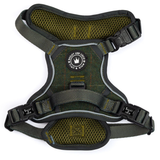
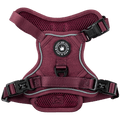
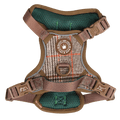
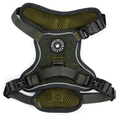
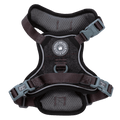
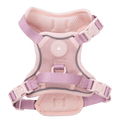
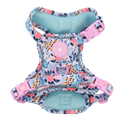
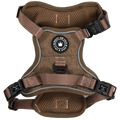
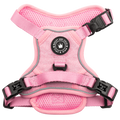
Browse our puppy harness range to find the right size for your growing pup, starting from XS.
6. Leaving the Collar on in the Crate
Collars can catch on crate bars, wire, or bedding zips. Always remove your puppy's collar during unsupervised crate time to eliminate the risk of choking or injury.
Collar and Lead Introduction Together
Once your puppy is comfortable wearing a collar, the next milestone is introducing a lead. These two introductions work best when handled in sequence rather than simultaneously. Trying to get a puppy used to both a collar and a lead at the same time can be overwhelming for them.
Start with a lightweight lead clipped to the collar's D-ring. Let the lead trail on the ground while your puppy moves around the house or garden under your supervision. This helps them get used to the slight drag and the sound of the clip without any pressure on the neck.
After a day or two of trailing, begin picking up the lead and following your puppy around. Do not pull or guide them; simply hold the lead loosely and let your puppy decide the direction. Reward them for walking near you with treats and praise.
Only once your puppy is happy with both the collar and the trailing lead should you begin gentle directional guidance. This gradual approach builds confidence and lays the foundation for enjoyable walks together.
When to Upgrade to an Adult Collar
Your puppy will not stay in their first collar forever. At some point, they will outgrow it and be ready for a full-sized adult collar. But when is the right time to make the switch?
The Growth Plateau
Most dogs reach their adult size between 9 and 12 months for small to medium breeds, and 12 to 18 months for large and giant breeds. You will know your puppy is approaching their adult size when the gaps between collar adjustments start getting longer. If you have not needed to loosen the collar for four to six weeks, your puppy's growth is likely slowing down.
Signs It Is Time
You should upgrade to an adult collar when your puppy has reached or is very close to their full adult neck size, when the current collar is nearing the end of its adjustment range, or when the collar shows significant wear from months of daily use. A personalised collar makes a wonderful upgrade once your dog has reached their adult size, as you will not need to replace it as frequently.
What Changes with an Adult Collar
An adult collar can be slightly wider and more substantial than a puppy collar. You might also consider different materials. Leather becomes a viable option once the collar does not need constant adjustment. However, many owners find that soft fabric and tweed collars remain the preferred choice throughout their dog's life thanks to their comfort, style, and ease of cleaning.
Why Bailey and Coco Collars Are a Great Choice for Puppies
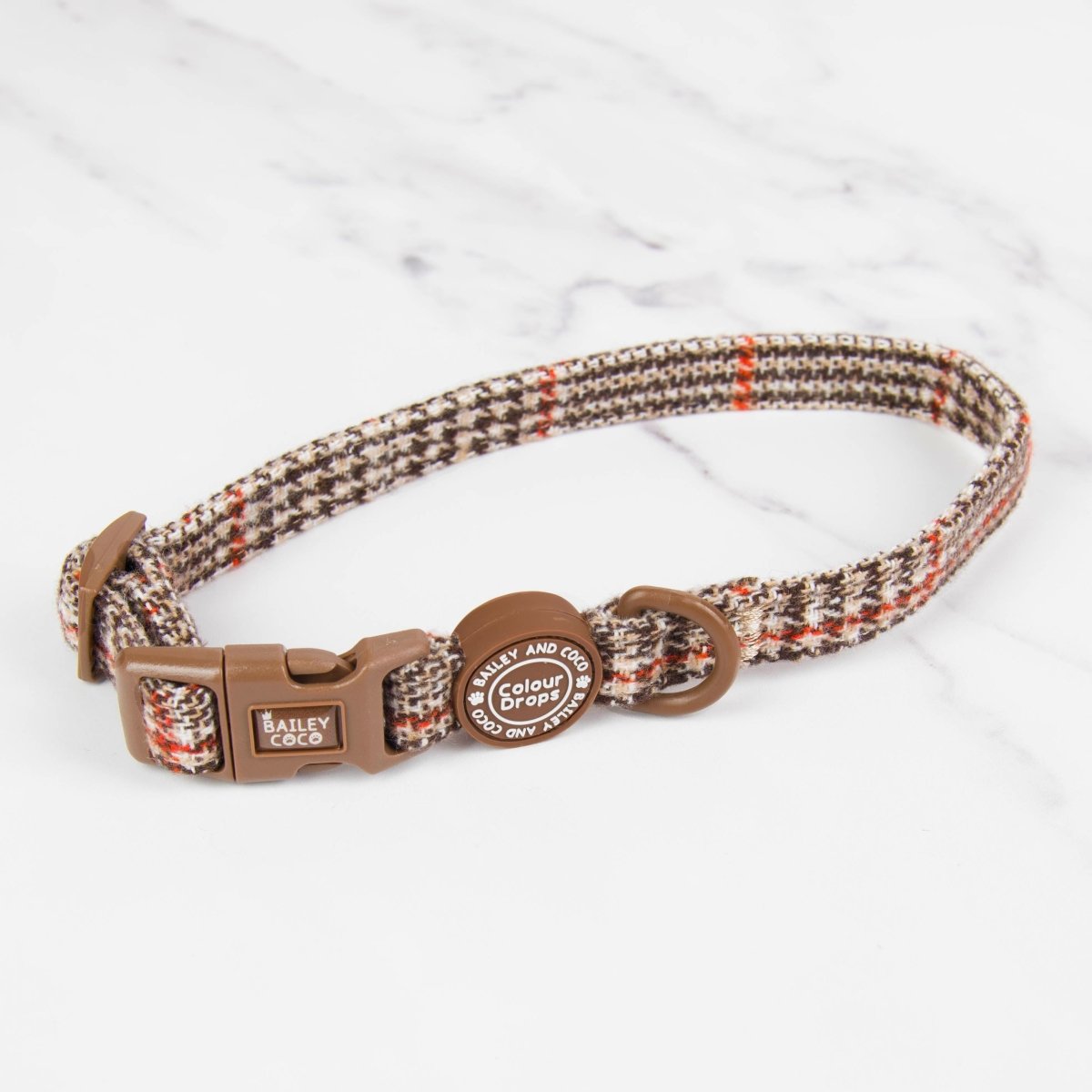
At Bailey and Coco, our adjustable fabric collars tick every box on the puppy collar checklist. They are lightweight, soft against the skin, and have a generous adjustment range that grows with your pup through those all-important early months. The quick-release buckle provides peace of mind, while the premium tweed and fabric finishes mean your puppy looks every bit as stylish as they are comfortable.
Our collars are designed and finished to a standard that means they do not just see your puppy through the first few months; many of our customers find the same collar lasts well into adulthood for smaller breeds. And with a range of colours and patterns, from Lavender Tweed to Heritage Plaid, there is something for every personality.
The best first collar is one your puppy does not even notice they are wearing. That is exactly what we aim for.
Your puppy's first engraved tag

A puppy's first tag is day-one safety kit. Our hand-finished engraved tags sit on a 38mm stainless steel blank, light enough to ride a puppy or toy-breed collar without swinging, and deep-engraved so the details stay readable for the lifetime of the dog. An engraved tag is a practical way to meet the Control of Dogs Order 1992 the first time your puppy steps outdoors. If it helps to see what a first tag actually looks like in practice, our real UK dog tag examples page walks through genuine layouts from customer orders.
What to put on a puppy's first tag
Owner surname, house number and postcode, and a mobile phone number. A puppy will not understand the tag, but a neighbour will. The dog's name sits naturally on the reverse if you want a warmer touch for anyone who finds your puppy in those first curious weeks.

See the three finishes in the engraved dog tag collection. The silver engraved dog tag is the most common first-tag choice. The black engraved dog tag shows text brightest against a light-coloured puppy. The rose gold engraved dog tag works beautifully as a welcome-home gift.
Frequently Asked Questions
What age can a puppy wear a collar?
You can introduce a collar from eight weeks old, which is typically the age puppies leave their breeder and come home. Start with short indoor sessions and build up gradually. By the end of the first week, most puppies are comfortable wearing their collar for extended periods during the day.
Do puppies have to wear a collar in the UK?
Yes. Under the Control of Dogs Order 1992, all dogs (including puppies) must wear a collar with an ID tag showing the owner's name and address when in any public place. This applies from the very first time your puppy leaves your home, including vet visits and garden walks near public footpaths.
How do I know if my puppy's collar is too tight?
Use the two-finger rule: you should be able to slide two fingers flat between the collar and your puppy's neck. If you cannot fit two fingers, or if you notice redness, rubbing, or hair loss around the collar area, it is too tight. Check the fit at least once a week, as puppies grow rapidly.
Should I take my puppy's collar off at night?
Yes, it is best practice to remove your puppy's collar at night and during any unsupervised time, especially in a crate. Collars can catch on bedding, crate bars, or other objects, creating a choking risk. Put the collar back on first thing in the morning as part of the daily routine.
How often should I replace my puppy's collar?
Most puppies need a new collar, or at least a collar adjustment, every two to four weeks during their fastest growth phases (typically between 8 weeks and 6 months). Once growth slows, you may only need one or two more collars before your dog reaches their adult size. Choose adjustable collars with a wide size range to minimise replacements.
Is a harness better than a collar for a puppy?
Both serve different purposes. A harness distributes pressure across the chest and is excellent for lead walking, particularly for puppies who tend to pull. However, a collar is still required by UK law for ID tags. Many owners use both: a collar for identification and a harness for walks. See our dog collar vs harness guide for a full comparison.
What size collar does an 8-week-old puppy need?
It depends entirely on the breed. Toy breeds may need a collar starting at 15 cm, while large breed puppies could need 30 cm or more. The best approach is to measure your puppy's neck with a soft tape measure and add 2 to 3 cm for comfort. Always choose an adjustable collar so you have room to grow. Our dog collar size guide has detailed measurements by breed.
When your puppy is ready for walks, find the right lead in our best dog leads UK guide, which covers lengths, materials, and breed recommendations for puppies and adult dogs alike.


