













Part of The Weekly Woof by Andrew Simpson
There is something wonderfully satisfying about a dog collar with your pet's name on it. It is personal, it is practical, and it says something about the bond between you and your four-legged companion. Personalised dog collars have surged in popularity across the UK in recent years, and it is easy to see why. They combine identification with individuality, giving your dog a collar that is uniquely theirs.
But the world of personalised collars is broader than you might think. From embroidered text to engraved buckles, from printed patterns to slip-on ID tags, there are multiple ways to customise a collar, each with its own advantages and trade-offs. And beyond the style factor, there are real safety and legal considerations that make personalisation more than just a nice touch.
In this guide, we will walk you through everything you need to know about personalised dog collars in the UK. We will cover the different types of personalisation, what information to include, how UK law affects your choices, which materials work best, and how to pair a quality collar with the right identification. Whether you are a first-time puppy owner or looking to upgrade your current setup, this is your definitive resource.
Why Personalised Dog Collars Are So Popular
The appeal of a personalised collar goes beyond aesthetics. Here are the key reasons UK dog owners are choosing custom options in increasing numbers.
Instant Identification
A personalised collar puts your dog's name and your contact details right there on the collar itself. If your dog ever slips their lead or wanders off, anyone who finds them can see their name and call you immediately. There is no fumbling with a dangling tag, no squinting at tiny engraved text on a metal disc. The information is visible, clear, and always present.
Peace of Mind
Knowing that your dog's collar carries your phone number provides genuine reassurance. While microchipping is the ultimate safeguard (and a legal requirement in the UK), a collar with visible contact details is the fastest way for a stranger to reunite you with your dog. Microchips require a scanner to read; a collar with your number on it requires nothing more than a pair of eyes.
Style and Individuality
Let us be honest: personalisation is also fun. Seeing your dog's name stitched, engraved, or printed on a collar adds a personal touch that mass-produced collars cannot match. It makes the collar feel special, like a bespoke accessory rather than a generic item. For owners who take pride in their dog's appearance, personalisation is the finishing touch.
Reduced Tag Noise
Traditional metal ID tags jingle and clang against the D-ring with every movement. For some dogs (and owners), the constant noise is irritating. A collar with the identification information built directly into the collar itself, whether embroidered, engraved on the buckle, or printed on the fabric, eliminates the jingle entirely.
Gift-Worthy Appeal
Personalised collars make excellent gifts for dog owners. A collar with a new puppy's name on it is a thoughtful and practical present that any dog lover would appreciate.
Types of Personalisation
Not all personalisation methods are equal. Each has distinct characteristics that affect durability, legibility, appearance, and cost. Understanding the differences will help you choose the right option for your dog's lifestyle.
Embroidered Personalisation
Embroidered collars have the text stitched directly into the collar fabric. The thread is woven into the material, creating a permanent, tactile finish that looks premium and professional. Embroidered text is highly durable and does not fade, peel, or wear off with normal use. It is one of the most popular personalisation methods for good reason.
The main advantage of embroidered personalisation is longevity. The text is physically part of the collar, so it lasts as long as the collar itself. The main limitation is that you cannot change the text once it is done, so if your phone number changes, you will need a new collar or an additional tag.
Engraved Personalisation
Engraved collars typically feature text etched into a metal plate, buckle, or nameplate attached to the collar. The engraving is permanent, legible, and resistant to wear. Metal engravings work particularly well on leather and biothane collars, where a metal nameplate adds a touch of elegance.
Some collars feature laser-engraved text directly onto the collar material, which provides a clean, precise finish. The depth of the engraving affects longevity; deeper engravings last longer but may be more expensive.
Printed Personalisation
Printed collars use dye-sublimation, screen printing, or digital printing to apply text and designs to the collar surface. This method allows for the most creative freedom, including full-colour designs, patterns, and fonts. Printed personalisation is typically the most affordable option.
The trade-off is durability. Printed text sits on the surface of the material rather than being embedded in it, which means it can fade or wear over time, particularly with heavy outdoor use. That said, modern printing techniques have improved significantly, and a well-made printed collar can last a surprisingly long time with proper care.
ID Tag Attachment
The simplest form of personalisation is attaching an engraved ID tag to a quality collar. This gives you complete flexibility: you can use any collar you like and swap tags as needed. If your contact details change, you simply get a new tag rather than a new collar. For the detail on picking a tag that stays legible for years, see our engraved dog tag buyer's guide.
The downside is the noise factor (tags jingle) and the risk of tags falling off. Split rings can open, clip-on attachments can break, and tags can get caught on branches, fences, or kennel bars. A tag is an excellent complement to collar-based personalisation, but it should not be your sole form of identification.
Personalisation Types Compared
Here is how the four main personalisation methods stack up against each other.
| Criteria | Embroidered | Engraved | Printed | ID Tag |
|---|---|---|---|---|
| Durability | Excellent | Excellent | Good | Good (tag can detach) |
| Legibility | High (bold stitching) | High (precise lettering) | High (can fade over time) | Varies (small tags hard to read) |
| Wash Resistance | Excellent | Excellent | Moderate | Excellent (metal) |
| Cost | Mid-range | Mid to premium | Budget to mid-range | Budget (tag only) |
| Flexibility | Fixed (cannot change) | Fixed (cannot change) | Fixed (cannot change) | High (swap tags easily) |
| Noise | Silent | Silent (if integrated) | Silent | Jingles |
| Style Range | Good (thread colours) | Classic and elegant | Widest range (full colour) | Separate from collar style |
| Best For | Active dogs, outdoor use | Premium look, leather collars | Budget-conscious, creative designs | Pairing with any quality collar |
For many owners, the ideal approach combines methods: a high-quality collar paired with an engraved tag as a secondary backup. This gives you the best of both worlds; visible identification on the collar and a backup on the tag.
What to Put on a Personalised Dog Collar
Choosing what information to include is as important as choosing the personalisation method itself. Space on a collar is limited, so every character needs to earn its place.
Essential Information
- Your dog's name: This is the most common personalisation. It helps anyone who finds your dog to call them by name, which can be calming for a lost or anxious pet.
- Your phone number: This is the single most important piece of information. A mobile number is preferable, as you are likely to have your phone with you when your dog goes missing.
Recommended Additional Information
- Second phone number: If space allows, a backup contact number provides an alternative if you are unreachable.
- Postcode or address: Useful if your dog is found locally and the finder wants to return them directly.
Optional but Valuable Information
- Medical information: If your dog has a condition that requires urgent attention (such as epilepsy, diabetes, or severe allergies), noting this on the collar can be critical. Something as simple as "NEEDS MEDICATION" can alert a finder to seek veterinary help.
- "Microchipped" text: Adding the word "microchipped" signals that your dog has a chip and can be scanned at any vet or rescue centre for your full details.
- "Neutered/Spayed" text: Some owners include this, particularly if their dog is a breed that is commonly targeted by unscrupulous breeders.
What to Avoid
- Full address: For security reasons, your full home address on an external collar is not recommended. A postcode or area is sufficient.
- Your name: This is unnecessary on the collar itself and takes up valuable space. Your dog's name and your phone number are what matter.

UK Law: What Your Dog Must Wear in Public
This is the section that every UK dog owner should read carefully. There is a legal requirement for dog identification in public places, and understanding it is essential.
The Control of Dogs Order 1992
Under the Control of Dogs Order 1992, every dog in a public place in England, Scotland, and Wales must wear a collar with an attached tag (or plate) displaying the owner's name and address, including postcode. This is a legal requirement, not a recommendation.
Key points:
- The tag or plate must show the owner's name and address (including postcode).
- A phone number is not legally required but is strongly recommended.
- The requirement applies in all public places, including parks, streets, footpaths, and beaches.
- Exemptions exist for working dogs (such as police dogs, guide dogs, and some farm dogs) while they are working.
- Failure to comply can result in a fine of up to £2,000.
Microchipping and the Law
Since 2016, it has also been a legal requirement for all dogs in England to be microchipped and registered on an approved database. Scotland and Wales have similar requirements. A microchip provides a permanent, tamper-proof form of identification, but it does not replace the legal requirement for a collar and tag in public.
This is a crucial distinction: a microchip alone is not enough. Your dog must also wear a collar with an identification tag or plate in public. The two requirements are separate and complementary.
Personalised Collars and the Law
A personalised collar with your name and address embroidered, engraved, or printed on it can satisfy the legal requirement, provided the information is clearly legible. However, most experts recommend also attaching a separate ID tag as a backup. Tags are inexpensive and provide redundancy in case the collar text becomes worn or difficult to read over time.
For more on UK regulations around dogs in public, including lead laws, our guide to dog lead laws in the UK covers the essentials.
Safety Benefits: Personalised Collars vs Tags Alone
While a dangling ID tag is the most common form of dog identification, it has some notable vulnerabilities that collar-based personalisation addresses.
Why Tags Can Fail
- Tags fall off: Split rings can open or weaken over time. Clip-on tag attachments can break. If the tag detaches, your dog has no visible identification.
- Tags get caught: A dangling tag can snag on kennel bars, branches, undergrowth, or fencing. This is not only an identification risk but a safety hazard.
- Tags wear down: Engraved text on a metal tag gradually wears smooth, particularly if the tag rubs against another tag or the D-ring. After a year or two, the text may become difficult to read.
- Tags are small: Even with good eyesight, reading a small tag on a moving or nervous dog can be difficult. A finder may struggle to make out the phone number.
The Advantage of Collar-Based Identification
When identification is part of the collar itself, it cannot fall off separately. It does not jingle, it does not snag, and it does not wear down in the same way a dangling tag does. The text is larger and more visible, making it easier for a stranger to read at a glance.
The ideal setup is both: personalisation on the collar and an ID tag as a backup. If one fails, the other is still there. Combined with a microchip, you have three layers of identification, which provides maximum peace of mind. Our round-up of the best UK dog tags is a good starting point for the backup tag.
Personalised Collar Materials: What Works Best
The material of the collar affects which personalisation methods are available and how well they hold up over time.
Nylon
Nylon is the most common collar material and works well with embroidered and printed personalisation. Embroidered nylon collars are particularly popular, as the stitching integrates naturally into the fabric. Nylon is lightweight, affordable, and available in a wide range of colours.
Leather
Leather collars pair beautifully with engraved nameplates. The combination of quality leather and a polished metal engraving creates a classic, premium look. Leather is durable and develops a rich patina over time, though it requires more care than synthetic materials.
Biothane
Biothane is a waterproof material that works with riveted nameplates and some printing techniques. It is an excellent choice for active dogs, as it handles mud, water, and rough use without degrading. If you are interested in waterproof options, our guide to waterproof dog collars covers this material in detail.
Fabric and Tweed
Fabric collars, including tweed and cotton designs, work beautifully with embroidered personalisation. The textile surface provides an ideal base for stitched text, and the overall effect is warm, characterful, and distinctly British. Fabric collars are particularly popular for their style and comfort.
Best Personalised Collars for Puppies
If you are personalising a collar for a puppy, there are specific considerations to keep in mind.
Adjustability Is Essential
Puppies grow rapidly, and a collar that fits at eight weeks will be too small within a month or two. An adjustable collar allows you to increase the size as your puppy grows, getting more use from a single collar. This is particularly important with personalised collars, which represent a slightly higher investment than a plain collar. Our collar size guide includes specific advice for measuring puppies.
Consider an ID Tag for Puppies
Given how quickly puppies outgrow collars, some owners prefer to start with a quality adjustable collar and a separate engraved ID tag. The tag can be transferred to the next collar when the puppy sizes up. This is a practical and cost-effective approach during the rapid-growth phase. Once your dog reaches their adult size, you can invest in a personalised collar with embroidered or engraved details that will last for years.
For detailed guidance on choosing puppy collars, including sizing, materials, and when to size up, we have a dedicated guide.
Fit Matters More Than Style
With puppies, comfort and safety come first. Ensure the collar is not too tight (the two-finger rule applies: you should be able to fit two fingers between the collar and your puppy's neck) and not so loose that it can slip over their head. Our guide on how tight a dog collar should be is essential reading for new puppy owners.

Caring for Personalised Collars
The personalisation on your dog's collar needs to remain legible to serve its purpose. Here is how to care for each type.
Embroidered Collars
Hand wash with mild soap and warm water. Avoid harsh detergents, as these can fade the thread colour over time. Air dry the collar rather than using a tumble dryer, as heat can affect the stitching. Embroidered personalisation is inherently durable, so with basic care, it will last the lifetime of the collar.
Engraved Collars and Tags
Wipe metal engravings with a soft cloth regularly to prevent dirt buildup in the lettering. For tarnished metal, a gentle polish restores legibility. Check periodically that engraved nameplates are securely attached and that rivets have not loosened.
Printed Collars
Printed personalisation is the most vulnerable to wear, so gentle cleaning is key. Wipe with a damp cloth rather than submerging in water where possible. Avoid scrubbing the printed area directly. If the collar is machine-washable, use a delicate cycle and a laundry bag to protect the print.
General Tips
- Inspect the personalisation monthly to ensure it is still clearly legible.
- Replace the collar or tag immediately if the text becomes difficult to read.
- Keep a spare ID tag with current details in case of emergency.
- Update your contact information on the collar and tag whenever it changes.
Bailey and Coco Collars: The Perfect Base for Personalisation
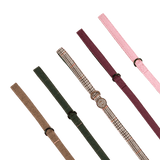
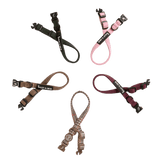
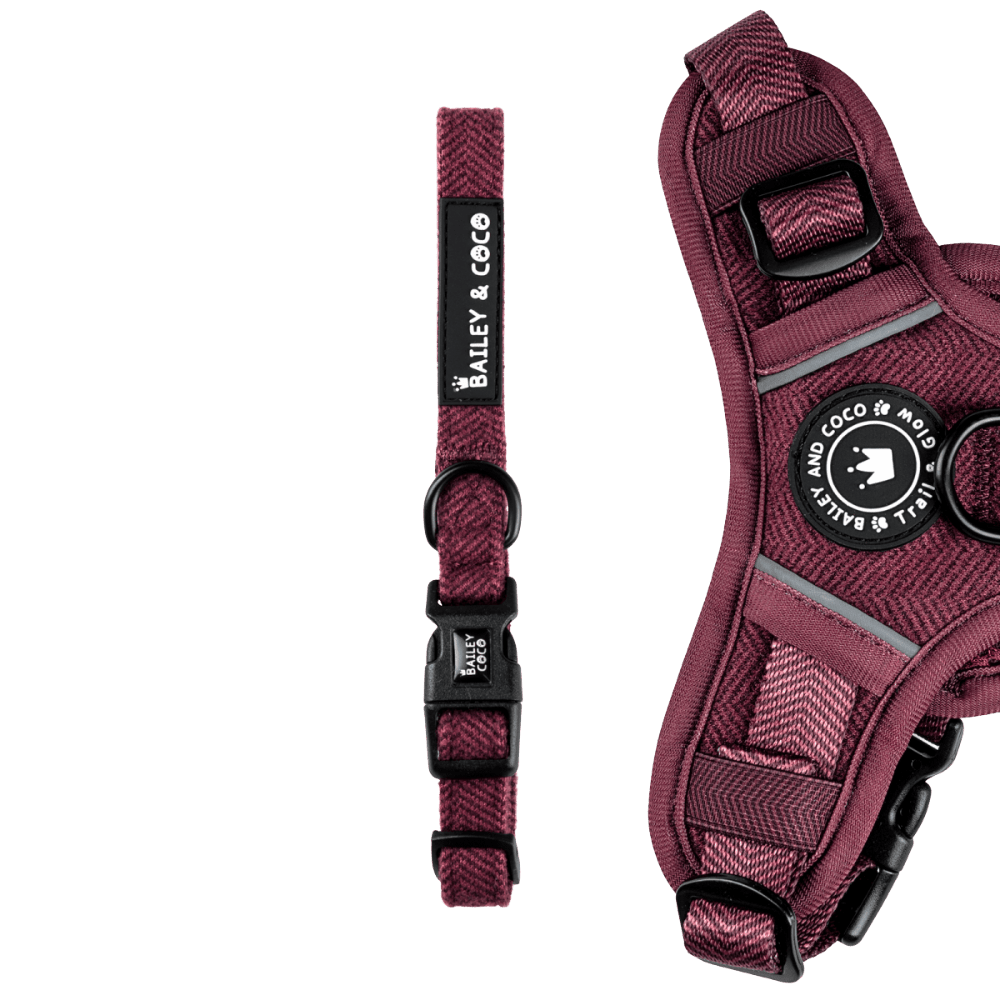
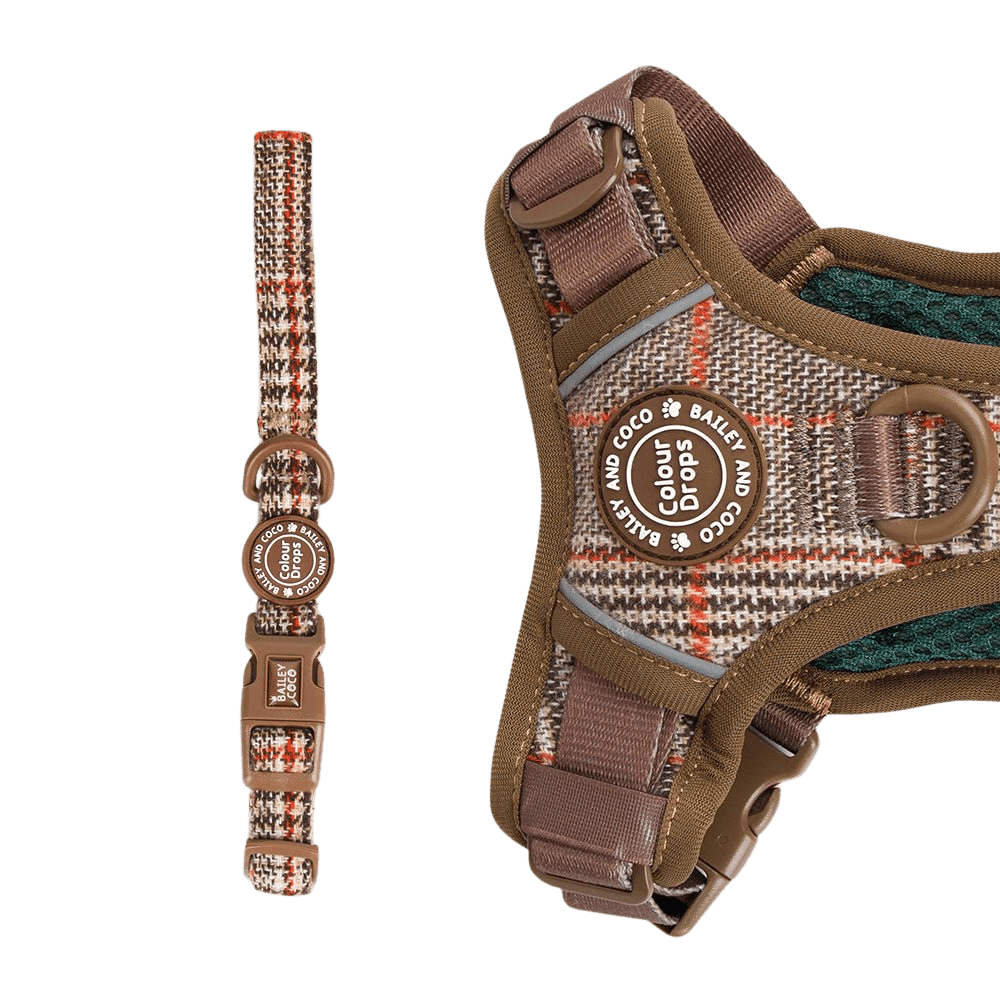
At Bailey and Coco, we craft our collars with quality, comfort, and style at the forefront. Our adjustable fabric collar range, featuring designs like Charcoal Tweed, Mulberry Tweed, Heritage Plaid, Lavender Tweed, and Forest Tweed, provides a beautiful foundation that pairs perfectly with personalised ID tags.
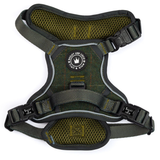
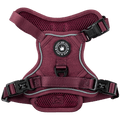
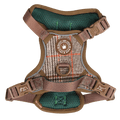
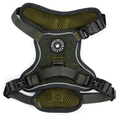
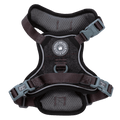
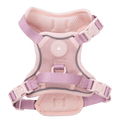
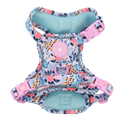
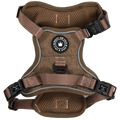
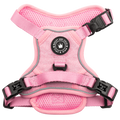
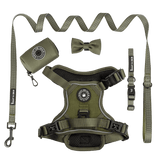
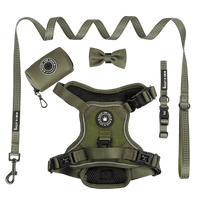
Pair your personalised collar with a coordinating dog harness from our collection for a complete, stylish walking setup.
Each collar in our collection is thoughtfully designed with soft, durable fabric, secure adjustable hardware, and patterns that are distinctly British. The quality of the collar itself matters enormously when you are adding personalisation on top. A cheap collar with a beautiful engraved tag is a mismatch. A Bailey and Coco collar with a quality engraved tag is a combination that looks and performs beautifully.
Our collars feature sturdy D-rings that securely hold ID tags, and the adjustable fit means you can find the perfect comfort level for your dog. Pair any of our designs with an engraved tag displaying your dog's name and your phone number, and you have a personalised setup that is both stylish and compliant with UK law.
Looking for the complete picture? Our guide to the best dog collars in the UK compares all the options to help you find exactly the right collar for your needs.
How to Choose the Right Personalised Collar
With all the options available, here is a simple framework for making your decision.
Step 1: Determine Your Priority
Is your primary goal identification, style, or both? If identification is paramount, prioritise legibility and durability (embroidered or engraved). If style is the driver, explore the full range of printed options and tag designs.
Step 2: Consider Your Dog's Lifestyle
An active dog who spends time in water and mud needs a personalisation method that can handle the elements. Embroidered or engraved options on waterproof or durable fabric collars are ideal. A dog who primarily walks on pavements and in parks has more flexibility in material and method choice.
Step 3: Check the Legibility
Whatever method you choose, the text must be easy to read. Choose a font and size that a stranger could read without having to hold the collar up close. Contrast matters: light text on a dark collar, or dark text on a light collar, is far more legible than similar tones.
Step 4: Include the Right Information
At minimum, include your dog's name and your phone number. If space allows, add your postcode. Remember the legal requirement: in public, your dog must wear a tag or plate showing your name and address.
Step 5: Invest in Quality
A personalised collar is only as good as the collar it is built on. Cheap materials degrade quickly, taking the personalisation with them. Start with a quality collar, whether that is one of our Bailey and Coco designs or another reputable brand, and then add personalisation that matches the collar's quality level.
Matching an engraved tag to your personalised collar

A personalised collar carries the dog's story across its face. An engraved tag carries the owner's details on the other side of the same collar. Together they cover style and safety in one set. The Bailey & Coco engraved collection sits on a 38mm stainless steel blank in silver, black or rose gold, and each tag is a practical way to meet the Control of Dogs Order 1992 on every walk. For a visual sense of what the tag side of that pairing looks like on real collars, see our real dog tag layouts from UK customers.
Which finish pairs with your tweed or leather collar?
Rose gold flatters the warmer tones in mulberry tweed, heritage plaid and tan leather, and is the most-gifted finish for that reason. Silver pairs with every Bailey & Coco pattern and feels classic against soft daisy and spring colourways. Black reads clearest on charcoal or jet-base collars where the tag needs to stand apart.

See all three side by side in the engraved dog tag collection, or pick the silver engraved dog tag, black engraved dog tag or rose gold engraved dog tag directly.
Frequently Asked Questions
Is a personalised collar a legal requirement in the UK?
A personalised collar specifically is not a legal requirement, but under the Control of Dogs Order 1992, your dog must wear a collar with a tag or plate showing the owner's name and address (including postcode) in public places. A personalised collar with this information embroidered, engraved, or printed on it can satisfy this requirement, though we recommend also attaching a separate ID tag as a backup.
What information should I put on a personalised dog collar?
At minimum, include your dog's name and your mobile phone number. Ideally, also include your postcode and the word "microchipped" if applicable. For legal compliance, your name and address should be on the collar tag. If your dog has a medical condition that requires urgent attention, a brief note such as "NEEDS MEDICATION" can be valuable.
Are personalised collars safe for puppies?
Yes, provided you choose an adjustable collar and check the fit regularly as your puppy grows. For fast-growing puppies, many owners start with a quality adjustable collar paired with a separate engraved tag, which can be transferred to larger collars as the puppy sizes up. Once your dog reaches adult size, investing in a collar with permanent personalisation makes more sense.
Can I wash a personalised dog collar?
Yes, but the method depends on the personalisation type. Embroidered collars should be hand washed with mild soap. Engraved plates and tags simply need a wipe. Printed collars should be cleaned gently with a damp cloth to preserve the text. Always check the manufacturer's care instructions for your specific collar.
Does Bailey and Coco offer personalised collars?
Our focus is on crafting beautifully designed, high-quality adjustable fabric collars in patterns like Charcoal Tweed, Mulberry Tweed, Heritage Plaid, Lavender Tweed, and Forest Tweed. These collars are the perfect base for personalisation; pair any of our designs with a quality engraved ID tag for a personalised setup that looks stunning and keeps your dog compliant with UK identification laws.
What is the difference between a personalised collar and an ID tag?
A personalised collar has identification information (name, phone number, address) built directly into the collar through embroidery, engraving, or printing. An ID tag is a separate metal or plastic disc attached to the collar's D-ring. Both serve the same purpose, but collar-based personalisation cannot fall off, does not jingle, and is typically more visible. Ideally, use both for maximum security.
How long does personalised text last on a dog collar?
This depends on the method and the dog's lifestyle. Embroidered text typically lasts the lifetime of the collar (two to five years of daily use). Engraved metal nameplates and tags last for years but may need occasional polishing. Printed text is the least durable and may fade after six to eighteen months of heavy outdoor use. Regardless of method, inspect the text regularly and replace the collar or tag if it becomes difficult to read.
Final Thoughts
A personalised dog collar is one of the simplest, most effective ways to keep your dog identifiable and safe. Whether you opt for embroidered text, an engraved nameplate, a printed design, or a quality collar paired with an engraved tag, the important thing is that your dog's collar carries visible contact details at all times.
In the UK, the law is clear: your dog must wear a collar with your name and address in public. A microchip alone is not enough. Personalisation satisfies this requirement while adding a touch of individuality that makes your dog's collar uniquely theirs.
At Bailey and Coco, we believe that the best personalised setup starts with a collar worth personalising. Our adjustable fabric collars in Charcoal Tweed, Mulberry Tweed, Heritage Plaid, Lavender Tweed, and Forest Tweed are crafted with premium materials, comfortable fits, and timeless British patterns. Pair one with a quality engraved ID tag, and your dog will be identified, legal, and looking their absolute best.
Explore our full collar collection to find the perfect foundation for your personalised setup. Pair your collar with a matching lead from our best dog leads guide, or complete your walking kit with our harness buying guide.


