









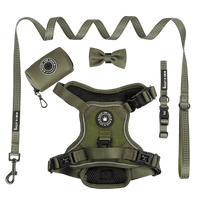

If you share your life with a Springer Spaniel, you already know the drill. One second they're trotting nicely beside you; the next, they've caught a scent and launched themselves nose-first into a hedgerow. Springers are athletic, powerful, and gloriously unpredictable on a walk. They were bred to flush game from thick cover, and that drive doesn't switch off just because they're on a lead.
That's exactly why choosing the right dog harness matters so much for this breed. A flimsy harness won't survive the mud, water, and sheer pulling force of a determined Springer. A poorly fitting one will mat their beautiful feathered coat and rub raw patches into their skin. You need something built for the job, something that can keep up with a dog that never, ever stops.
This guide covers everything Springer Spaniel owners need to know about finding the perfect harness: sizing, fit, features, training tips, and why our Trail & Glow range has become a favourite among spaniel owners across the UK.

Why Springer Spaniels Need a Tough, Reliable Harness
English Springer Spaniels are medium-sized dogs, typically weighing between 18 and 25kg, but don't let that fool you into thinking they're easy to manage on a walk. These are working gun dogs with serious muscle, explosive energy, and an instinct to chase anything that moves.
Here's what makes Springers particularly challenging for standard harnesses:
- Powerful pulling force. When a Springer catches a scent, they don't ease into it. They lunge. That sudden burst of speed puts enormous strain on buckles, stitching, and D-ring attachments. Cheap harnesses break, warp, or come undone entirely.
- Water and mud obsession. Springers are natural swimmers and will find every puddle, stream, and bog on your route. Their harness gets soaked repeatedly, which means it needs to dry quickly and resist that musty smell that builds up in absorbent materials.
- Thick, feathered coat. That gorgeous wavy coat is one of the breed's defining features, but it's also a nightmare under the wrong harness. Thin straps dig in and cause matting, especially around the chest and behind the front legs. Once matted, the coat pulls at the skin and becomes painful.
- Athletic, deep-chested build. Springers have a broad chest relative to their weight. Many harnesses designed for "medium" dogs are too narrow across the chest or too loose around the belly, creating pressure points or allowing the dog to back out.
- Constant movement. These dogs don't plod along. They zigzag, spin, bounce, and reverse direction without warning. The harness has to move with them without shifting, riding up, or restricting their natural gait.
A collar alone simply isn't enough for most Springers, particularly those still working on loose-lead walking. The concentrated pressure on the throat from a collar can cause long-term damage to the trachea and cervical spine. A well-fitted harness distributes force across the chest and shoulders, giving you control without risking injury. We cover the full collar vs harness debate in a separate guide if you'd like to dig deeper.
What to Look for in a Springer Spaniel Harness
Not all harnesses are created equal, and what works for a French Bulldog or a Labrador won't necessarily suit a Springer. Here are the features that matter most for this breed:
Dual Lead Attachment Points
A front clip (on the chest) redirects your dog's momentum when they pull, gently turning them back towards you. A back clip gives comfortable, relaxed control for calmer walks. Having both means you can adapt to the situation. Starting a walk near a busy road? Front clip. Relaxed Sunday stroll through a quiet field? Back clip. For Springers who are serious pullers, our no-pull dog harness collection is worth exploring.
Wide, Padded Straps
Thin nylon straps slice into a Springer's coat and skin, especially during a hard pull. Wide, padded straps spread the load across a larger area, reducing pressure and preventing the strap-line matting that plagues feathered breeds.
Quick-Drying, Weatherproof Materials
Your Springer will get wet. Repeatedly. Sometimes within the first five minutes of a walk. The harness material needs to shed water quickly, resist bacterial build-up, and not become heavy or saggy when soaked. Neoprene padding and coated webbing are ideal. If you want to understand the difference between water-resistant and waterproof gear, our guide on water-resistant vs waterproof dog gear breaks it all down.
A Sturdy Back Handle
This is non-negotiable for Springer owners. When your dog spots a squirrel, a pheasant, or another dog across a field, you need to be able to grab them quickly and securely. A reinforced dog harness with handle on the back gives you that instant control without fumbling for the lead.
Adjustable Fit
Springers vary quite a lot in build. A working-line Springer can be leaner and taller than a show-line dog of the same weight. Multiple adjustment points (chest, belly, and neck) let you dial in a snug, comfortable fit regardless of your dog's exact proportions.
Reflective Details
With shorter daylight hours for much of the UK year, reflective stitching or trim keeps your Springer visible during early morning and evening walks. Given how quickly they can disappear into undergrowth, every bit of visibility helps.
Trail & Glow: Why It Works for Springers
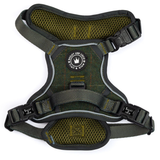
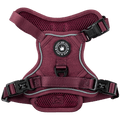
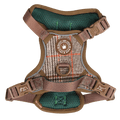
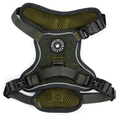
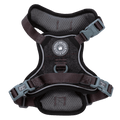
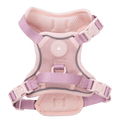
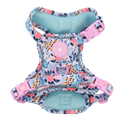
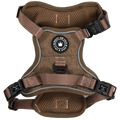
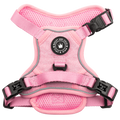
We designed the Trail & Glow range to handle exactly the kind of adventures Springer Spaniels live for. Here's why it's become one of our most popular choices among spaniel owners:
- Dual attachment points. Front and back D-rings give you full flexibility. Use the front clip for training and pull-management, switch to the back for relaxed off-lead recall walks.
- Wide, neoprene-padded straps. The generous strap width sits comfortably across a Springer's chest without digging into or matting their feathered coat. The neoprene padding is soft against the skin and dries remarkably fast after a swim.
- Reinforced back handle. Stitched and stress-tested to hold firm when you need to grab your dog mid-lunge. It sits flat when not in use, so it doesn't snag on branches or undergrowth.
- Quick-dry construction. The entire harness is built to shed water and dry within hours, not days. No more hanging a soggy harness over the radiator overnight and hoping for the best.
- Four adjustment points. Chest, belly, and two side adjusters let you fine-tune the fit to your Springer's exact shape. Whether you have a compact, muscular working Springer or a broader show-type, you'll get a secure fit.
- Reflective stitching. Built into the straps for low-light visibility. Subtle enough to look smart, effective enough to catch headlights.
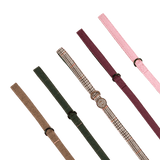
- Gorgeous designs. From classic tweeds to bold colour pops, the Trail & Glow range looks as good as it performs. Because your Springer deserves to turn heads for the right reasons, not just because they've rolled in something unspeakable.

Springer Spaniel Harness Size Guide
Getting the size right is everything. Too loose and your Springer will wriggle free the moment they spot a rabbit. Too tight and it will restrict their movement, cause rubbing, and mat their coat. Most English Springer Spaniels fit a size M or L in our Trail & Glow harnesses, but always measure rather than guess.
How to Measure Your Springer Spaniel
- Chest girth: Wrap a soft measuring tape around the widest part of your dog's ribcage, just behind the front legs. Keep the tape snug but not tight; you should be able to slide two fingers underneath.
- Neck circumference: Measure around the base of the neck, where a collar would naturally sit.
- Weight: Weigh your dog for a secondary reference point, but chest girth is always the primary measurement.
Top tip: Measure your Springer when they're standing naturally, not sitting or excited. A panting, wriggling Springer will give you a false reading every time.
Trail & Glow Size Chart for Springer Spaniels
| Size | Chest Girth | Typical Weight (guide only) | Typical Springer Fit |
|---|---|---|---|
| S | 35–66 cm | 7–14 kg | Too small for most adult Springers |
| M | 40–71 cm | 14–22 kg | Most female Springers and leaner males |
| L | 55–83 cm | 20–32 kg | Larger males and stockier show-type Springers |
| XL | 71–99 cm | 30–45 kg | Only very large, heavily built males |
Between sizes? If your Springer's chest measurement falls in the overlap zone, go with the larger size. You can always tighten the adjusters, but you can't add more strap to a harness that's too small. For a detailed walkthrough of the full sizing process, our dog harness buying guide covers every step.

Harness vs Collar for Springer Spaniels
This is one of the most common questions we get from Springer owners. The short answer: for walks, a harness is almost always the better choice. Here's how they compare for this specific breed:
| Feature | Harness | Collar |
|---|---|---|
| Pull management | Distributes force across chest and shoulders; front clip redirects pulling | All pressure on throat and neck; can cause tracheal damage in strong pullers |
| Escape prevention | Wraps around chest and torso; very difficult to back out of when fitted correctly | Springers can slip collars, especially when wet or pulling backwards |
| Coat impact | Wide straps reduce matting; neoprene padding protects feathering | Can cause neck fur matting and friction in long-coated breeds |
| Control in emergencies | Back handle allows instant grab-and-hold | No handle; must grab collar or lead |
| Comfort on long walks | Even pressure distribution; no choking or gagging | Can cause coughing and discomfort during sustained pulling |
| ID tag attachment | Not ideal for ID tags (use a collar alongside) | Perfect for ID tags and legal requirements |
Our recommendation: Use both. A lightweight dog collar for ID tags (legally required in the UK under the Control of Dogs Order 1992), and a properly fitted harness for all on-lead walking. This gives you the best of both worlds: legal compliance, safety, and control.
Wet Weather and Water: Harness Care for Springer Owners
Let's be honest. If you own a Springer Spaniel, "clean" and "dry" are aspirational concepts at best. These dogs find water like a compass finds north. Whether it's a river, a muddy ditch, or a suspiciously deep puddle in the middle of a field path, your Springer is going in. And the harness is going with them.
Here's how to keep your harness in top condition despite your dog's best efforts:
After Every Muddy or Wet Walk
- Rinse the harness under cool running water to remove mud, grit, and debris. Don't let mud dry on; it hardens and grinds against the fabric.
- Check all buckles and clips for trapped grit or sand, which can jam mechanisms over time.
- Hang to air dry in a well-ventilated area. Avoid radiators and tumble dryers, as direct heat can weaken neoprene padding and warp plastic components.
Weekly Deep Clean
- Hand wash with mild soap and warm water. Avoid harsh detergents or bleach, which degrade waterproof coatings.
- Use a soft brush on stubborn mud or stains.
- Rinse thoroughly and air dry completely before the next use.
Seasonal Checks
- Inspect all stitching, especially around the D-rings and back handle. These are the highest-stress points.
- Check the adjustable straps for fraying or wear.
- Test all buckle clips for secure closure. If a buckle feels loose or doesn't click firmly, replace the harness.
- Replace the harness every 12 to 18 months for heavily active Springers, or sooner if you notice any wear.
The Trail & Glow harness is specifically designed to withstand this kind of lifestyle. The quick-dry materials mean you're not starting every walk with yesterday's damp harness, and the coated webbing resists the bacterial build-up that causes that unmistakable wet-dog-harness smell.
Walking and Training Tips for Springer Spaniels
A great harness gives you better tools, but it's not a magic fix for pulling. Springers are intelligent, eager-to-please dogs, and with consistent training, they can become brilliant walking partners. Here are some breed-specific tips:
Managing the Scent Drive
Springers pull because they're following their nose, not because they're trying to dominate you. Their scenting instinct is incredibly powerful, and fighting it completely is a losing battle. Instead, build "sniff breaks" into your walk. Walk on a loose lead for a stretch, then reward with a "go sniff" command where they get 30 seconds of free sniffing. This satisfies their drive while teaching them that good behaviour earns sniffing time.
Front Clip Training
Attach your lead to the front D-ring of the harness during training sessions. When your Springer pulls forward, the front attachment naturally pivots their body back towards you, interrupting the pulling pattern without any harsh corrections. Once loose-lead walking is more consistent, you can switch to the back clip for everyday walks.
The Stop-Start Method
When your Springer pulls, stop walking completely. Don't yank them back; just stand still. Wait for them to turn and look at you or for the lead to go slack, then mark it with a "yes" and continue walking. Springers are smart and learn this quickly, though you might spend your first few walks covering about 200 metres in half an hour.
Recall and Off-Lead Confidence
Springers can have excellent recall if trained early and reinforced consistently. Use a long training lead (attached to the back D-ring) to practise recall in open spaces before going fully off-lead. A high-value treat, something like cheese or liver, beats a distant squirrel more often than you'd think.
Burning Energy Before the Walk
A five-minute game of fetch or a training session in the garden before you clip the lead on can take the edge off that initial explosion of energy. A slightly tired Springer is a significantly more manageable Springer.
For more lead-specific advice, including which dog leads work best with harnesses, our guide on the best leads for Cockapoos and Spaniels covers exactly the right options for feathered, energetic breeds.
Complete the Look
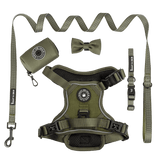
Once you've got the perfect harness sorted, why not kit out your Springer with the full set? Matching accessories look fantastic and make your walking setup cohesive and practical.

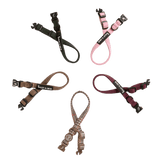
- Dog Collars. Lightweight, stylish collars for ID tags. Match your harness pattern for a coordinated look on every walk.
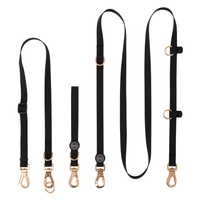
- Dog Leads. Padded, comfortable leads in matching designs. Choose between standard and multi-length options depending on your walking style.
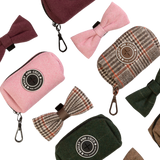
- Dog Bow Ties. Because even the muddiest Springer scrubs up beautifully. Perfect for pub walks, family photos, or just making your dog feel special.
- Bundles. Save money by grabbing a harness, collar, and lead together in a matching set. It's the easiest way to get everything your Springer needs in one go.
If you're also looking for advice on another popular spaniel breed, our guide to the best harness for a Cocker Spaniel covers the smaller cousin in the same detail.
Frequently Asked Questions
What size harness does a Springer Spaniel need?
Most English Springer Spaniels fit a size M or L in our Trail & Glow harness range. Females and leaner working-type Springers typically suit a Medium, while larger males and stockier show-type Springers usually need a Large. On our chart Medium covers a 40 to 71cm chest and Large covers 55 to 83cm, and the two overlap, so your own measurement decides it rather than the breed guide. Always measure your dog's chest girth rather than guessing from weight alone.
Is a harness better than a collar for a Springer Spaniel?
For walking, yes. Springers are strong pullers with a tendency for sudden lunges when they catch a scent. A harness distributes force across the chest and shoulders, protecting the throat and neck from injury. We recommend using a collar for ID tags (legally required in the UK) and a harness for all on-lead walking. Read our full collar vs harness comparison for more detail.
Will a harness stop my Springer Spaniel pulling?
A harness alone won't stop pulling, but a no-pull harness with a front lead attachment makes a significant difference. The front clip redirects your dog's forward momentum, naturally discouraging pulling without any harsh corrections. Combined with consistent loose-lead training, most Springers show noticeable improvement within a few weeks.
Will a harness mat my Springer's coat?
Thin-strapped harnesses can cause matting in feathered breeds like Springers, especially behind the front legs and across the chest. The Trail & Glow harness uses wide, neoprene-padded straps that sit on top of the coat without digging in, which significantly reduces matting. We also recommend removing the harness after each walk and brushing through the contact areas to keep the coat in good condition.
Can my Springer Spaniel swim in a harness?
Yes, and with Springers, they almost certainly will. The Trail & Glow harness is designed with quick-dry materials that won't become waterlogged or heavy when wet. The back handle is also useful for helping your dog out of water if needed. After swimming, rinse the harness with fresh water to remove any salt, algae, or debris, and hang it to air dry.
How do I stop my Springer backing out of the harness?
Springers can be escape artists, especially when startled or over-excited. The key is correct fit. The harness should be snug enough that you can only slide two flat fingers between the strap and your dog's body. Check the chest strap in particular, as this is usually where dogs back out. If your Springer is between sizes, size up and use the adjusters to tighten. A well-fitted Trail & Glow harness with its four adjustment points is very difficult for a dog to wriggle free from.
How often should I replace my Springer Spaniel's harness?
For an active Springer who walks twice daily and regularly gets muddy or wet, we recommend replacing the harness every 12 to 18 months. Check the stitching around D-rings and the back handle regularly, as these are the highest-stress areas. If any buckle doesn't click securely, any stitching is fraying, or the padding has compressed and hardened, it's time for a new one.