








If you share your life with a Border Collie, you already know the drill. The laser focus on a distant squirrel. The sudden lunge when a cyclist appears. The sheer, joyful, flat-out sprint across the field that makes every other dog owner stop and stare. Border Collies are brilliant, beautiful, and built to move. And that means they need a harness that can keep up.
A poorly fitted harness on a Collie is more than an inconvenience. It restricts their powerful shoulder movement, causes matting in that glorious double coat, and does nothing to help you manage their herding instincts on a busy path. The right harness, though? It transforms your walks. More control for you, more comfort for them, and a whole lot less wrestling at the front door.
This guide covers everything you need to know about choosing, sizing, and fitting a harness specifically for Border Collies. Whether you have a smooth coat or a rough coat, a calm companion or a reactive bundle of energy, we have got you covered.

Why Border Collies Need a Specialist Harness
Border Collies are not your average medium-sized dog. They are athletes with a unique build that demands careful consideration when choosing walking gear.
First, there is the chest. Border Collies have a deep, narrow chest compared to stockier breeds like Labradors. Many off-the-shelf harnesses are designed for barrel-chested dogs, which means they sit awkwardly on a Collie, gaping at the sides or pressing into the armpits. A harness that does not account for this build will chafe, restrict movement, and end up being something your dog dreads rather than gets excited about.
Then there is the energy. These dogs were bred to herd sheep across the hills of the Scottish Borders for hours on end. They have an endurance and explosiveness that most breeds simply cannot match. When a Border Collie decides to lunge at a passing jogger or bolt after a rabbit, the force goes through the harness in an instant. A flimsy, poorly constructed harness will not cut it.
Their intelligence adds another layer. A bored Border Collie will figure out how to wriggle free from a loose harness in seconds. They are escape artists when they want to be, and if a harness does not fit snugly and securely, they will find the weak point.
Finally, that beautiful double coat. Whether your Collie has a rough coat with long feathering or a sleek smooth coat, harness straps can cause matting and irritation if they are too narrow, too rough, or positioned badly. You need padded, well-placed straps that sit comfortably over the coat without bunching the fur underneath.
If you are weighing up whether a harness is even necessary, our detailed collar vs harness comparison breaks down the pros and cons for active breeds.
What to Look for in a Border Collie Harness
Not all harnesses are created equal, and Border Collies have a specific set of requirements that should guide your choice. Here is what matters most.
Y-shaped front design. This is non-negotiable for an active breed. A Y-shaped harness sits around the chest and between the front legs without crossing over the shoulders. This allows full range of shoulder movement, which is essential for a dog that runs, jumps, and turns as dynamically as a Border Collie. Avoid any harness that has a strap running horizontally across the chest or shoulders, as this restricts the natural gait and can cause long-term joint issues.
Adjustable fit points. Border Collies vary quite a bit in build. A working-line Collie from a farm may be lean and leggy, while a show-line dog might be broader and heavier coated. You need a harness with multiple adjustment points (chest, belly, and ideally neck) so you can dial in the fit precisely. Two-finger rule: you should be able to slide two fingers under every strap when the harness is fastened.
Padded, coat-friendly straps. Look for wide, padded straps with smooth lining. Neoprene or soft mesh padding prevents rubbing and reduces the matting that narrow straps cause in a Collie's thick coat. This is especially important around the chest and behind the front legs where fur tends to bunch.
Secure buckles and stitching. When your Collie spots something to herd and throws their full 15 to 20kg into a sudden lunge, you need hardware that holds. Reinforced stitching, metal D-rings, and sturdy clip buckles are essential. Plastic components should be high-grade and tested for strength.
Back handle. A harness with a grab handle on the back is incredibly useful for Border Collies. It gives you instant physical control when you need to guide your dog past a trigger, lift them over a stile, or help them into the car after a long walk. It is one of those features you do not think you need until you really, really need it.
Back-clip lead attachment. For most Border Collies, a back-clip attachment is ideal. It allows natural movement and is comfortable for longer walks and runs. If your Collie is a serious puller, pairing a back-clip harness with proper lead training techniques will give you far better results than relying on a front-clip alone. You can also explore our no-pull harness collection for additional options designed to discourage pulling.
For a deeper dive into every feature to look for, our dog harness buying guide covers the lot.
Trail & Glow: Why It Works for Border Collies
We designed the Trail & Glow harness range with active, adventurous dogs in mind, and Border Collies are the definition of that. Here is why Collie owners across the UK keep coming back to it.
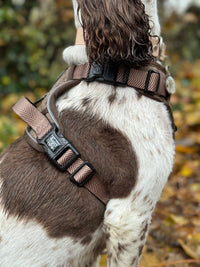
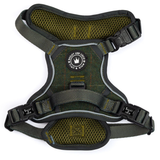
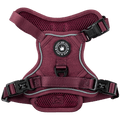
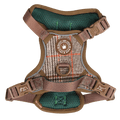
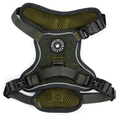
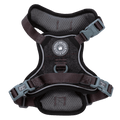
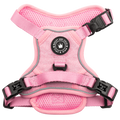
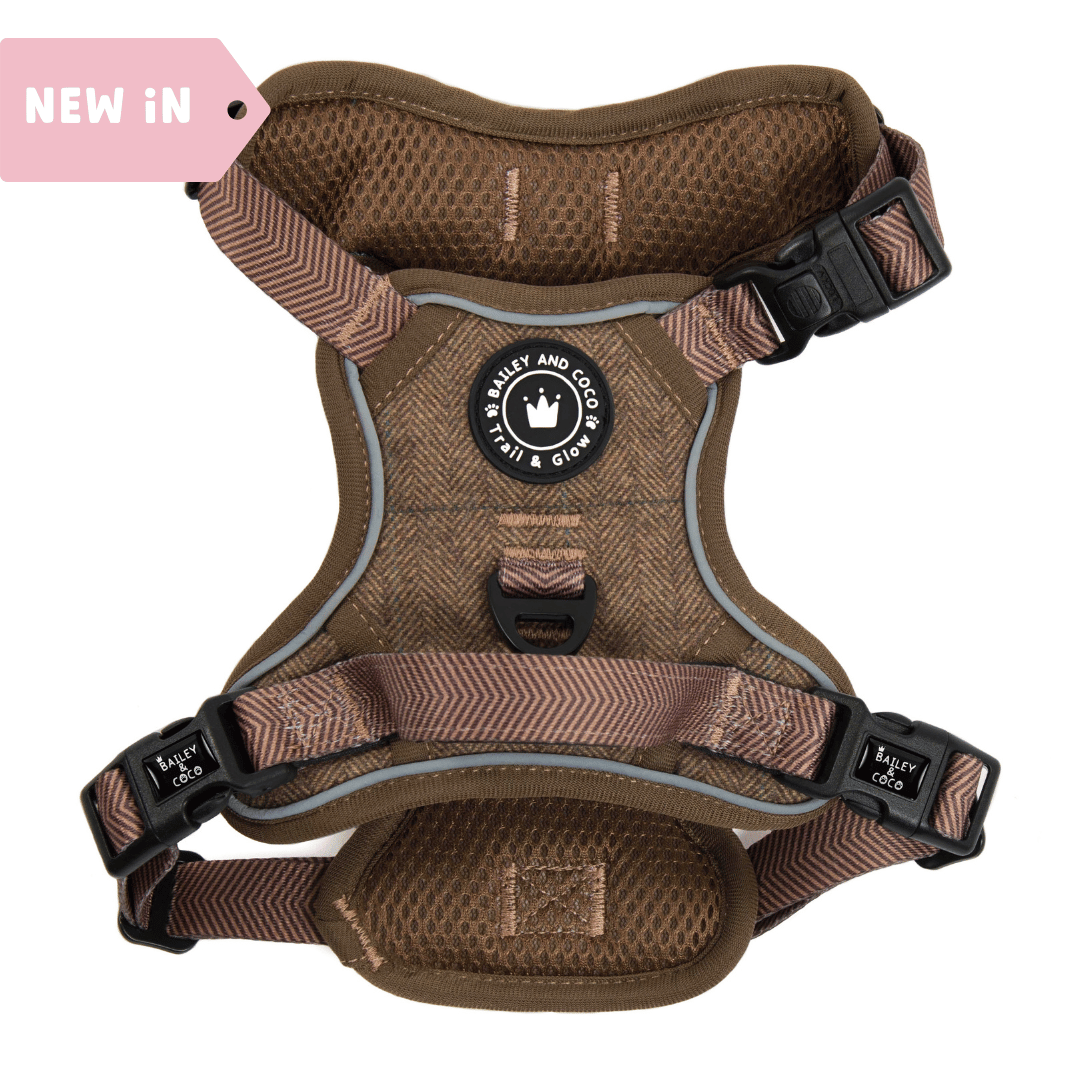
Freedom of movement. The Trail & Glow uses a Y-shaped chest design that wraps around the sternum and between the front legs. There is nothing crossing the shoulders, which means your Collie can run, twist, drop into a herding crouch, and move exactly as nature intended. For a breed that needs to express their physicality on every walk, this matters enormously.
Dual adjustment. Every Trail & Glow harness adjusts at both the chest and the belly, giving you precise control over the fit. Whether your Collie is a lean 12kg working dog or a solid 20kg show type, you can get it snug without it being tight. The straps are wide enough to distribute pressure evenly and padded to protect the coat.
Built-in grab handle. The reinforced back handle is a game changer for Collie owners. Reactive moment? Grab the handle. Helping them into the boot? Grab the handle. Navigating a narrow path past another dog? Handle. It sits flat when not in use and is strong enough to bear your dog's full weight briefly.
Reflective stitching. Border Collies need proper exercise regardless of the season, which means plenty of dark winter walks. The Trail & Glow features reflective stitching along the straps that catches headlights and torchlight, keeping your Collie visible on early morning and late evening outings.
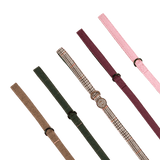
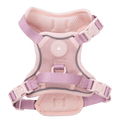
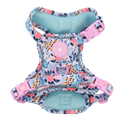
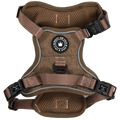
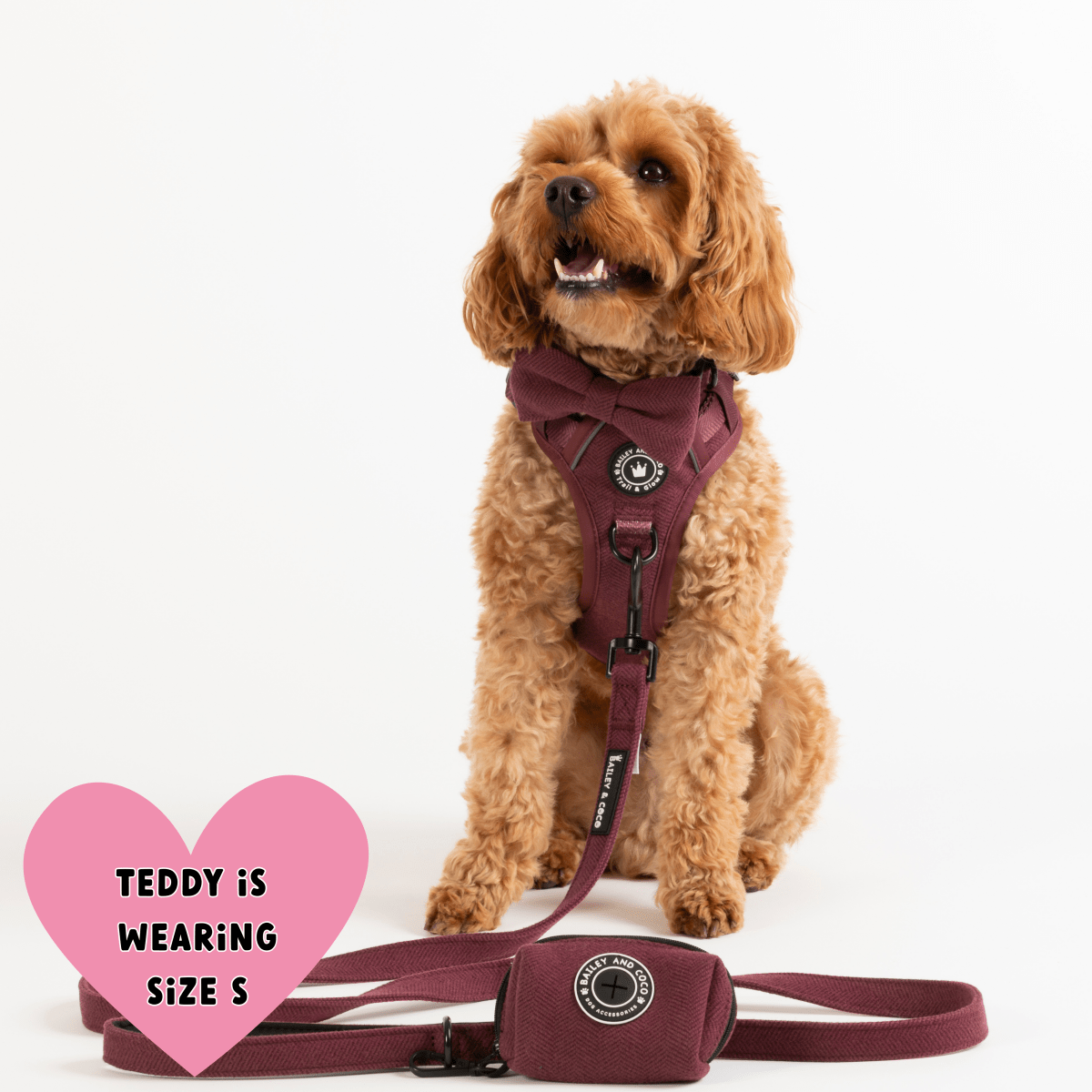
Styles that stand out. Let us be honest; part of the joy of owning a stunning breed is kitting them out properly. From the classic Mulberry Tweed to bold prints and seasonal designs, the Trail & Glow range means your Collie looks as good as they perform. Because a Border Collie in a beautiful harness is a sight to behold.
Browse the full range of dog harnesses and find the perfect match for your Collie.
Border Collie Harness Size Guide
Getting the size right is the single most important thing when buying a harness for your Border Collie. Too loose and they will back out of it (Collies are notorious for this). Too tight and it will restrict their movement and rub their coat raw.
How to measure your Border Collie:
- Chest girth: Wrap a soft tape measure around the widest part of your dog's ribcage, just behind the front legs. Keep the tape snug but not tight. You should be able to slide a finger underneath.
- Neck girth: Measure around the base of the neck where a collar would naturally sit.
- Weight: Weigh your dog if you are unsure. Most vets will let you pop in and use their scales for free.
Most adult Border Collies fit a Size M or Size L in our Trail & Glow harnesses. Here is how it typically breaks down:
| Border Collie Type | Typical Weight | Chest Girth | Recommended Size |
|---|---|---|---|
| Small/lean female | 12 to 15kg | 48 to 58cm | Size M |
| Average adult | 15 to 18kg | 55 to 65cm | Size M or L |
| Large/heavy-coated male | 18 to 22kg | 62 to 72cm | Size L |
| Young dog (9 to 12 months) | 10 to 15kg | 45 to 55cm | Size S or M |
Tip for between sizes: If your Border Collie's measurements fall between two sizes, go with the larger option and adjust down. This is especially important for rough-coated Collies, as the thicker fur adds volume around the chest. You want the harness sitting on top of the coat, not compressing it.
Fit check: Once the harness is on, run through this quick checklist:
- Two fingers slide comfortably under every strap
- The chest plate sits on the sternum, not pressing against the throat
- No strap crosses over the top of the shoulders
- Your dog can walk, trot, and sit without the harness shifting
- No fur is being pinched or bunched under the buckles
If you also have a Labrador in the family, our Labrador harness guide covers the different sizing considerations for that breed.
Harness vs Collar for Border Collies
This is one of the most common questions we get from Border Collie owners. Should you use a harness, a collar, or both? The short answer: a harness is almost always the better choice for walking, but a collar still has its place.
Here is how they compare for Border Collies specifically:
| Factor | Harness | Collar |
|---|---|---|
| Pulling pressure | Distributed across chest and body | Concentrated on throat and neck |
| Lunge control | Excellent; body control via handle | Poor; risk of neck injury on lunge |
| Escape risk | Low with correct fit | High; Collies can back out easily |
| Shoulder freedom | Full range with Y-shaped design | Full range (no body contact) |
| Coat impact | Minimal with padded wide straps | Can matt neck fur over time |
| ID tag attachment | Possible but not ideal | Perfect; legal requirement met |
| Reactivity management | Superior; redirect without choking | Can increase frustration and reactivity |
The ideal setup for most Border Collies is a well-fitted harness for walking and a lightweight collar for carrying ID tags. Under UK law, your dog must wear a collar with an ID tag in public, so many owners use both together. The collar stays on all day with tags attached, and the harness goes on for walks.
For Border Collies that pull heavily, the pressure distribution of a harness is critical. A collar focuses all pulling force directly on the throat and cervical spine. For a dog that can go from zero to full sprint in a heartbeat, that concentrated force can cause real damage over time, including tracheal injury and spinal issues. A harness spreads that force across the chest and ribcage, which is far safer and gives you much better control.
Managing Reactivity: How a Harness Helps
If your Border Collie is reactive, you are not alone. It is one of the most common behavioural challenges in the breed, and it stems directly from those incredible herding instincts. Your Collie is not being naughty when they lunge at a cyclist. They are doing what hundreds of years of selective breeding told them to do. They are trying to control movement.
A good harness is one of the most practical tools you have for managing reactivity on walks. Here is why.
Physical control without pain. When your Collie locks onto a trigger and lunges, a harness lets you hold them securely without any pressure on the neck. The back handle on the Trail & Glow is especially valuable here. You can take hold of it calmly and guide your dog away from the trigger without jerking, choking, or creating additional stress. Pain and discomfort from a collar actually make reactivity worse over time, as the dog starts to associate the presence of triggers with the unpleasant sensation of collar pressure.
Confidence for you. Half the battle with a reactive dog is your own stress levels. If you are anxious about your dog lunging because you do not trust your equipment, that tension travels straight down the lead. A secure, well-fitted harness with a handle gives you genuine confidence that you can manage the situation, and your Collie picks up on that calmness.
Better positioning. A back-clip harness allows you to gently redirect your dog's body orientation. Instead of pulling their head around (which can escalate arousal), you are guiding their whole body, making it easier to turn them away from a trigger and create distance.
Training compatibility. Most positive reinforcement trainers and behaviourists recommend a well-fitted harness as the foundation for reactivity training. It gives you control without punishment, which is essential for building new, calmer responses to triggers. If your Collie is still learning lead manners, our guide on teaching your dog to walk on a lead pairs perfectly with harness training.
Reactivity is manageable. It takes patience, consistency, and the right equipment. A harness that fits well and gives you a secure connection to your dog is where it all starts.
Seasonal Walking Tips for Border Collies
Border Collies need exercise all year round. There is no "too rainy" or "too cold" for a breed that was developed to work on windswept hillsides in the middle of a Scottish winter. But different seasons do bring different considerations for harness use and walk planning.
Spring and summer. Warmer months mean longer coats are at their thickest after winter, and shedding kicks in hard. Check under the harness straps regularly for matting, especially where the chest strap sits. Brush your Collie before putting the harness on to prevent loose fur getting trapped and tangled. On hot days, avoid harnesses with heavy padding that might cause overheating. The Trail & Glow's breathable design helps with airflow, but always be mindful of exercising in the heat. Early morning and evening walks are best.
Autumn. This is peak Collie weather. Cool temperatures, crunchy leaves, and muddy fields. Your harness is going to get dirty. Choose one that is easy to clean; the Trail & Glow can be hand washed and air dried. Autumn also brings shorter days, so reflective features on the harness become essential for those 4pm walks that are suddenly in the dark.
Winter. Border Collies handle cold weather well thanks to that double coat, but there are still a few things to consider. If you are wondering whether it is ever too cold to walk, our guide on how cold is too cold to walk your dog has temperature guidelines. Wet conditions mean a soaked harness, so having a second harness in rotation is handy. Always dry the harness thoroughly between uses to prevent bacteria build-up and that classic "wet dog" smell clinging to the fabric.
Year-round tip: Border Collies need mental stimulation as much as physical exercise. Vary your walk routes, incorporate training into walks, and use the harness as a positive cue. When the harness comes out, good things happen. That association makes putting it on a joy rather than a battle.
Complete the Look
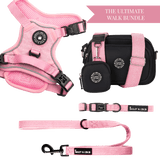
Once you have found the perfect harness for your Border Collie, why stop there? A coordinated walking kit is not just about looking good (though your Collie will look absolutely fantastic). Matching equipment from the same range ensures consistent quality, compatible hardware, and a put-together look that turns heads on every walk.
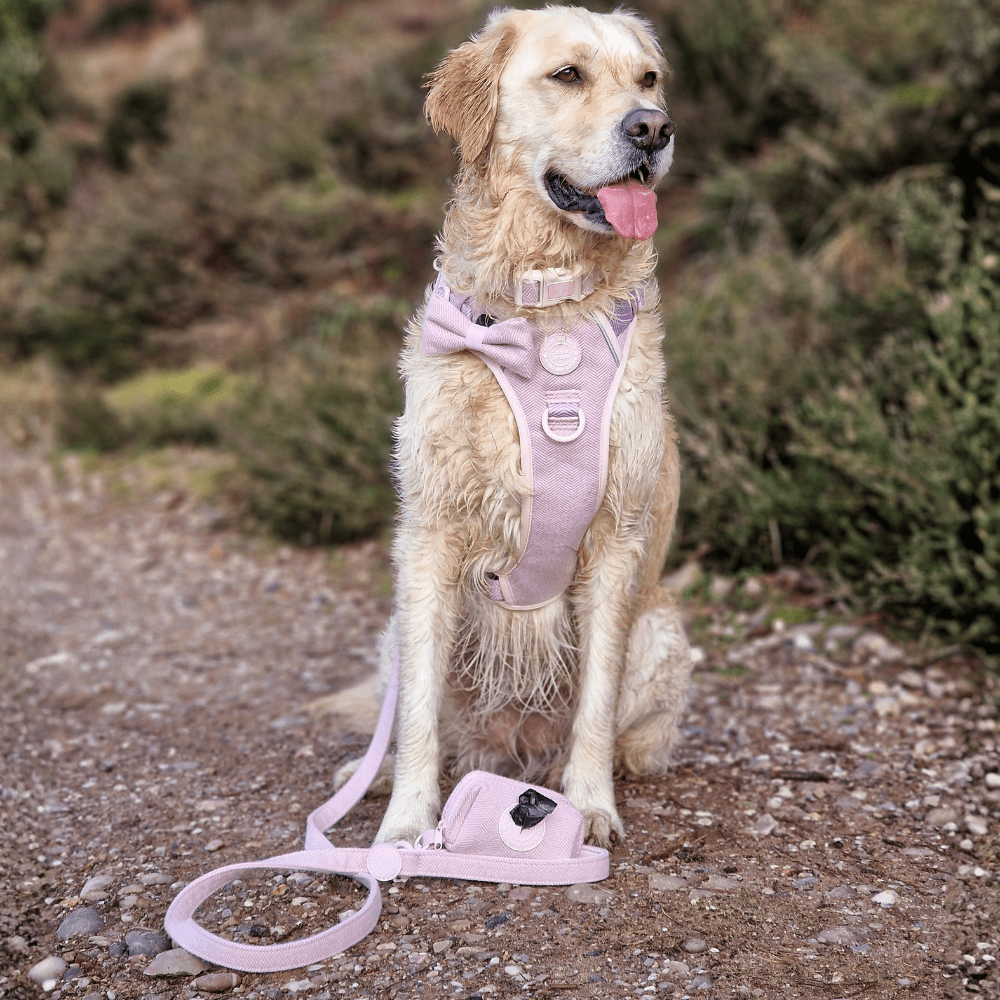
Matching leads. Pair your Trail & Glow harness with a matching lead from the same collection. The consistent width, hardware, and design create a seamless look. For Border Collies, a standard length lead (around 1.2m) gives you enough control without tangling, while a longer training lead is great for practising recall in secure areas.
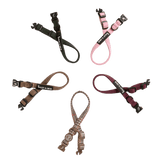
Collars and ID. As mentioned, a lightweight collar for ID tags is a legal requirement in the UK. Choosing one from the same range as your harness means the colours and materials complement each other beautifully.
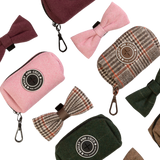
Bow ties and accessories. For special occasions, photo shoots, or just because your Collie deserves it, a bow tie adds instant charm. They clip onto collars in seconds and make for wonderful social media moments.
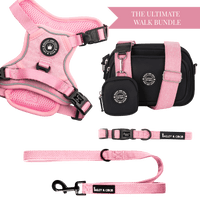
Bundles for value. If you are kitting out your Collie from scratch, our harness and lead bundles offer the full set at a better price than buying separately. It is the easiest way to get everything you need in one go.
Frequently Asked Questions
What size harness does a Border Collie need?
Most adult Border Collies need a Size M or Size L in the Trail & Glow harness range. Females and leaner working-type Collies typically fit a Medium (chest girth 48 to 58cm), while larger males and heavy-coated Collies usually need a Large (chest girth 62 to 72cm). Always measure your dog's chest girth with a soft tape measure just behind the front legs for the most accurate sizing.
Is a harness better than a collar for a Border Collie?
For walking and exercise, yes. A harness distributes pulling pressure across the chest and body rather than concentrating it on the throat, which is much safer for a breed prone to sudden lunges. Border Collies can also back out of collars more easily than harnesses. However, your dog should still wear a collar with an ID tag to comply with UK law. Most Collie owners use both: a collar for ID and a harness for walks.
How do I stop my Border Collie pulling on the harness?
Pulling is natural for Border Collies because of their herding drive and high energy. A well-fitted harness gives you better control, but it is not a magic fix on its own. Combine your harness with consistent positive reinforcement training. Stop walking when your Collie pulls, reward them when the lead is loose, and be patient. Most Collies respond brilliantly to training because of their intelligence. Our guide on lead training has step-by-step techniques that work well for the breed.
Will a harness cause matting in my Border Collie's coat?
It can, if the harness is poorly designed. Narrow straps, rough materials, and incorrect fit are the main culprits. A good harness with wide, padded straps minimises this. To further prevent matting, brush your Collie before putting the harness on, remove the harness after walks rather than leaving it on all day, and check under the straps regularly for any tangles forming. Rough-coated Collies need more attention here than smooth-coated ones.
Can my Border Collie puppy wear a harness?
Absolutely. In fact, starting with a harness from puppyhood is ideal because it establishes good walking habits early. Border Collie puppies grow quickly, so check the fit every two to three weeks and be prepared to size up. A puppy at 9 to 12 months may need a Size S or M depending on their growth rate. Introducing the harness gradually with treats and positive associations makes the process smooth.
How often should I wash my Border Collie's harness?
For a Border Collie that is out in mud, rain, and fields regularly (which is most of them), washing the harness every two to four weeks is a good rule. Hand wash with mild soap and warm water, rinse thoroughly, and air dry completely before the next use. A damp harness can harbour bacteria and cause skin irritation. Having a second harness in rotation means your Collie never misses a walk while one is drying.
My Border Collie is reactive on walks. Will a harness help?
A harness will not cure reactivity, but it is an essential management tool. It gives you secure physical control via the back handle without causing neck pain or increasing your dog's stress. This is important because collar pressure during reactive episodes can actually make the behaviour worse over time. A well-fitted harness lets you calmly redirect your Collie away from triggers and is recommended by most positive reinforcement trainers as the foundation for reactivity training programmes.