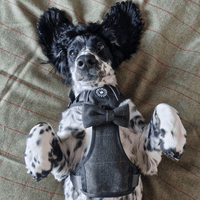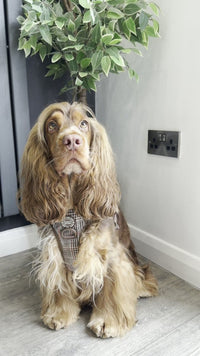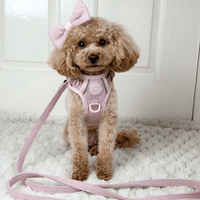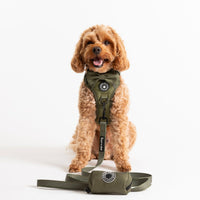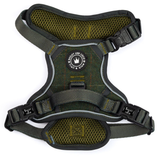
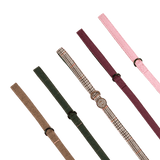
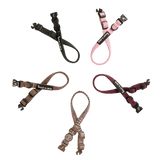


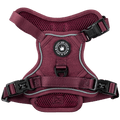
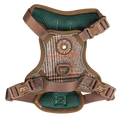
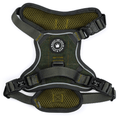
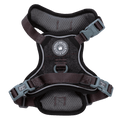
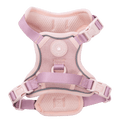
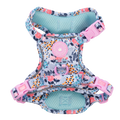
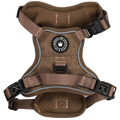
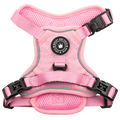







The best harness for a small terrier is one that fits your own dog's neck and chest snugly, has separate neck and chest adjustment for a wriggly, deep-chested little body, and gives you a front ring for those moments when a scent takes over. Small terriers come in very different shapes, so measure first. On our size chart, Yorkshire Terriers appear under XXS and XS, Westies under XS, and Jack Russells and Border Terriers under S. Norfolk, Norwich, Cairn and Patterdale Terriers aren't listed by name, so your tape measure decides.
Here's how to size a small terrier, what to look for and how to get a secure, comfortable fit on a dog who'd rather be digging.
Why small terriers are tricky to fit
- Very different builds. Some terriers are short-legged and long in the body, others are leggy and athletic. Two dogs with the same weight can need different sizes.
- Deep chests, slim waists. Many terriers are deep through the chest and narrow behind it, so the chest strap must sit snugly behind the front legs.
- Wriggling and reversing. A determined terrier will try to back out of anything loose. A correct, snug fit matters more than any single feature.
- Harsh or long coats. A wiry coat or a long, silky one can hide how loose a harness really is.
Reading our size chart for small terriers
| Size | Neck | Chest | Terriers listed on our chart |
|---|---|---|---|
| XXS | 20-29cm | 22-41cm | Yorkie |
| XS | 24-34cm | 26-50cm | Westie, Yorkshire Terrier |
| S | 30-45cm | 35-66cm | Jack Russell, Border Terrier, Boston Terrier |
The sizes overlap, so check both the neck and the chest. If your dog is between sizes, our size guide says to size up for comfort, as the harnesses have wide adjustment ranges. Breed suggestions are guidelines only, as individual dogs vary. A stocky terrier may need M; the full harness size chart runs from XXS to XL.
How to measure a small terrier
- Neck: around the base of the neck, where a collar would usually sit.
- Chest: around the widest part of the chest, just behind the front legs.
- Through the coat, keeping the tape snug against the body, not resting on the fur.
- Standing, twice. A treat on the floor in front of your dog helps keep them still for a few seconds.
Our measuring and fitting video shows where the tape goes.

What to look for in a harness for a terrier
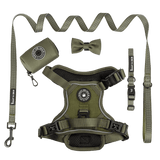
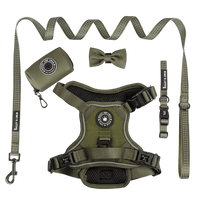
Our Trail & Glow harnesses are built around the things a busy terrier needs:
- Three buckles with separate neck and chest adjustment, so you can get a snug fit on a deep chest and a slim body.
- A lockable neck clasp. The harness opens at the neck and wraps around your dog, so there's no need to pull it over the head of a wriggler.
- Front and back D-rings. The no-pull front ring can help with lead control when your terrier spots a squirrel. The back ring suits relaxed walks.
- A back handle for a steadying hand at kerbs and gates.
- Breathable, quick-dry mesh lining for wet grass and muddy holes, and reflective strips along the front and back.
All our harnesses are strength tested. Not every colourway stocks every size, so check that your size is listed and in stock on the product you choose.
For very small terriers, our lighter Adjustable Neck harnesses are another option. They come in XXS to S with their own size chart, have a single back D-ring, a breathable mesh lining and a lockable safety clip.
Getting a secure fit on a wriggly terrier
- Two fingers under every strap. Snug enough not to slip, loose enough to slide two fingers under without forcing. Any looser and a terrier may find a way out.
- Chest strap behind the front legs, sitting on the deepest part of the chest, not up in the armpit.
- Test it before the walk. With the lead on, take a gentle step back and watch whether the harness slides forward over the shoulders. If it does, tighten the straps.
- Re-check after grooming. A strip or a trim can change how snug the harness is.
- Wash it cool. After muddy walks, wash it on a cool wash, ideally inside our laundry bag.
No harness can be called escape proof, so stay close at roadsides and keep a collar with an ID tag on your dog too.

More terrier guides
- Best harness for Staffordshire Bull Terriers, for bigger, stockier terriers
- Best small dog harness
Quick questions
What size harness does a Border Terrier need?
Our chart lists Border Terriers under S (neck 30-45cm, chest 35-66cm), but measure your own dog. A slight dog may fit XS, and a stocky one may need M.
What size harness does a Westie need?
Westies are listed under XS (neck 24-34cm, chest 26-50cm) on our chart. Measure through the coat, as a full coat can make a Westie look bigger than they are.
My terrier backs out of harnesses. What can I do?
Check the size against your measurements, tighten the straps so two fingers fit snugly, make sure the chest strap sits behind the front legs, and test the fit before you set off. Keep a collar with an ID tag on as well.