













If your dog’s collar keeps falling off, it is stressful. One minute you are heading out the door, the next you are holding an empty collar in your hand and your dog is looking at you like nothing happened. This is one of those problems that feels like a mystery until you break it down, then it usually becomes very fixable.
In the UK, collar slip issues often show up during rainy walks (when fur is damp and slick), after grooms (when coat shape changes), or when dogs are in a growth spurt (hello, puppies). It can also happen with narrow heads, thick neck fluff, or simply because the collar is sitting in the wrong place on the neck.
This guide will help you figure out exactly why your dog’s collar keeps coming off, and what to do about it. You will get quick checks you can do in under a minute, plus breed tips for dogs that are more likely to slip collars.
Why does my dog’s collar keep falling off?
Quick answer: most collars fall off because they are too loose, the size range is wrong, or the collar is sitting too low and can slide over the head when the dog backs up or shakes. Sometimes the collar also rotates, so the “secure” position drifts into a slipping position.
Here are the most common causes:
- Wrong size range: your dog is at the smallest end of the size, so there is not enough adjustment for a stable fit.
- Too loose day to day: the collar looks fine, but it spins and can slip when your dog reverses.
- Coat changes: after grooming, the collar suddenly feels looser.
- Wet fur: damp fur and rain-walk slickness can make slipping easier.
- Neck and head shape: some breeds have a neck that is wider than the head, others have narrow heads where collars can slide off when loose.
- Fastening issues: a buckle that is not fully closed or a clasp that is worn can open unexpectedly.

Is a collar that falls off dangerous?
It can be, mainly because collars are where many owners keep ID tags. If a collar comes off when you are out, you lose that quick ID layer. The goal is a collar that stays secure and comfortable, so your dog is always ready for walks and everyday life.
Which dogs are most likely to slip a collar?
Any dog can slip a collar if it is loose, but these tend to be more prone:
- Puppies: growing fast, changing shape week to week.
- Small breeds: Chihuahua, Yorkie, Pomeranian, and tiny mixes.
- Dogs with lots of neck fluff: coat can compress and loosen the fit.
- Dogs that reverse or back up quickly: nervous dogs, or dogs that “moonwalk” away from things.
Next: Part 2 is the fast fix section. You will do the two-finger check, the “spin test”, and the correct collar position so you can stop slipping quickly.
How tight should a dog collar be so it does not slip off?
Quick answer: it should pass the two-finger rule. You should be able to slide two fingers comfortably between the collar and your dog’s neck. If you can fit more than that with lots of space, the collar is often loose enough to rotate and slip.
If you want a simple fit refresher, read: How Tight Should a Dog Collar Be? (UK) .
Do the “spin test” (the quickest way to spot a slip risk)
Many collars fall off because they rotate too easily. Try this:
- With your dog calm, gently hold the collar at the front.
- Rotate it slightly left and right.
- If it spins freely and the D-ring keeps drifting under the chin, the collar is usually too loose or unevenly adjusted.
A small adjustment tighter (still passing the two-finger rule) often fixes this.
Where should a dog collar sit to prevent slipping?
Quick answer: the collar should sit neatly on the neck, not dropping down onto the shoulders. Collars that sit too low move more as your dog walks and can slip forward and off when your dog backs up.

How do I measure my dog for the right collar size?
Quick answer: measure around the neck where the collar will sit using a soft tape. Choose the size range that includes your dog’s measurement with room to adjust, then confirm comfort using the two-finger rule once the collar is on.
If you want the full measuring walkthrough, use: Dog Collar Size Guide UK 2026 .

My dog is between sizes. What should I do?
If your dog sits between sizes, the goal is a collar that gives you a stable fit without leaving loads of extra strap. Many owners choose the size range that gives a snug, comfortable adjustment, rather than being at the very smallest setting. A collar that is “maxed out tight” can still be hard to position properly.
Next: Part 3 covers the less obvious causes, like wet fur, grooming changes, and rubbing and rotation. You will also get breed tips for small dogs and puppies.
My dog’s collar falls off after grooming. Why?
Quick answer: grooming can change the neck shape and coat thickness, especially for Cockapoos, Cavapoos, Poodles, Doodles, and Spaniels. If your dog had a fluffy neck before and it is now trimmed, the collar can suddenly feel looser.
After grooming, do a quick re-check:
- Two-finger rule.
- Spin test.
- Make sure the collar is sitting neatly on the neck.
My dog’s collar slips off more in the rain
Damp fur can make slipping easier, especially on longer coats. Rainy walks can also add grit and movement, which increases collar rotation. If your dog’s collar gets wet often, it helps to keep it clean and fully dry between wears.
If you need a quick routine, read: How to Clean a Dog Collar UK .

Could collar rubbing be linked to slipping?
Yes. A collar that rotates a lot is more likely to rub and more likely to slip off, because it never stays in the stable position. If you are seeing hair thinning or scratchiness, it is worth fixing rotation quickly.
This guide helps if rubbing is part of the picture: Dog Collar Rubbing Fur (UK) .
Puppy collars: why they slip off so easily
Puppies are the number one collar slip group because they grow fast and their bodies change shape quickly. The fix is not overcomplicated, it is just consistent:
- Check weekly in the early months.
- Adjust after growth spurts, even if it is just one notch.
- Keep it lightweight and stable so it does not twist and invite chewing.
Puppy guide: Best Puppy Collar UK .
Small dogs: the slipping collar problem
Small dogs can slip collars if there is too much looseness, especially during backing up. The neat-fit approach is usually best: stable, comfortable, and not bulky.
Small-dog guide: Small Dog Collars UK .

Next: Part 4 wraps everything into a simple checklist, answers common questions like “how do I stop my dog backing out of a collar”, and gives you the quickest path to a secure everyday setup.
How do I stop my dog backing out of their collar?
Quick answer: most dogs back out of collars when the collar is loose enough to slip forward over the head. A stable fit (two-finger rule), correct neck position, and reducing rotation are the quickest fixes.
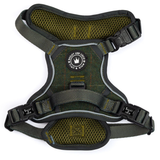
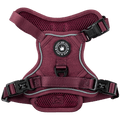
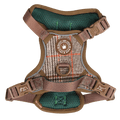
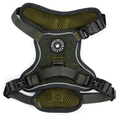
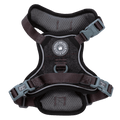
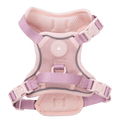
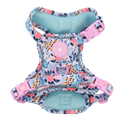
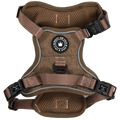
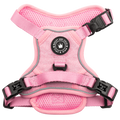
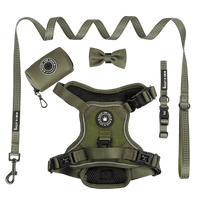
If your dog backs out when nervous, focus on calm handling too. Pause, create space, and avoid tugging at the collar. For walking training and extra control, many owners prefer using a harness for lead walking while keeping the collar for ID.
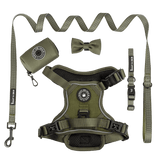
If you want to explore harnesses for walking, you can here: shop dog harnesses .
My dog’s collar keeps coming undone. What should I check?
Start with the simple checks:
- Re-clip properly: make sure the buckle or clasp is fully closed.
- Look for wear: if hardware looks tired or the collar is well used, it may be time to replace.
- Check adjustment holes and strap: make sure nothing is slipping or stretched.
Quick checklist: stop your dog’s collar falling off
- Measure the neck and choose the right size range.
- Two-finger rule for comfort and stability.
- Collar position sits neatly on the neck, not on the shoulders.
- Spin test to reduce rotation and slipping.
- Re-check after grooming and after rainy walks.
- Keep collars clean and dry so they stay comfy and stable.
More collar guides you might find helpful
- Dog Collars in 2026 UK
- Dog Collar Size Guide UK 2026
- How Tight Should a Dog Collar Be? (UK)
- How to Clean a Dog Collar UK
- Dog Collar Rubbing Fur (UK)


