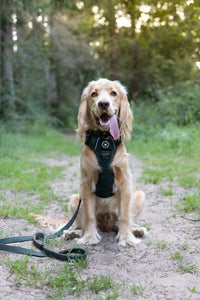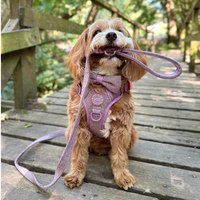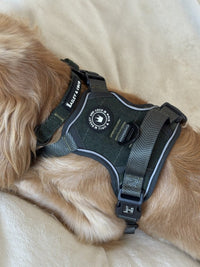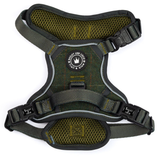




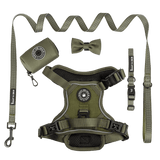




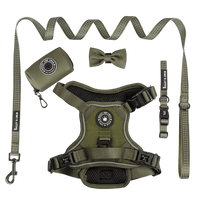

The best lead for a dog that pulls is a fixed-length lead, around 5ft, with a comfortable handle you can grip properly and a strong clip that locks shut. If you'd like more help with control, a double-ended lead that clips to both the front and back D-rings of a harness is worth a look. Just be realistic: no lead will stop a dog pulling on its own. The right lead makes walks more comfortable and easier to manage while you work on lead manners.
Here's what each lead feature does for you when your dog pulls, and which ones to skip.

Lead features that help with a strong puller
| Feature | Why it helps | Example from our range |
|---|---|---|
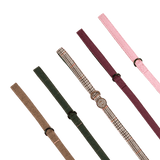
| Fixed length, around 5ft | Your dog always gets the same amount of lead, and you can hold it shorter near roads | Plum Tweed 5ft lead |
| Padded handle | More comfortable to hold when your dog leans into the lead | Padded neoprene handle on our 5ft fabric and tweed leads |
| Lockable clip | Locks shut on the D-ring, so it can't be nudged open in use | Gold clips on our Plum Tweed and standard 5ft Colour Drops leads |
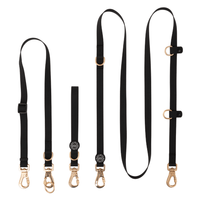
| Double-ended | Clips to the front and back D-rings of a harness at the same time, which can help with lead control | Hands-Free Double Ended Dog Lead (210cm) |
| Short handle | Keeps your dog right by your side at crossings and in busy places | Traffic Handle Add-On (30cm) |
Length: why a fixed 5ft lead is the place to start
A 5ft lead is roughly 152cm. It gives your dog room to walk and sniff, but it's short enough to keep them close on pavements, around other dogs and near roads, where the Highway Code asks dog parents to keep their dog on a short lead. With a puller, a consistent length also helps: your dog learns where the end of the lead is, and you can shorten your hold quickly by gathering the lead into your hand.
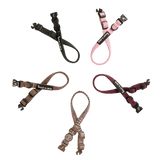
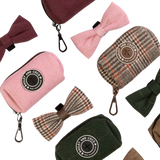
Most of our fabric leads are 5ft, including our Trail & Glow leads and our tweed leads.
The handle: comfort for your hands
When a dog pulls, all of the load ends up in your hand. A padded handle makes a real difference on a longer walk. Our 5ft fabric and tweed leads have a padded neoprene handle, and the Plum Tweed lead's product page explains that it spreads the load across your hand. Hold the handle with the loop over your wrist and your hand closed around the lead, so it can't be pulled from your grip.
The clip: lockable is worth having
With a strong or excitable dog, a clip that locks shut gives extra peace of mind. Gold clips on our leads are lockable. That includes our Plum Tweed lead, our standard 5ft Colour Drops leads, the Mulberry Waterproof Lead and the hands-free range. Our Forest Tweed, Mulberry Tweed and Oxford Tweed leads don't have a gold clip, so they aren't lockable. If a lockable clip matters to you, look for "lockable" in the product description.
Our Lightweight Mini leads are designed for small dogs, with a narrower lead and a lightweight clip, so they aren't the right choice for a strong puller.

Double-ended leads: using the front and back D-rings together
A double-ended lead has a clip at each end. Clip one to the front D-ring of your dog's harness and the other to the back D-ring, and you hold the lead in the middle. When your dog surges ahead, the front connection tends to turn them back towards you, while the back connection keeps things steady. It can help with lead control, especially for big or strong dogs, but it works best alongside training rather than instead of it.
Our Hands-Free Double Ended Dog Lead is 210cm with three integrated D-rings and lockable gold safety clips. As well as double-ended, you can wear it across your body, around your waist, or hold it as a normal lead. Our double-ended dog leads guide explains each setup.
If you'd like your dog right beside you for a crossing, the 30cm Traffic Handle Add-On clips onto the hands-free lead, or straight onto the back D-ring of your dog's harness as a grab handle.
Leads to avoid with a dog that pulls
- Retractable leads. They keep some tension on the lead all the time, so your dog never feels a slack lead, and they give a puller more room to build up speed. Our guide to retractable vs fixed leads goes into more detail.
- Long lines on pavements. A long line is brilliant for recall practice in open spaces, but too long for busy streets.
- Light leads made for small dogs. A narrow lead and a lightweight clip are lovely for a small dog, but not built for a strong puller.
Clip to a harness, not just a collar
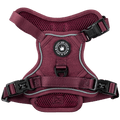
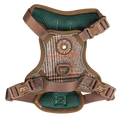
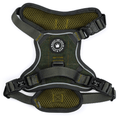
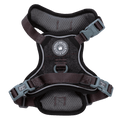
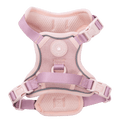
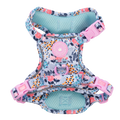
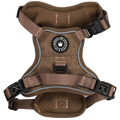
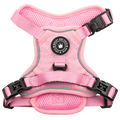
With a dog that pulls, it's worth clipping the lead to a well-fitted harness, so the pressure isn't all on the neck. Every Trail & Glow harness has front and back D-rings and a back handle, and the no-pull front ring can help with lead control. To compare harness options, see our no-pull harness guide and our front clip harness guide.
Kit helps, training changes things
A good lead and harness make walks more comfortable and easier to manage, but they don't teach your dog to walk nicely on their own. That takes calm, consistent practice: rewarding your dog when the lead is slack and not moving forward while it's tight. If you have a puppy, our guide on teaching a puppy to walk on a lead is a good place to start. If pulling is a long-standing problem, a qualified trainer can help.
Quick questions
What length lead is best for a dog that pulls?
A fixed 5ft lead (about 152cm) suits most everyday walks. It's long enough to be comfortable and short enough to keep your dog close when you need to.
Do double-ended leads stop pulling?
No lead stops pulling on its own. Clipping to both the front and back D-rings can help with lead control, and it works best alongside training.
Which lead should I pair with a no-pull harness?
Any strong, fixed-length lead with a lockable clip works well. If you want to use both D-rings, choose a double-ended lead. For more on lead types and materials, see our best dog leads guide.