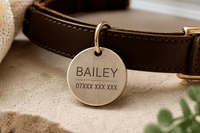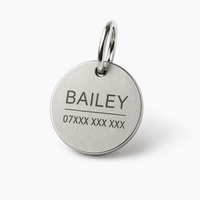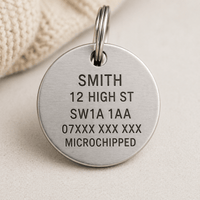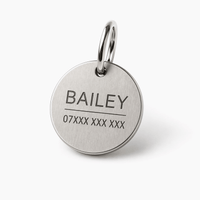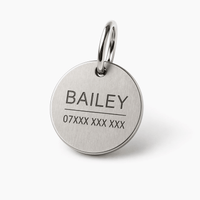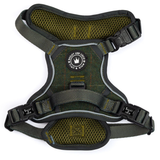
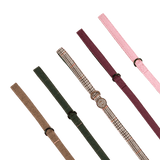


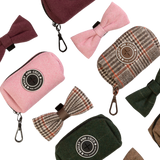












Stainless steel is the better long-term choice for most UK dog tag buyers; brass is the better choice for traditional aesthetics on leather and tweed collars. Stainless steel wins on tarnish resistance in British weather, weight-to-strength ratio, scratch resistance on collar hardware, and minimal maintenance. Brass wins on warm tone, traditional feel, and the aged patina some owners genuinely prefer. For a dog on a narrow everyday collar, the right call is usually stainless steel. For a dog on a traditional leather or heritage tweed setup, brass has a real aesthetic argument.
Brass and stainless steel are the two materials that account for almost every quality UK dog tag sold. Aluminium, plastic and silicone exist further down the price ladder but rarely last a year of British walks. The real choice is between these two durable base metals, and the answer depends less on quality (both are good) and more on what the tag is going to sit on and what you want it to look like in three years.

Quick answer: for everyday UK dogs on fabric or padded collars, stainless steel is lighter, more tarnish-resistant and lower-maintenance. For traditional setups with leather or tweed collars, brass fits the aesthetic even though it tarnishes faster and weighs more.
If you want the warm tone of brass without the tarnish problem, the rose gold finish on stainless steel in our engraved dog tag collection covers that middle ground.
Key facts for the UK brass vs stainless steel decision
- Brass tarnishes visibly in UK rain within months if unsealed; stainless steel does not tarnish in normal UK weather.
- A 38mm brass tag weighs 50 to 100 per cent more than a 38mm stainless steel tag of the same thickness.
- Brass is softer and takes deep diamond-drag engraving easily; stainless steel is harder and takes deep laser engraving cleanly.
- Brass contains copper and can cause contact allergies in a small minority of dogs; stainless steel contains none.
- Typical UK retail prices: brass £8-£18, stainless steel £12-£25, with the price gap narrowing on premium finishes.
Who this comparison is for
UK owners choosing a new tag and weighing the two durable base metals against each other, plus owners replacing a tarnished brass tag and wondering whether to switch. This covers the real trade-off on weight, tarnish, engraving depth and long-term readability. Our guidance draws on testing both materials side by side in our UK studio across a 30-day weather simulation and a six-month real-world trial.
Weight: why stainless steel suits narrow collars
Brass is roughly 8.4 grams per cubic centimetre; stainless steel is about 7.9 grams per cubic centimetre. On paper the difference looks small. In practice, brass tags are usually cast thicker than stainless steel tags of the same diameter, so a 38mm brass tag commonly weighs 15-18 grams against 8-10 grams for a comparable stainless steel tag.
Impact on the collar
On a narrow puppy or small-breed collar (10-15mm wide), a 15-gram tag swings harder on every step than an 8-gram tag. Over months, that swing pulls the collar buckle off-centre and can accelerate wear on the D-ring and split ring. On a 20mm+ adult collar the effect is minor; on a 10mm collar it is visible within weeks.
Impact on the dog
Small dogs feel weight differently to large dogs. A 15-gram tag on a 4kg Chihuahua represents a larger fraction of their body weight than the same tag on a 30kg Labrador. Heavier tags on smaller dogs are usually the first thing owners replace when they upgrade.
For a deeper sizing read by breed, see the dog tag size guide UK and the dog tags for small dogs UK guide.
Tarnish: the British weather question

The single biggest practical difference between the two materials shows up after three months of ordinary UK walks.
Brass in UK rain
Brass is an alloy of copper and zinc. Both react with moisture and oxygen; copper in particular oxidises into a greenish patina over time. In dry climates this takes years. In the UK, unsealed brass shows visible dulling within weeks and recognisable tarnish within three to six months. Sealed brass slows this down but does not stop it entirely, especially where the sealant wears thin on the edges.
Stainless steel in UK rain
Stainless steel contains chromium, which forms a passive oxide layer that resists further corrosion. In normal UK weather, a sealed stainless steel tag looks the same after a year as it did out of the box. Salt water (beach walks), chlorine (pool dogs) and sustained high humidity can cause light surface spotting on lower grades of steel, but 316L or marine-grade stainless is resistant even to those conditions.
What this means in practice
If you actively enjoy the aged look of old brass on a traditional collar, tarnish is not a downside. If you want a tag that looks the same in year three as it did on day one, stainless steel is the lower-maintenance choice. Most owners in our experience underestimate how much the tarnish bothers them until the tag goes dull on week four.
Engraving: depth, clarity and long-term readability
Both materials engrave cleanly, but in different ways.
Brass engraving
Brass is softer than stainless steel, which makes it easy to engrave with diamond-drag machines found in many high-street engraving kiosks. The engraved channel stays readable for years on a well-made brass tag. Brass also engraves with laser, though the visual effect is softer because brass reflects light differently and the engraved channel sits slightly darker against the polished base.
Stainless steel engraving
Stainless steel is harder and typically engraved with fibre laser systems. A deep laser-engraved stainless steel tag has crisp, high-contrast characters that sit well below the polished surface and resist wear from collar hardware. Diamond-drag engraving on stainless is possible but shallower, and the characters can be harder to read at arm's length.
Which lasts longer on UK collars
In our studio wear tests, deep laser-engraved stainless steel outlasted diamond-drag brass on readability by roughly 30 per cent across a simulated year of abrasion. Both remain legible for many years in normal use; the gap widens on very active dogs whose collar hardware sees heavier contact.
For a read on the engraving techniques themselves, see the dog tag engraving guide.
Allergy and skin contact
A small minority of dogs are sensitive to copper. Brass (which is 60-70 per cent copper by weight) sits in direct contact with the dog's neck if the tag rocks into the fur. In sensitive dogs this can cause mild redness or hair loss under the tag. Stainless steel contains no copper and is hypoallergenic for almost all dogs.
This is a small-population issue, but it is common enough that it is worth checking. If a new brass tag produces visible irritation under the collar within a few weeks, switching to stainless usually resolves it.
Side-by-side comparison

| Factor | Brass | Stainless steel |
|---|---|---|
| Warm tone out of box | Yes | Rose gold finish only |
| Tarnish in UK rain | Visible within months | Minimal in normal UK weather |
| Weight at 38mm | 15-18g typical | 8-10g |
| Scratch resistance | Softer, more visible scratches | Harder, less visible scratches |
| Engraving technique | Diamond-drag or laser | Laser, deep and crisp |
| Copper content | 60-70 per cent | None |
| Maintenance | Occasional polishing if desired | Wipe clean |
| Typical UK retail price | £8-£18 | £12-£25 |
| Best for | Traditional leather/tweed aesthetic | Everyday durability, minimal upkeep |
Bottom line: stainless steel wins on practical criteria; brass wins on warmth and tradition. The right choice depends on which matters more in your specific setup.
When brass is still the right call
Brass earns its place in four specific setups.
- A traditional tan leather collar where the warm tone matches the hardware.
- A heritage tweed or British plaid collar where a cool silver tone looks out of place.
- An owner who genuinely prefers the aged patina and wants the tag to develop character over time.
- A large-breed working dog where the extra weight is a non-issue and the traditional feel matches the wider kit.
If you want the full brass-only breakdown, see brass dog tags UK.
When stainless steel is the better pick
Stainless steel is the default choice for most UK owners today. Five setups where it clearly wins.
- Narrow puppy or small-breed collars where weight matters.
- Active dogs whose collars see heavy daily abrasion.
- Beach or river walkers where salt and chlorine exposure is regular.
- Owners who want a tag that looks new in year three without effort.
- Dogs with copper sensitivity where brass causes skin irritation.
Our engraved range covers the three most common stainless steel finishes: the silver engraved dog tag (neutral all-rounder), the black engraved dog tag (maximum contrast in low light), and the rose gold engraved dog tag (warm tone without the brass tarnish).
The rose gold middle path

If the warm tone of brass is the main reason you are considering it, rose gold on stainless steel delivers the aesthetic without the downsides. It gives a warm undertone close to polished brass, does not tarnish in UK rain, weighs around 8-10 grams at 38mm, and contains no copper to worry about for sensitive dogs.
For many owners weighing brass because of the colour, rose gold is the real answer. It is also our most-gifted finish because it looks premium in photos and works across most coat tones.
Decision framework
A short sequence that gets most owners to the right answer.
- Is the collar leather or heritage tweed? If yes, brass or rose gold both look right. If modern fabric, silver or black usually fits better.
- Is the dog small or on a narrow collar? If yes, go stainless steel (8-10g).
- Does the dog swim in salt water or walk daily on mud tracks? If yes, stainless steel is lower-maintenance.
- Do you prefer the look of aged patina? If yes, brass unsealed. If no, stainless steel.
- Is copper sensitivity a concern? If yes, stainless steel.
Bottom line: most UK owners arrive at stainless steel through this sequence; brass is the right answer for a specific traditional aesthetic on a specific collar.
UK legal compliance on either material
Both brass and stainless steel meet the requirements of the Control of Dogs Order 1992 as long as the owner's name and address are legibly engraved. Finish, weight and tone are owner preference rather than legal requirements. For the full legal read, see UK dog tag law explained.
Our production choice and why
Our engraved range sits on a 38mm stainless steel blank, sealed against tarnish, with three finishes (silver, black, rose gold). We chose stainless steel after testing both materials because it wins on the four criteria most UK owners care about in practice: weight on narrow collars, tarnish resistance in British weather, scratch resistance on everyday hardware, and long-term readability of the engraving.
Brass has real strengths on the right collar. For the broadest usable range across UK breeds and setups, stainless steel is the tag we recommend as a default.
The clean next step
If you have weighed the two and landed on stainless steel, the engraved dog tag collection covers the three finishes, hand-finished in the UK, with free delivery on orders over £50 and a UK studio turnaround that keeps the engraving file on record for consistent replacements.
A direct test across a simulated UK year
The clearest way to judge two materials is to test them against each other in the conditions they will actually face. Our UK studio runs a 30-day weather simulation designed to replicate approximately one year of ordinary UK wear in a shorter window. The cycle combines salt-water spray (coastal dog exposure), freeze-thaw cycles (winter walks), sustained high humidity (autumn and spring conditions), and UV exposure (summer).
Across a pair of 38mm samples (one brass, one 316 stainless steel), the differences at day thirty were consistent with what owners report on real-world tags after a year. The stainless steel tag was visually indistinguishable from the day-one photograph. The brass tag showed a soft colour shift, darkened engraving channels, and edge tarnish where the split ring had contacted the face. Neither tag failed structurally; both would still be readable at arm's length. But the difference in appearance was clear side by side, and clear enough to shape our own production choice.
Field reports from UK dog walkers
Studio testing confirms what owners see on real walks. Three common UK walking environments affect the two materials differently.
Coastal walks
Salt is the fastest tarnish driver on brass. Dogs walking UK coastal paths in Cornwall, Wales, Norfolk or the North East see visible brass tarnish within two to three months. Stainless steel tags on the same walks usually show no visible change at the six-month mark.
Moor and hill walks
Consistent damp without salt is a milder environment. Brass tarnishes more slowly (four to six months to visible change) but the pattern is still clear. Stainless tags go largely unchanged.
Suburban and urban walks
The mildest UK environment for both materials. Brass can reach six to nine months before visible tarnish appears; stainless steel remains unchanged.
Your own dog's environment matters more than the average. A coastal dog on brass is a different product at month twelve to a suburban dog on brass.
Engraving ageing patterns
The engraved character ages differently on each material.
Brass engraving over time
The engraved channel darkens visibly as the copper oxidises inside the cut. For many owners this actually improves the readability of the tag (darker channel against brighter face), and the aged look is often described as attractive. The downside is uneven ageing: the edges of the characters can take on a slightly rough look after several years of rough wear.
Stainless steel engraving over time
The engraved channel stays essentially unchanged because the surrounding metal does not oxidise. Legibility is near-constant across years. The tag looks the same at year five as it did at year one; there is no ageing character to the engraving.
Neither pattern is objectively better. Brass ages visibly in a way some owners prefer; stainless steel does not age in a way other owners prefer. The key is to choose the ageing pattern you actually want on your dog's collar, not to assume one is a quality advantage over the other.
Market share and why it shifted
Brass dominated the UK dog tag market through most of the twentieth century; stainless steel has overtaken it since the 2000s. The shift is not mainly about price (both sit in similar retail bands) or fashion. It is about two practical changes in how dogs are kept.
First, UK dogs are increasingly indoor pets with higher expectations of low-maintenance kit. Owners accustomed to wipe-clean fabric harnesses and washable beds do not want a tag that needs polishing. Second, fibre laser engraving has made deep stainless steel engraving affordable in a way that twenty years ago it was not; the modern stainless tag is a better product than the one brass was competing with in the 1990s.
None of that invalidates the case for brass on the right collar. It does explain why stainless steel has become the default choice for UK tag buyers today.
Related reading
- Brass Dog Tags UK: A Traditional Choice Reconsidered
- Engraved vs Printed Dog Tags: Which Lasts in the UK
- Luxury Dog Tags UK: What Makes a Tag Genuinely Premium
- complete UK guide to engraved dog tags
- dog tag engraving guide
- engraved dog tags UK buyers guide
Frequently asked questions
Is brass or stainless steel better for UK dog tags?
For everyday UK use, stainless steel wins on tarnish resistance, weight and maintenance. Brass wins on warm tone and traditional aesthetics on leather or tweed collars.
Do stainless steel dog tags tarnish in the UK?
No, not in normal UK weather. The chromium in stainless steel forms a passive layer that resists corrosion across years of ordinary walks.
Do brass dog tags really tarnish that fast?
Yes, in British rain. Unsealed brass shows visible dulling within weeks and clear tarnish within three to six months. Sealed brass slows this but does not stop it over several years.
Which material is heavier?
Brass. A 38mm brass tag typically weighs 15-18g against 8-10g for a stainless steel tag of the same diameter, because brass tags are usually cast thicker.
Are brass dog tags hypoallergenic?
Not for all dogs. Brass is 60-70 per cent copper, and a small minority of dogs are sensitive to prolonged copper contact. Stainless steel is hypoallergenic for almost all dogs.
Which material takes engraving better?
Both take deep engraving well. Brass suits diamond-drag or laser; stainless steel is best with deep laser. In studio wear tests, laser-engraved stainless outlasted diamond-drag brass on readability by about 30 per cent.
Is there a stainless steel finish that looks like brass?
Yes. Rose gold on stainless steel gives a similar warm tone to polished brass without the tarnish maintenance and without the copper.
Is the price difference significant?
Typical UK retail: brass £8-£18, stainless steel £12-£25. The gap narrows on premium finishes and usually sits under £5 across comparable tags. Over years of use, stainless steel's lower replacement frequency usually closes the gap entirely.